
Heat, unstable charging, and customer complaints can turn a good product idea into a costly return problem. I never judge Qi2 25W by wattage alone.
Qi2 25W wireless charging can be safe and reliable when the charger, phone, USB-C PD adapter, cable, magnetic alignment, heat control, foreign object detection, and certification are all correct.1 I see 25W as a system result, not a single product promise.
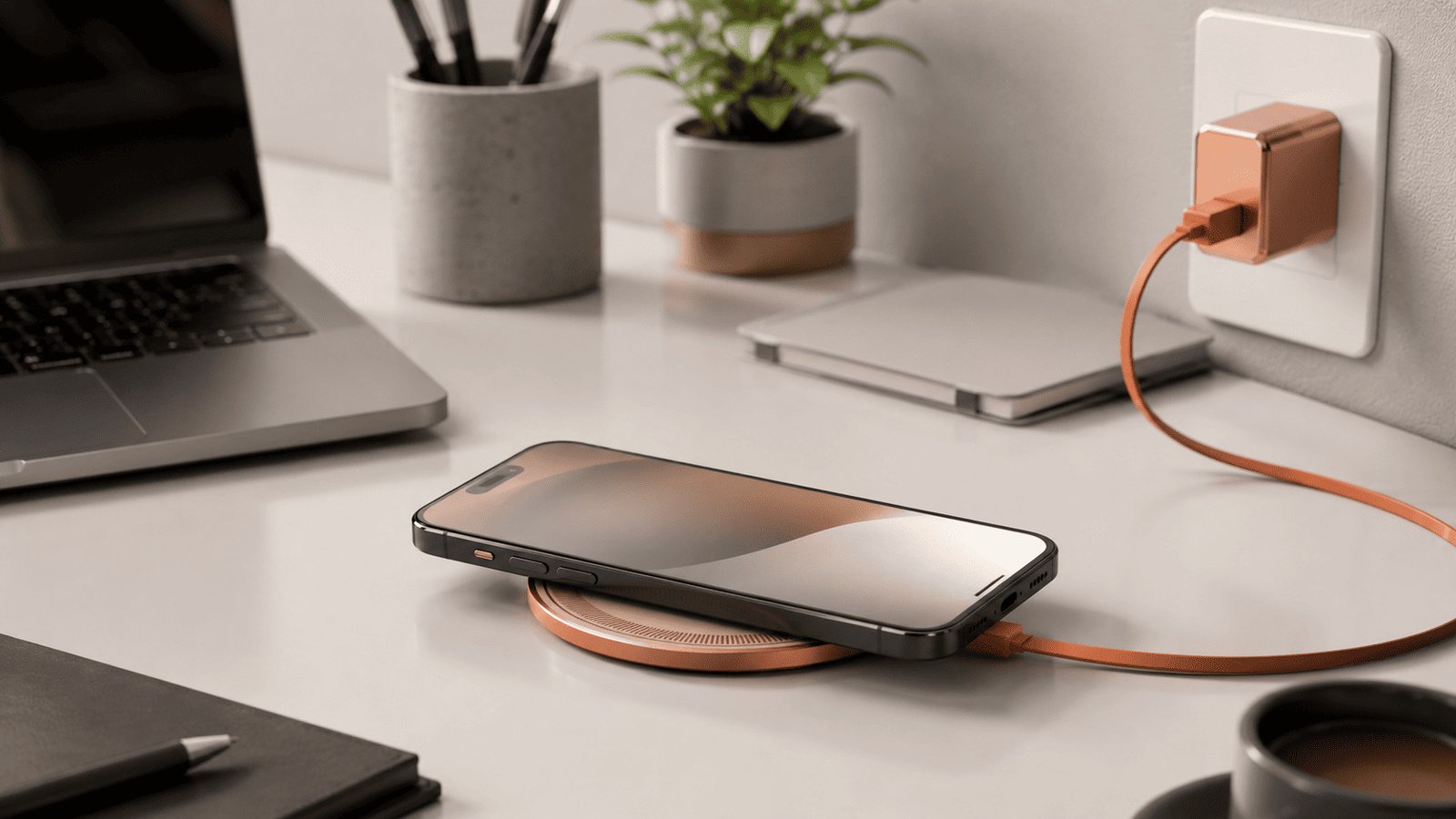
I have seen buyers focus only on “25W” because it looks simple on a product page. I understand that. A higher number looks easier to sell. But in manufacturing and bulk supply, I look at one harder question: can the product charge safely, charge stably, and perform the same across a full batch?
What Makes Qi2 25W Wireless Charging Safe in Real Use?
A charger can look modern and still create risk if the system is weak. I always start with heat, protection, and certification before I talk about speed.
Qi2 25W safety depends on a certified charger, a compatible phone, correct power input, accurate magnetic alignment, thermal control, and foreign object detection.2 I treat safe charging as controlled charging, not only fast charging.
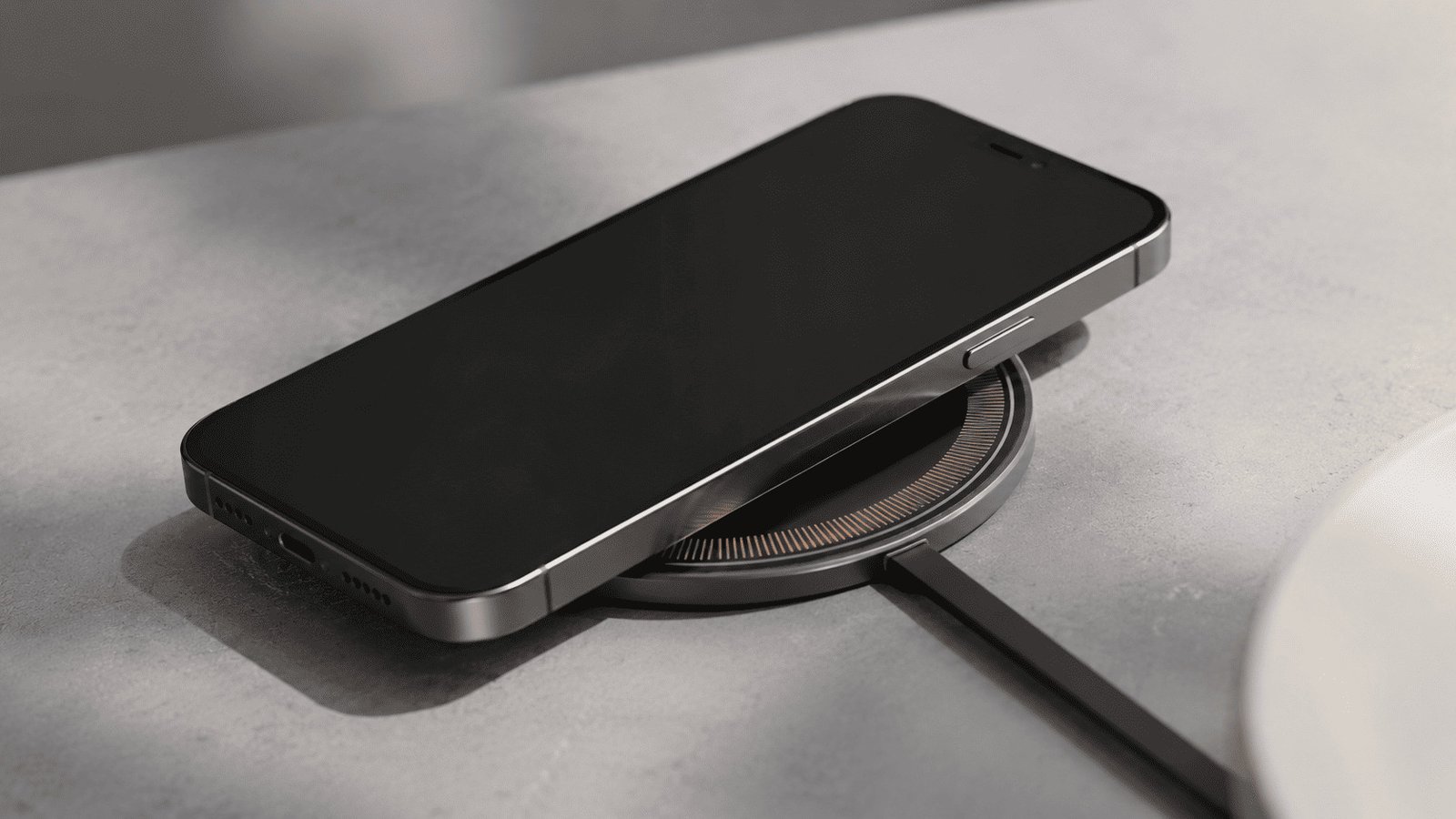
I do not see Qi2 25W as a magic label. I see it as a charging system with several parts. If one part is wrong, the result can change. A good charger should manage power, position, and temperature at the same time. Magnetic alignment helps because the phone and coil can sit in the correct position more often.3 This can reduce wasted energy. It can also help the charger keep a more stable charging curve.
But I still test the real product. I check surface temperature. I check input power. I check charging behavior with different phones. I also check what happens when the phone has a case. A thick case or a metal plate can change the result.4 A poor adapter can also limit output or cause unstable input.
| Safety factor | What I check | Why it matters |
|---|---|---|
| Certification | Qi2, CE, FCC, UL, RoHS, and other required reports | It supports market access and lowers compliance risk |
| Thermal design | Coil, PCB layout, heat path, and shell material | It helps control heat during long charging |
| FOD5 | Metal object detection | It helps reduce heating from coins, keys, or metal parts |
| Adapter and cable | USB-C PD rating and cable quality | It supports stable power input |
| Magnetic alignment | Magnet strength and coil position | It reduces misalignment and wasted energy |
I also explain one point to buyers very clearly. Certification does not replace real-world testing.6 It is a base requirement. It proves the design follows a standard. But a buyer still needs sample tests, batch checks, and clear user instructions.
Why Does a 25W Claim Not Always Mean 25W Charging?
Many buyers feel confused when a 25W charger does not always charge at 25W. I see this problem often, and it is not always product failure.
A 25W rating means the charger may support that level under the right conditions. Actual charging depends on the phone, firmware, temperature, battery level, adapter, cable, case, and alignment.7 I judge reliability by stable behavior, not only peak wattage.
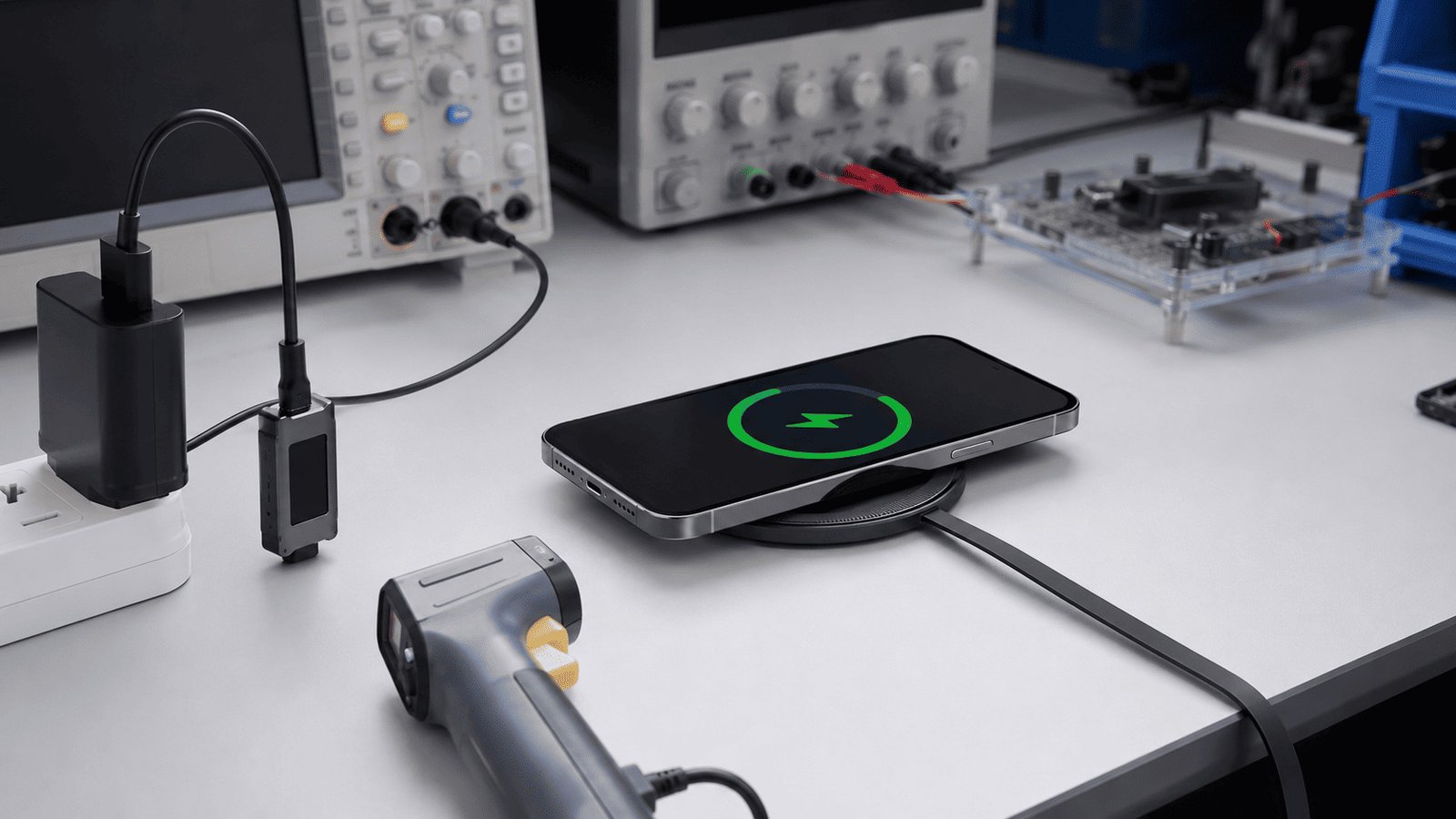
I try not to sell “25W” as a constant number. Wireless charging does not work like a fixed water pipe. The phone and charger talk to each other. The phone may reduce power when the battery gets warmer. It may also slow down when the battery is nearly full.8 This is normal. It protects the phone and battery.
For B2B buyers, this matters because the end user may not know these details. The user may only see “25W” and expect full speed all the time. If the product page is too aggressive, the return rate can rise. So I prefer clear claims. I would say “supports up to 25W under compatible conditions” instead of “always 25W fast charging.”
| Real condition | Possible result | My practical view |
|---|---|---|
| Phone does not support Qi2 25W | Lower charging power | This is compatibility, not always charger failure |
| Adapter is weak | Slow or unstable charging | Recommend correct USB-C PD adapter |
| Cable is low quality | Input drops | Use tested cable in package or clear cable spec |
| Phone case is thick | More heat or lower power | Give case thickness guidance |
| Room is hot | Power may reduce | Thermal control is working as protection |
| Battery is near full | Charging slows | This is normal phone behavior |
I also look at the charging curve, not only the highest number. A charger that reaches 25W for a short moment but becomes unstable is not a strong product. A charger that manages heat and keeps a smooth curve can create fewer complaints. For distributors, that difference is important because support teams deal with real users, not lab numbers.
How Should I Judge Qi2 25W Reliability Before Bulk Orders?
A product can pass a sample test and still fail in the market if batch control is weak.9 I always connect reliability with repeatable production.
I judge Qi2 25W reliability by stable charging, low heat complaints, consistent batch quality, verified compatibility, clear labels, and tested protection functions. For bulk orders, I focus on return risk, not only attractive specifications.
In my work with wireless chargers, I have learned that reliability is a business issue as much as a technical issue. A brand owner may lose trust after one bad batch. A distributor may lose channel space if customer complaints grow. A procurement manager may face pressure if certificates, labels, or test reports are incomplete. So I treat product reliability as a full process.
I first check the design. The coil must match the magnetic structure. The PCB must support stable control. The housing must help heat move out. The firmware must manage power changes smoothly. I then check production. The same product should perform the same in different batches. This means incoming material checks, aging tests, charging tests, and final inspection must be clear.
| Buyer concern | What I suggest checking | Business value |
|---|---|---|
| Return rate | Heat, disconnects, slow charging feedback | Fewer after-sales cases |
| Compliance | Qi2 and regional certificates | Easier import and sales |
| Batch consistency | Sample and mass production comparison | Lower quality risk |
| Claims risk | Package and listing language | Fewer user disputes |
| Compatibility | Test with main phone models | Better market experience |
| Accessories | Adapter and cable requirements | Fewer false complaints |
I also suggest that buyers ask for real test data. A factory should be able to share basic temperature data, compatibility results, certificate status, and adapter requirements. If the product needs a certain PD adapter, the supplier should say it clearly. If the charger performs best without a thick case, the manual should say it clearly.
I believe this honesty helps sales in the long term. It does not weaken the product. It protects the buyer, the seller, and the end user. Qi2 25W can be a strong product category, but only when the full system is designed, tested, and explained in a careful way.
Conclusion
I trust Qi2 25W when the full system is certified, tested, and used correctly. I do not trust wattage claims alone.
"[PDF] A review of foreign object detection (FOD) for inductive ... - Chris Mi", https://chrismi.sdsu.edu/publications/170.pdf. A standards or technical source from the Wireless Power Consortium or a comparable standards body should be cited to show that Qi2 wireless charging is governed by system-level requirements for interoperability, alignment, power transfer, and safety functions rather than by wattage alone. Evidence role: expert_consensus; source type: institution. Supports: Qi2 wireless charging performance and safety depend on interoperability, certification, alignment, power control, and protection features.. Scope note: Such a source would support the technical context for the claim, but it would not independently verify the safety or reliability of any specific charger model. ↩
"Qi (standard) - Wikipedia", https://en.wikipedia.org/wiki/Qi_(standard). A Wireless Power Consortium certification or technical overview should be cited to establish that Qi/Qi2 charging relies on certified interoperability and safety-related control mechanisms, including alignment and foreign-object detection. Evidence role: definition; source type: institution. Supports: Qi/Qi2 certification and operation involve interoperability, alignment, power control, and safety-related mechanisms including foreign object detection.. Scope note: The source would substantiate the standard-level requirements but would not directly assess the reliability of the article author's products or testing process. ↩
"Qi (standard) - Wikipedia", https://en.wikipedia.org/wiki/Qi_(standard). A technical paper or standards overview should be cited to show that coil misalignment reduces inductive coupling and that magnetic positioning systems are used to improve alignment between transmitter and receiver coils. Evidence role: mechanism; source type: research. Supports: Wireless charging efficiency and power transfer are affected by coil alignment, and magnetic alignment can improve positioning repeatability.. Scope note: The source would support the general mechanism, not the measured alignment performance of a particular charger design. ↩
"Wireless Charging of a Metal-Body Device - Academia.edu", https://www.academia.edu/82174228/Wireless_Charging_of_a_Metal_Body_Device. An engineering source on inductive charging should be cited to document that greater separation between coils and the presence of conductive metal can change coupling efficiency and may increase heating or reduce delivered power. Evidence role: mechanism; source type: paper. Supports: Increased coil separation and nearby metal objects can affect wireless power transfer efficiency and heat generation.. Scope note: The source would support the physical principle; effects vary by case design, charger design, and phone model. ↩
"[PDF] A review of foreign object detection (FOD) for inductive ... - Chris Mi", https://chrismi.sdsu.edu/publications/170.pdf. A standards or technical source should be cited to define foreign object detection as a wireless charging safety mechanism used to detect metallic objects that may absorb energy and heat during inductive power transfer. Evidence role: definition; source type: institution. Supports: Foreign object detection in wireless charging is intended to identify conductive objects that can heat in the electromagnetic field.. Scope note: The source would explain the purpose of FOD generally and would not verify the sensitivity or accuracy of any individual charger's detection implementation. ↩
"General Use Products: Certification and Testing | CPSC.gov", https://www.cpsc.gov/Business--Manufacturing/Testing-Certification/General-Use-Products-Certification-and-Testing. A quality-management or standards source should be cited to show that certification demonstrates conformity to specified requirements but does not eliminate the need for ongoing production controls, inspection, and validation under actual use conditions. Evidence role: expert_consensus; source type: institution. Supports: Compliance or certification should be complemented by production quality controls and validation testing for consistent real-world performance.. Scope note: The source would support the general quality principle, not a Qi2-specific testing protocol unless a Qi-focused source is used. ↩
"Wireless Charging Explained: Efficiency, Safety, Qi2 & MagSafe", https://www.flywing-tech.com/blog/wireless-charging-explained-efficiency-safety-qi2-magsafe/. A technical source on wireless charging control should be cited to support that delivered charging power is dynamic and may vary with receiver compatibility, state of charge, temperature, coil alignment, and the available input power path. Evidence role: mechanism; source type: research. Supports: Wireless charging output is controlled by device negotiation and affected by thermal conditions, battery state, alignment, and input power limitations.. Scope note: The source would support the mechanisms behind variable charging speed, but specific wattage behavior depends on individual phone firmware and charger design. ↩
"Why Does Charging Slow Down After 80% SOC? Have ... - Instagram", https://www.instagram.com/p/DZDR6lIx6vv/. A battery education or engineering source should be cited to explain that lithium-ion charging typically transitions from constant-current to constant-voltage operation, causing charging current and effective charging speed to taper as the battery nears full charge. Evidence role: mechanism; source type: education. Supports: Lithium-ion batteries typically use charging profiles in which current tapers during the constant-voltage phase near full charge.. Scope note: The source would describe normal lithium-ion charging behavior, while actual smartphone charging curves also depend on manufacturer firmware. ↩
"Reducing Variation with SPC | Center for Quality and Applied Statistics", https://www.rit.edu/processimprovement/reducing-variation-spc. A quality-engineering source should be cited to show that sample inspection provides limited evidence about a production process and that statistical process control, incoming inspection, and batch validation are needed to manage manufacturing variation. Evidence role: expert_consensus; source type: education. Supports: Manufacturing quality depends on process control and batch consistency, and a limited sample test may not reveal later production variation.. Scope note: The source would support the general manufacturing-quality principle rather than documenting a specific Qi2 charger failure case. ↩