
I often see buyers trust “strong magnet” claims too fast. That can cause slow charging, heat, returns, and weak user reviews.
Magnetic force affects wireless charging efficiency only when it helps keep the transmitter coil and receiver coil accurately aligned.1 Stronger magnets alone do not improve efficiency.2 Coil coupling, distance, misalignment, heat control, protocol, case thickness, and device compatibility decide real charging performance.3
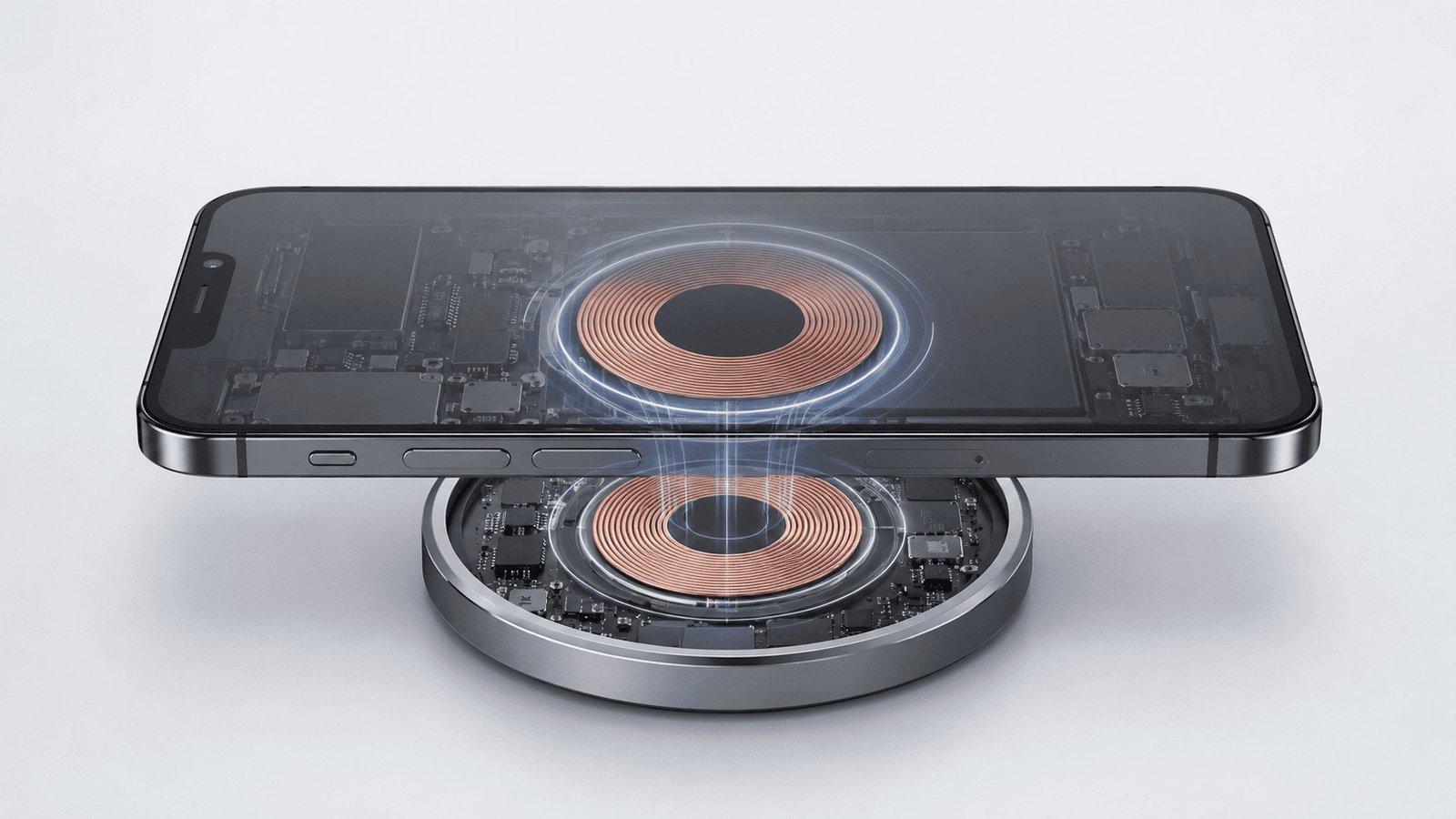
I have seen many magnetic wireless chargers in real use. Some units hold the phone tightly but still charge slowly. Some units feel weaker by hand but keep stable power because the coil position is correct. This is why I do not judge a product by magnetic force alone. I look at alignment, heat, protocol, and real-device results together. If you buy wireless chargers in bulk, this difference matters because one weak design can become a large after-sales problem.
Does Stronger Magnetic Force Mean Better Wireless Charging?
I often hear one simple claim in the market: stronger magnets mean better charging. This sounds easy, but it can mislead buyers.
Stronger magnetic force does not directly create higher wireless charging efficiency. It only helps when it places and holds the phone in the correct coil position. If the coil design, magnet ring position, heat path, or protocol matching is poor, charging can still be slow or unstable.
I see magnetic force as a positioning tool, not a power tool. Wireless charging works through energy transfer between the transmitter coil in the charger and the receiver coil in the phone.4 The key point is coupling. When the two coils face each other well, power transfer is more stable.5 When they shift to the side, the charger may need more input power to deliver the same output. This creates more heat and less useful energy.6
I usually explain it to buyers in a simple way. The magnet is like a guide rail. It helps the phone stop in the right place. But the guide rail does not decide the engine quality.
| Factor I Check | Why It Matters | Buyer Risk If Ignored |
|---|---|---|
| Coil position | It decides coupling quality | Slow charging or drop in power |
| Magnet ring position | It affects how the phone sits | Good hold but wrong alignment |
| Magnetic force | It keeps the phone stable | Phone may slide in cars or power banks |
| Heat control | It protects power output | Overheating and power throttling |
| Protocol support | It controls charging mode | Lower power than claimed |
For B2B buyers, I do not suggest asking only, “How strong is the magnet?” I suggest asking, “Can the product keep correct alignment and stable output with real phones?” This question is closer to real quality.
How Do Alignment Errors Reduce Charging Efficiency?
I have seen small alignment errors create big performance differences. The phone still shows charging, but the real speed becomes much lower.
Alignment errors reduce wireless charging efficiency because the transmitter coil and receiver coil do not overlap well. Academic research shows that the efficiency of wireless power transfer declines significantly as lateral and angular misalignments increase between the coils. This weakens coupling, increases energy loss, raises temperature, and may trigger power reduction. Engineering simulations confirm that even minor misalignment significantly drops magnetic flux density, reducing overall power efficiency and generating substantial stray fields. Even a small lateral shift can affect charging speed and stability.
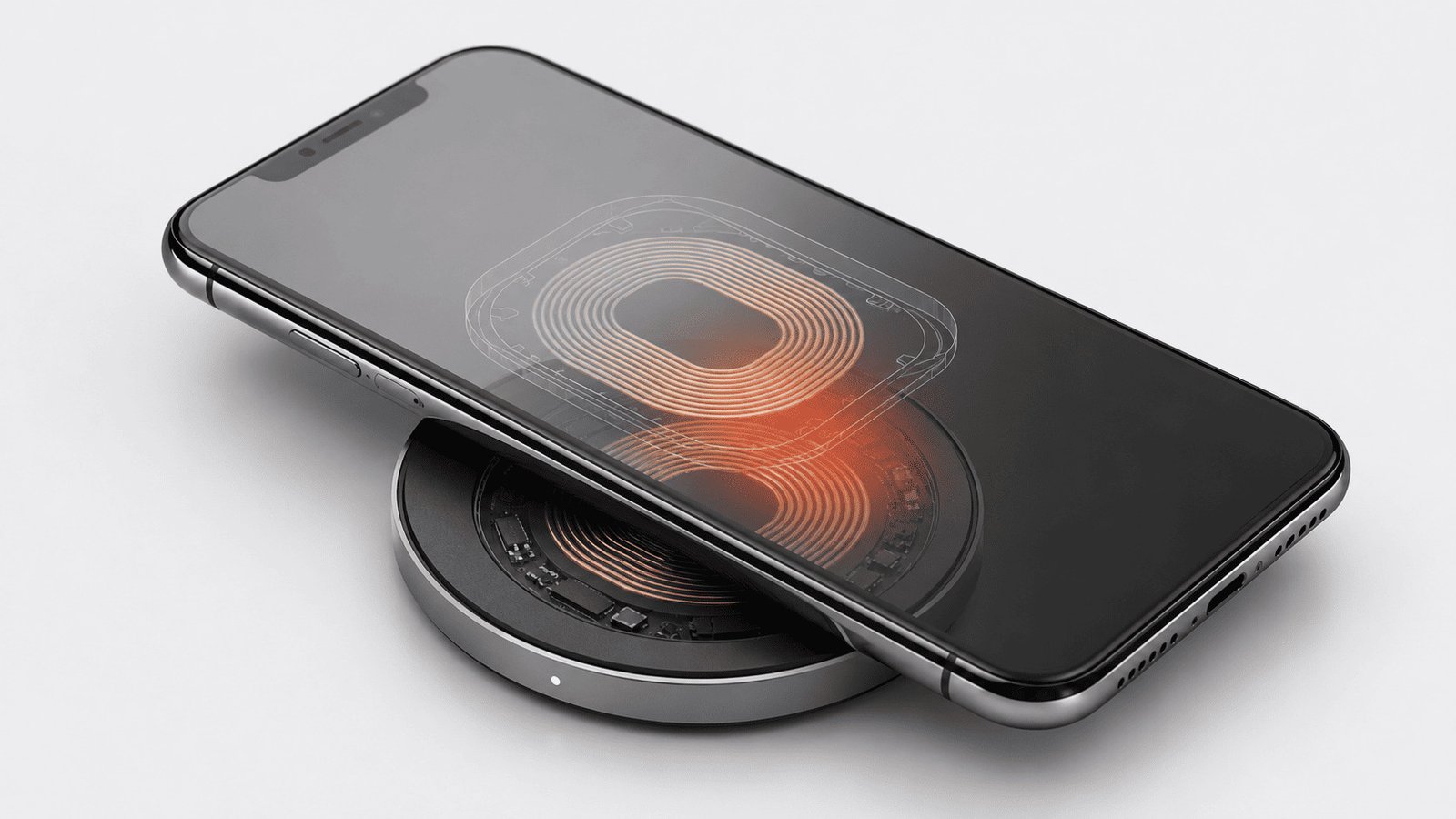
In normal use, alignment errors come from many places. The user may place the phone slightly off center. The phone case may be thick. The internal coil may not match the magnet ring. A car mount may shake. A magnetic power bank may move inside a bag. These situations are common, so I do not treat lab results as enough.
I pay special attention to lateral misalignment and vertical distance. Lateral misalignment means the phone moves left, right, up, or down from the best point. Vertical distance means the gap between coils becomes larger because of the shell, glass, rubber pad, or phone case. Both reduce the coupling coefficient, which is the essential reason for fluctuations in transmission power during misalignment.
| Error Type | Common Cause | What I Usually Test |
|---|---|---|
| Lateral shift | Poor magnet ring or weak centering | Charging at center and off-center points |
| Larger distance | Thick case or thick product shell | Charging with 1 mm to 5 mm case samples |
| Tilt angle | Car vibration or weak support | Charging on stand and in movement |
| Heat buildup | Poor internal heat path | Temperature after 30 to 60 minutes |
| Protocol mismatch | Phone and charger do not match | Power curve on iPhone, Samsung, and other models |
I also care about the charging curve, not only the peak watt number. A charger may reach high power for a short time and then drop because of heat.7 Smartphone batteries are extremely sensitive to temperature8, and when excess heat builds up, the device activates [thermal throttling to automatically reduce charging power](https://support.apple.com/en-us/120619)9 and protect battery health. This looks good in marketing, but it does not help the end user. For distributors and brand owners, stable average output is often more important than peak output.
What Should B2B Buyers Test Before Bulk Orders?
I know buyers need simple standards because they must compare many suppliers. A beautiful sample is not enough.
B2B buyers should test accurate alignment, stable power transfer, safe temperature, certified performance, and real-device compatibility. They should not accept “strong magnet” as the main proof of quality. Real charging data under normal use is the better standard.
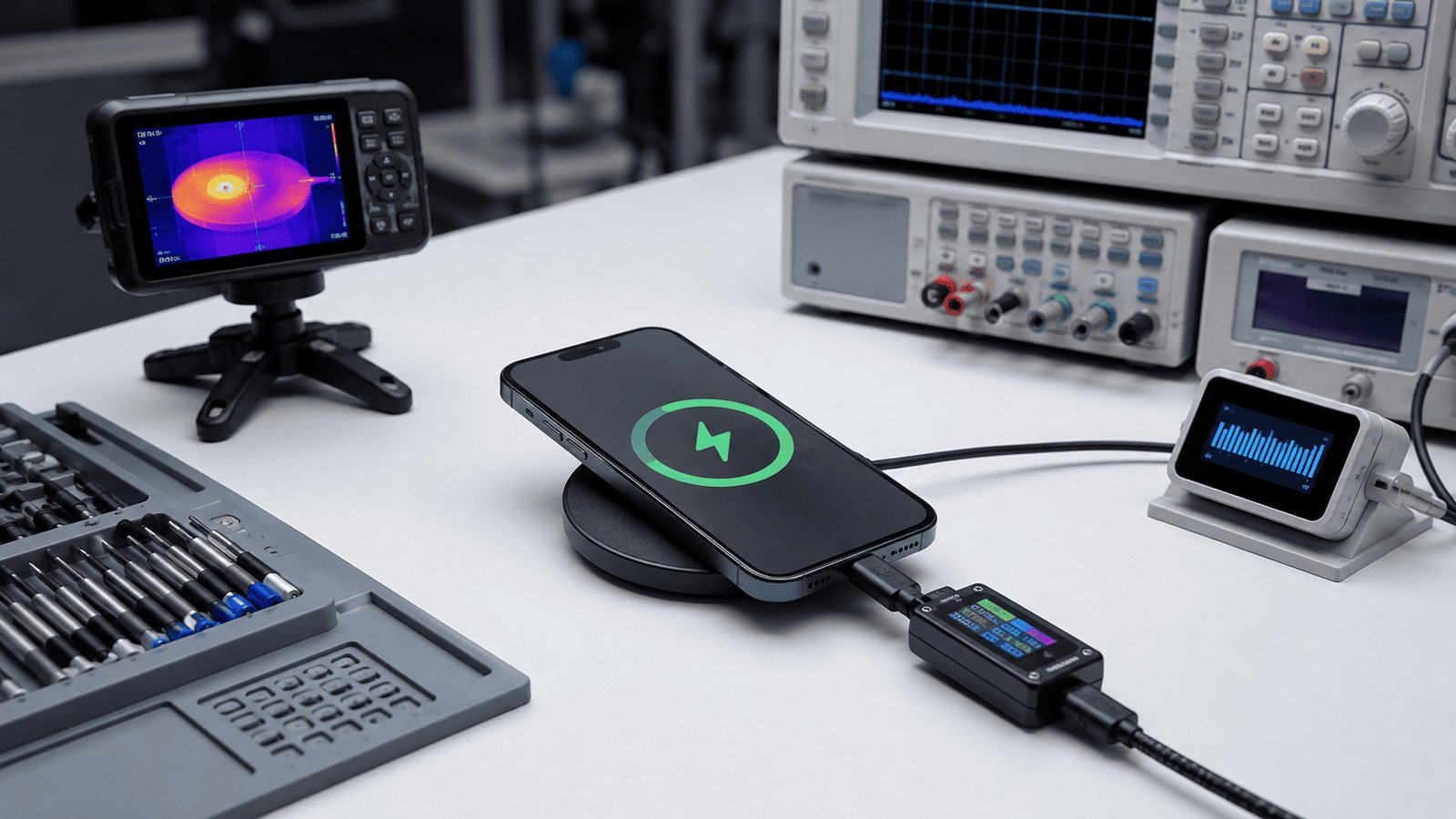
I usually recommend a practical test plan before mass orders. First, test several phone models, not only one flagship model. Second, test with normal phone cases because users rarely remove cases every day. Third, test at center and slight off-center positions. Fourth, record temperature and power over time. Fifth, confirm certificates and test reports.
| Test Item | My Suggested Standard | Reason |
|---|---|---|
| Real phone test | Test iPhone, Samsung, and key local models | Markets use different devices |
| Case test | Use thin and medium cases | Case thickness changes distance10 |
| Alignment test | Center and offset placement | It shows real tolerance |
| Temperature test | 30 to 60 minutes | Heat affects safety and speed |
| Certification check | Qi, CE, FCC, RoHS, UL, PSE, KC as needed | Import and retail need proof |
| Aging test | Long running sample test | It shows stability before shipment |
As a wireless charger manufacturer, I also look at internal structure. The coil, magnet ring, PCBA, shielding, and heat path must work as one system. If one part is wrong, the whole product suffers. For example, a strong magnet may increase trust in the first touch, but poor thermal design can still make the phone hot. Advanced products utilize [high-permeability nanocrystalline materials for magnetic shielding](https://pmc.ncbi.nlm.nih.gov/articles/PMC9609277/)11, providing a clear magnetic channel that reduces eddy current effects on the battery and prevents compliance failure. Poor shielding can create unstable charging or fail compliance checks.12
I suggest buyers ask suppliers for test reports, real-device videos, temperature data, and sample consistency checks. I also suggest checking several samples from the same batch. One good sample does not prove stable production. Bulk buyers need repeatable results because their risk starts after shipment.
Conclusion
I do not equate stronger magnets with better charging. I trust accurate alignment, safe heat, certified design, and stable real-device test results.
"Qi (standard) - Wikipedia", https://en.wikipedia.org/wiki/Qi_(standard). A peer-reviewed study on inductive wireless power transfer identifies coil alignment and coupling as determinants of transfer efficiency, supporting the view that magnetic attraction contributes to efficiency only when it improves coil positioning. Evidence role: mechanism; source type: paper. Supports: The source should explain that inductive wireless charging efficiency depends primarily on coil coupling and alignment, while magnets function as a positioning aid.. Scope note: This would support the physical mechanism, not prove performance for every commercial magnetic charger design. ↩
"Inductive charging - Wikipedia", https://en.wikipedia.org/wiki/Inductive_charging. Technical guidance on inductive wireless charging describes magnets as alignment or attachment components, while power-transfer efficiency is governed by coil coupling, separation, and control circuitry. Evidence role: general_support; source type: institution. Supports: The source should show that wireless charging efficiency is governed by electromagnetic coupling, coil geometry, alignment, distance, and control electronics rather than static magnet strength.. Scope note: This would be contextual support because few standards state directly that stronger magnets alone cannot improve efficiency. ↩
"Qi (standard) - Wikipedia", https://en.wikipedia.org/wiki/Qi_(standard). Wireless charging standards and technical reviews describe performance as a function of coil coupling, separation, alignment, thermal control, and protocol negotiation, supporting the article's multi-factor account of charging behavior. Evidence role: expert_consensus; source type: institution. Supports: The source should document that real-world wireless charging performance depends on physical coupling conditions, thermal limits, and protocol or interoperability requirements.. Scope note: The source may not list every factor in the same wording, so the citation would substantiate the combined technical context rather than each item individually. ↩
"Inductive charging - Wikipedia", https://en.wikipedia.org/wiki/Inductive_charging. An encyclopedic definition of inductive charging describes wireless charging as power transfer between a transmitter coil and a receiver coil by electromagnetic induction. Evidence role: definition; source type: encyclopedia. Supports: The source should define inductive charging as energy transfer between transmitting and receiving coils through electromagnetic induction.. ↩
"Optimizing a High Lateral Misalignment Tolerance of the Short ...", https://www.academia.edu/42625917/Optimizing_a_High_Lateral_Misalignment_Tolerance_of_the_Short_range_Inductive_Coupling_Wireless_Power_Transfer_System_by_Using_Basic_Capacitive_Compensation_Topologies. Peer-reviewed wireless power transfer research reports that improved transmitter-receiver coil alignment increases magnetic coupling and stabilizes delivered power. Evidence role: mechanism; source type: paper. Supports: The source should show that better alignment between transmitter and receiver coils increases coupling and stabilizes transferred power.. ↩
"Phase-shift compensation strategy for misaligned wireless power ...", https://repositories.lib.utexas.edu/items/6fe10b45-6ccb-42b8-98d2-52138bbaee78. Experimental and modeling studies of inductive wireless power transfer show that lateral misalignment reduces coupling and transfer efficiency, increasing electrical losses that are dissipated as heat. Evidence role: mechanism; source type: paper. Supports: The source should demonstrate that lateral misalignment lowers transfer efficiency and increases losses, which may appear as heat.. Scope note: The exact increase in input power depends on charger control design and operating protocol. ↩
"[PDF] Thermal Design and Optimization of High-Power Wireless Charging ...", https://www.osti.gov/servlets/purl/1871896. Device thermal-management documentation states that charging power or charging current may be reduced when temperature limits are approached, supporting the observation that a charger can peak briefly and then lower output because of heat. Evidence role: mechanism; source type: institution. Supports: The source should explain that phones or chargers can reduce charging current or power when temperature rises.. Scope note: The specific timing and power curve vary by phone model, battery state, charger design, and ambient temperature. ↩
"Battery Lifespan | Transportation and Mobility Research | NLR", https://www.nlr.gov/transportation/battery-lifespan. Battery research reviews report that lithium-ion battery performance, aging, and safety are strongly temperature-dependent, including during charging. Evidence role: expert_consensus; source type: paper. Supports: The source should show that lithium-ion battery performance, safety, and degradation are affected by temperature, especially during charging.. Scope note: The source would support temperature sensitivity of lithium-ion cells generally, not every smartphone battery management implementation. ↩
"About iPhone charge speeds - Apple Support", https://support.apple.com/en-us/120619. Manufacturer and platform documentation on smartphone thermal protection states that charging may be slowed, limited, or paused when the device temperature exceeds safe operating thresholds. Evidence role: mechanism; source type: institution. Supports: The source should state that a phone may slow, pause, or reduce charging when temperature becomes too high.. Scope note: Such documentation establishes the mechanism but may describe a specific operating system or device family rather than all smartphones. ↩
"Inductive charging - Wikipedia", https://en.wikipedia.org/wiki/Inductive_charging. Research on inductive wireless power transfer shows that increasing the separation between transmitter and receiver coils lowers magnetic coupling and can reduce charging efficiency, which explains why case thickness is a relevant test condition. Evidence role: mechanism; source type: paper. Supports: The source should support that increased coil separation reduces coupling or efficiency in inductive wireless charging, making case thickness technically relevant.. Scope note: This supports the physical effect of added distance, not the performance impact of every case material or phone model. ↩
"Modern Advances in Magnetic Materials of Wireless Power Transfer ...", https://pmc.ncbi.nlm.nih.gov/articles/PMC9609277/. Materials research on nanocrystalline soft magnetic alloys reports high magnetic permeability and their use in flux guidance or magnetic shielding for inductive wireless power systems. Evidence role: mechanism; source type: research. Supports: The source should show that nanocrystalline soft magnetic materials have high permeability and are used or studied for magnetic flux guidance or shielding in wireless power applications.. Scope note: This supports the material property and application area, not the claim that all advanced commercial products use these materials. ↩
"Wireless power transfer - Wikipedia", https://en.wikipedia.org/wiki/Wireless_power_transfer. Electromagnetic compatibility rules and wireless power transfer studies indicate that shielding and field control are relevant to limiting stray emissions and meeting compliance requirements. Evidence role: general_support; source type: government. Supports: The source should support that wireless power devices must manage electromagnetic emissions and stray fields, and that shielding affects electromagnetic compatibility.. Scope note: This would support compliance relevance generally; whether poor shielding causes unstable charging depends on the charger layout, control electronics, and test conditions. ↩