
A 25W label can look safe. But bulk orders can still run hot, charge slowly, or fail with some phones. Buyers need deeper proof.
Qi2 25W reliability depends on the full charging system, not certification alone. We must check phone support, PD input, cable quality, magnetic alignment, coil design, heat control, FOD, firmware, and production consistency before trusting stable 25W performance.
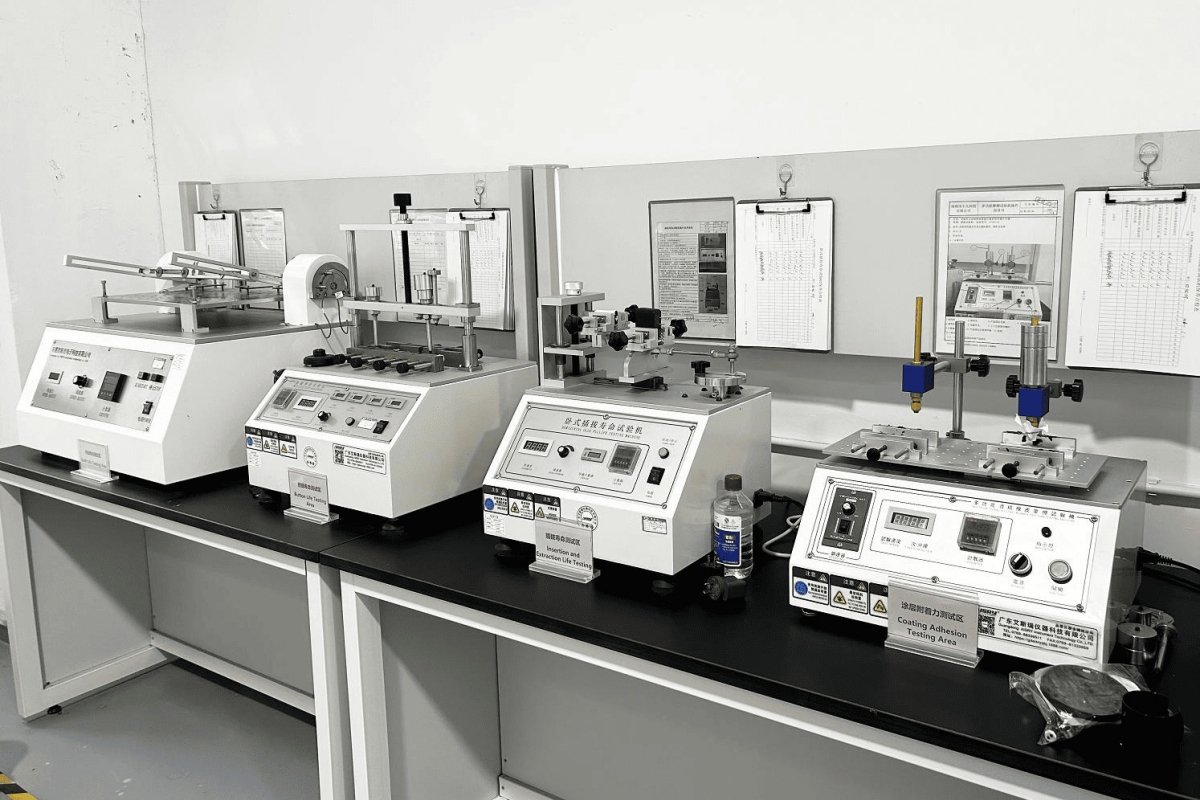
We have seen many projects where the first sample looked perfect. The charger passed basic checks. The power showed close to 25W in a short test. Then the real issues appeared in longer use, mixed phone models, different adapters, thicker cases, and mass production. That is why we treat Qi2 25W certification as the beginning of evaluation, not the final answer.
Is Qi2 25W Certification Alone Enough to Guarantee Stable, Safe, and Consistent Wireless Charging?
Certification reduces risk. But it does not remove every risk.1 A certified charger can still behave differently when the phone, adapter, cable, case, heat, and firmware change.
Qi2 25W certification confirms that the product meets defined wireless charging requirements. But stable real-world performance also needs verified system design, thermal control, compatibility testing, FOD checks, aging tests, and repeatable production quality control.
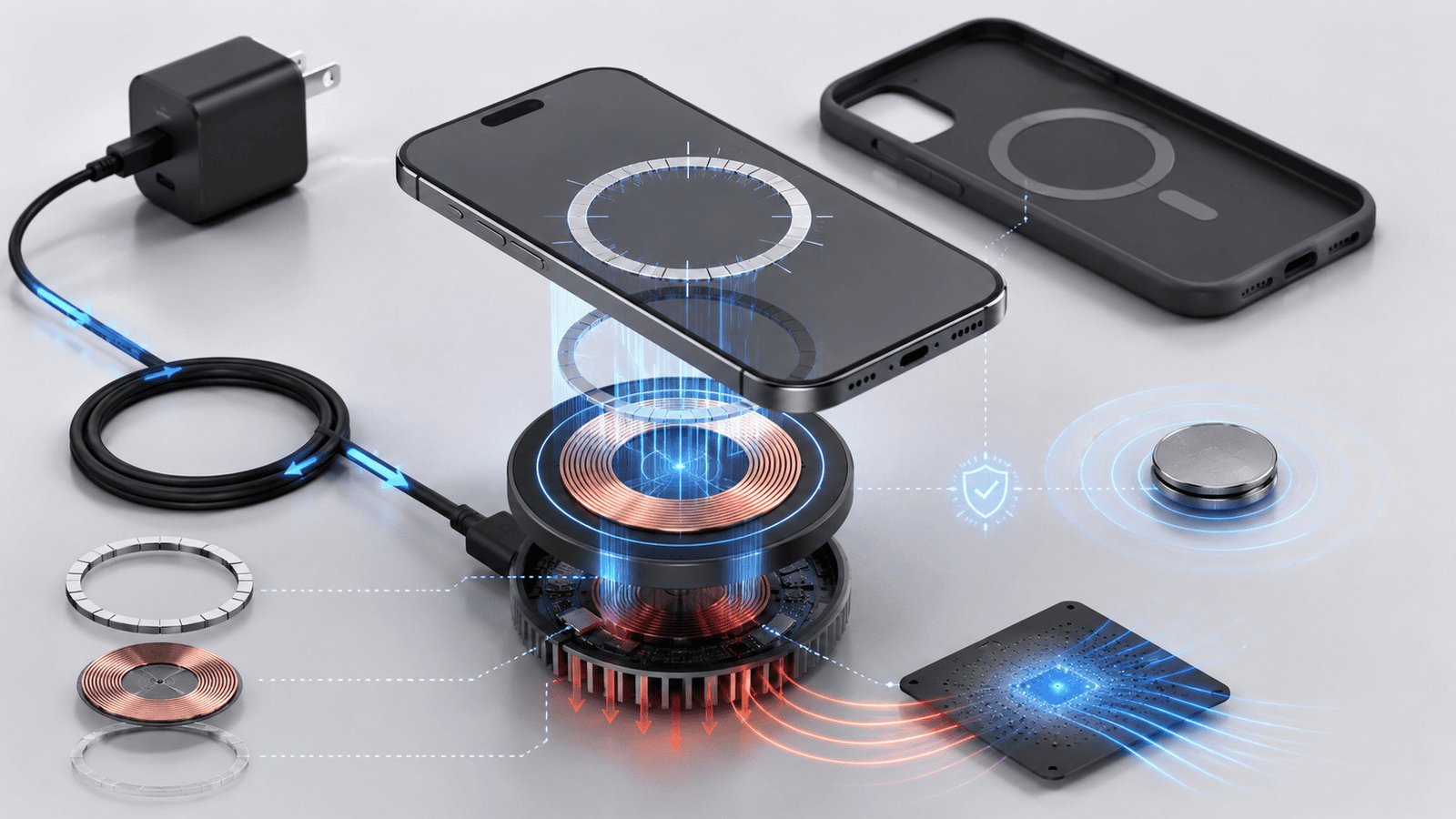
We should first be clear about one point. “25W” is not a fixed result in every situation.2 It is a possible charging level under the right conditions. The phone must really support Qi2 25W.3 The adapter must provide enough USB-C PD input power. The cable must carry power with low loss. The magnetic position must be correct. The charger coil must match the phone coil well. The heat must stay within the control range. The firmware must manage power in a stable way.
In real projects, we often see buyers compare only the label, the price, and the certification file. That is not enough for a wholesale order. A golden sample can pass a short test, but it does not prove that 5,000 or 50,000 units will behave the same.4 We need to check whether the design is strong enough, and whether the factory can repeat the same result in production.
What should we check beyond the Qi2 25W certificate?
| Area we check | Why it matters | What can go wrong |
|---|---|---|
| Phone compatibility | Not every phone supports Qi2 25W in the same way | Charging may drop to 15W, 10W, or lower |
| USB-C PD input | The charger needs enough stable input power | Low-power adapters cause slow or unstable charging |
| Cable quality | Cable resistance affects power delivery5 | Heat rises, voltage drops, charging becomes weak |
| Magnetic alignment | Coil position affects energy transfer | Poor alignment creates heat and power loss6 |
| Coil design | Coil size, turns, shielding, and position matter | Efficiency drops, heat increases, charging cuts off |
| Thermal control | 25W charging creates more heat than lower power charging | Power throttles or the charger stops |
| FOD function | Metal objects must be detected quickly7 | Safety risk increases |
| Firmware behavior | Power control depends on software logic | Charging may jump, pause, or restart |
| Production control | Bulk units must match the approved sample | Defect rate rises after mass production |
We pay special attention to heat because heat is one of the most common reasons for unstable 25W charging. A charger may reach 25W for a short time, then reduce power after the phone battery gets warm8(https://en.wikipedia.org/wiki/Lithium-ion_battery#Charging_procedure). The phone may also lower the receiving power when the battery level is high. A room at 35°C is also very different from a room at 22°C.9 If a buyer only tests for five minutes, the result may look good. If we test for one or two hours, we often see the real curve.
Why does phone support matter so much?
Qi2 25W needs support from both sides. The charger may be ready, but the phone may not accept 25W. Some phone models may support magnetic alignment but not full 25W charging. Some firmware versions may behave differently. Some batteries slow down charging after a certain level. Some phones reduce power when the case is thick. We must test real phone models that match the buyer’s market.
For example, a distributor selling to Europe may need a different test list from a distributor selling to Southeast Asia. The popular phone models are not always the same. We should not only test one latest flagship phone. We should test different battery levels, different cases, different adapters, and different room temperatures. This gives us a more useful view of real customer experience.
Why is USB-C PD input not a small detail?
A Qi2 25W wireless charger cannot create stable output if the input side is weak. We usually check the adapter power profile, cable voltage drop, connector temperature, and input stability. A buyer may use a 30W PD adapter in the test room, while the end user may use an older adapter at home. The result can be very different.
We also look at packaging and user guidance. If the product needs a certain PD adapter, the buyer should know that before ordering. If the brand sells the charger without an adapter, the manual should clearly explain the adapter requirement. This reduces complaints after launch.
Why does a golden sample not prove bulk-order reliability?
A golden sample is useful, but it is not enough. It may come from a carefully adjusted small batch. Bulk production has more variation. Coils may shift slightly.10 Magnets may have tolerance differences. PCBA components may come from different lots. Thermal pads may not be placed with the same pressure. Assembly workers may create small gaps that affect heat transfer.
That is why we ask for production control records, not only nice photos. We want to see incoming material inspection, coil position checks, PCBA test records, aging test data, FOD test results, and final inspection standards. For larger orders, we also suggest pre-shipment random testing with real phones and real adapters.
What tests should buyers request before placing a bulk order?
We suggest buyers request practical test data, not only a certificate. The certificate shows compliance. The test data shows real behavior.
| Test item | What we want to see |
|---|---|
| Thermal test | Surface temperature, coil area temperature, and power curve over time |
| Compatibility test | Charging results across key phone models in the target market |
| PD adapter test | Performance with recommended adapters and lower-grade adapters |
| Cable test | Voltage drop and heat with different cable lengths and qualities |
| FOD test | Response to coins, keys, rings, and other metal objects |
| Case test | Charging with thin, medium, and thick cases |
| Aging test | Long-time operation under load |
| Production sample test | Random units from pilot or mass production |
We believe this kind of testing protects both sides. It protects the buyer from returns and market complaints. It also protects the factory from unclear claims after shipment. When the test method is clear, the product standard becomes clear.
What does reliable Qi2 25W manufacturing look like?
Reliable manufacturing is not only about one smart engineer or one clean sample room. It is about repeatable control. We need stable sourcing, controlled assembly, trained workers, clear test fixtures, and inspection points. We also need firmware version control. If firmware changes after certification or after buyer approval, the charging behavior may change too.
In our work with wireless chargers, we treat reliability as a system result. The product needs a certified design. It also needs a stable magnetic structure, proper coil layout, enough heat path, safe FOD logic, and tested power negotiation. Then the factory must repeat the same build every day. This is where many low-cost products fail. They may look similar outside, but the inside control is not the same.
Conclusion
Qi2 25W certification reduces risk, but real reliability comes from full system testing, thermal proof, compatibility checks, and repeatable production control.
"Qi Certification Process | Wireless Power Consortium", https://www.wirelesspowerconsortium.com/knowledge-base/testing-and-certification/qi-certification-process/. Wireless Power Consortium documentation describes Qi certification as a conformance process for defined wireless charging requirements, supporting the distinction between standards compliance and broader real-world reliability. Evidence role: definition; source type: institution. Supports: Certification verifies conformance with defined wireless charging requirements but is not the same as proof of identical performance under all user conditions.. Scope note: The source can define the scope of certification, but it may not directly evaluate the specific charger models discussed in the article. ↩
"Inductive charging - Wikipedia", https://en.wikipedia.org/wiki/Inductive_charging. Research on inductive wireless power transfer reports that delivered power and efficiency vary with coupling, alignment, load, and control conditions, supporting the view that a 25W rating is a maximum operating condition rather than a constant result. Evidence role: mechanism; source type: research. Supports: Wireless charging output depends on operating conditions and control systems rather than remaining fixed at the maximum rated wattage.. Scope note: General wireless power studies may not test Qi2 25W chargers specifically, so the support is contextual rather than product-specific. ↩
"Qi (standard) - Wikipedia", https://en.wikipedia.org/wiki/Qi_(standard). Wireless Power Consortium materials describe Qi charging as an interaction between a transmitter and a receiver, supporting the claim that 25W operation requires compatible capability on the phone side as well as the charger side. Evidence role: mechanism; source type: institution. Supports: Wireless charging power depends on both the transmitter and receiver supporting compatible charging profiles.. Scope note: The source may explain the standard architecture rather than list every phone model that supports Qi2 25W. ↩
"Real-Time Monitoring and Control of Additive Manufacturing ...", https://www.nist.gov/programs-projects/real-time-monitoring-and-control-additive-manufacturing-processes. Statistical quality control references describe production variation and the need for sampling or process control, supporting the claim that a single golden sample cannot prove the behavior of thousands of mass-produced units. Evidence role: expert_consensus; source type: government. Supports: Manufacturing processes have variation, so single-sample approval is not enough to establish consistency across a large production run.. Scope note: Quality-control sources support the general production-risk principle rather than measuring variation in a specific charger factory. ↩
"Joule heating - Wikipedia", https://en.wikipedia.org/wiki/Joule_heating. Electrical engineering references describe voltage drop and Joule heating as consequences of current flowing through resistance, supporting the claim that cable resistance can affect delivered power. Evidence role: mechanism; source type: education. Supports: Electrical resistance in a cable causes voltage drop and resistive heating, which can reduce the power reaching the charger.. Scope note: Basic electrical references support the mechanism, but they do not quantify the effect for every USB-C cable or charger combination. ↩
"[PDF] Design and Performance Analysis of Misalignment Tolerant ...", https://repository.aus.edu/bitstreams/5c9d09a5-0276-4d65-8dfc-fc66909568fb/download. Studies of inductive wireless power transfer show that coil misalignment reduces coupling efficiency and increases power losses, supporting the article’s statement that poor alignment can cause heat and reduced charging performance. Evidence role: mechanism; source type: paper. Supports: Coil misalignment reduces magnetic coupling and can lower transfer efficiency, increasing losses that appear as heat.. Scope note: Experimental results vary by coil geometry, frequency, shielding, and control design, so the evidence is mechanistic rather than a direct test of all Qi2 products. ↩
"[PDF] Foreign Object Detection for Wireless Power Transfer Based on ...", https://tentzeris.ece.gatech.edu/WPTC20_Ote.pdf. Wireless power transfer research and Qi-related safety documentation describe foreign object detection as a method for identifying metal objects that may heat in the magnetic field, supporting the need for prompt detection. Evidence role: mechanism; source type: research. Supports: Foreign metal objects can absorb energy and heat during inductive charging, which is why foreign object detection is a safety function.. Scope note: The source may establish the safety mechanism without specifying a universal detection time threshold for every charger. ↩
"[PDF] Challenges and Innovations of Lithium-Ion Battery Thermal ... - ECEC", https://ecec.me.psu.edu/Pubs/2023_Liu_JHMT.pdf. Battery management literature explains that lithium-ion charging current is controlled according to temperature limits, supporting the claim that charging power may be reduced after the phone or battery becomes warm. Evidence role: mechanism; source type: paper. Supports: Lithium-ion charging systems limit or reduce charge current under elevated temperature to protect the battery and device.. Scope note: The evidence supports the battery-management principle, but exact throttling behavior is device- and firmware-specific. ↩
"[PDF] Quantifying Process Variations and Its Impacts on Smartphones", https://sites.tufts.edu/tcal/files/2019/12/ispass19-processvariations.pdf. Thermal management and battery-charging studies report that ambient temperature influences heat dissipation and allowable charging conditions, supporting the article’s distinction between testing at 35°C and 22°C. Evidence role: mechanism; source type: paper. Supports: Higher ambient temperature reduces thermal headroom and can affect charging performance or trigger thermal limits.. Scope note: The source may not compare exactly 35°C and 22°C for Qi2 25W chargers, so the citation supports the general thermal principle. ↩
"[PDF] Design and Performance Analysis of Misalignment Tolerant ...", https://repository.aus.edu/bitstreams/5c9d09a5-0276-4d65-8dfc-fc66909568fb/download. Research on inductive charging reports that coil displacement changes magnetic coupling and transfer efficiency, supporting the article’s claim that slight coil shifts in production can affect charging behavior. Evidence role: mechanism; source type: paper. Supports: Changes in coil position alter coupling between transmitter and receiver coils and can reduce transfer efficiency.. Scope note: The magnitude of the effect depends on the product’s coil design, shielding, magnet structure, and control firmware. ↩