
Many buyers still chase the biggest watt number. We see the same mistake often. It creates slow charging, heat, returns, and unhappy Android users.
The best Android wireless charger in 2026 is the one that matches the phone protocol, adapter, cable, case, coil position, magnetic design, and heat control. A 15W or 25W label does not mean every Android phone will receive that power.1
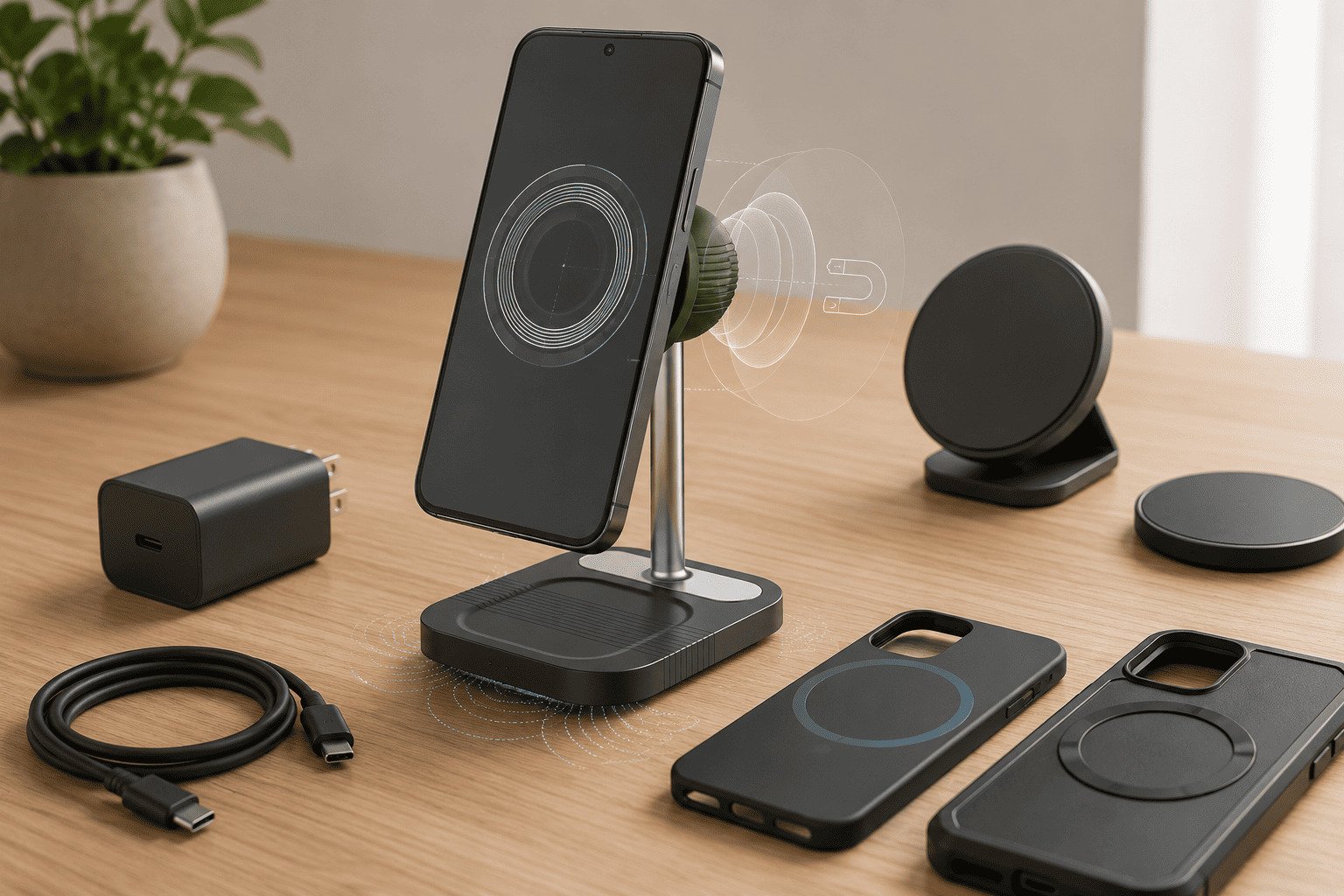
We manufacture wireless chargers for global buyers, so we do not judge a charger only by its peak lab result. We judge the full charging system. The phone, charger, USB-C PD or PPS adapter, cable, phone case, coil alignment, and room temperature all change the result.2 If one part is wrong, the whole system becomes weak. This is why a charger can work well with one Android phone and charge another Android phone slowly. We need to look at the real use environment before we choose.
Why should we check the charging protocol before we trust the wattage?
Many product pages show 15W, 20W, or 25W. We know this number can mislead buyers when the phone does not support the same charging mode.
We should first confirm whether the phone supports Qi, Qi2, or a brand-specific wireless fast charge mode.3 Then we should match the charger, adapter, cable, coil design, and thermal limits to that phone.
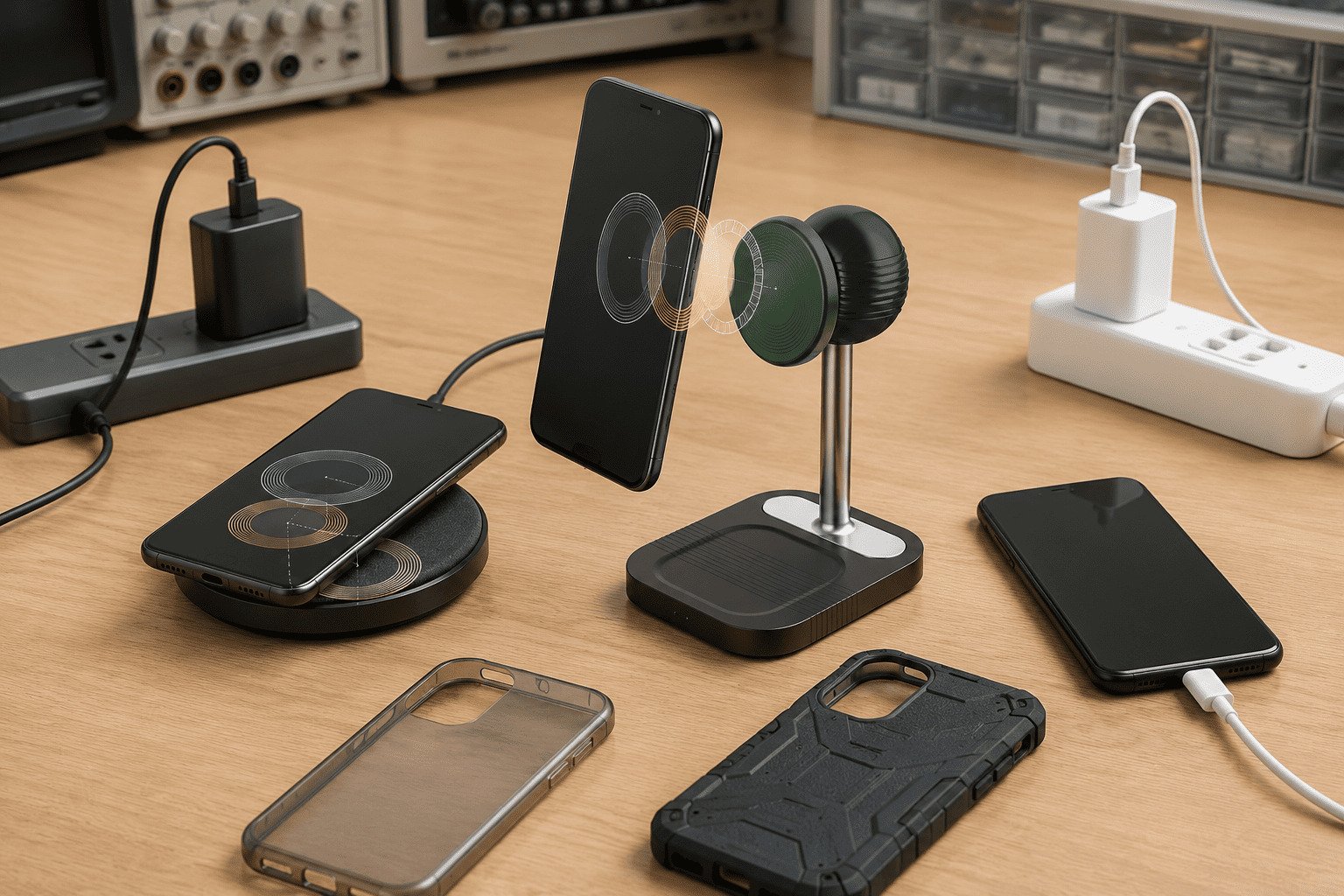
Wireless charging for Android is still very device-specific4in 2026.Two Android phones can both support Qi, but they may not charge at the same speed on the same charger. One phone may accept standard Qi power. Another phone may need a special fast-charge protocol. A third phone may need a PPS adapter before the charger can hold higher output.5 The Wireless Power Consortium explains Qi and Qi2 as standards for wireless power transfer, but phone brands can still add their own limits and control rules. Official phone specifications also matter. We always check the phone maker’s page before we confirm a charger for a project.
| What we check | Why it matters | Buyer risk if ignored |
|---|---|---|
| Qi support | Confirms basic wireless charging | Phone may not charge |
| Qi2 magnetic support | Confirms magnetic alignment and profile | Magnet may align poorly |
| Brand fast-charge mode | Confirms higher Android power | 15W charger may deliver 5W or 7.5W |
| USB-C PD or PPS adapter | Feeds stable input power | Charger may reduce output |
| Cable rating | Protects input stability | Charging may restart |
| Phone case material | Affects distance and heat | Heat or intermittent charging |
| Coil position | Affects power transfer | Slow charging and temperature rise |
We have seen a real protocol mismatch in testing. A charger marked 15W charged one Android phone near its expected level, but another Android phone stayed around a much lower level. The charger was not broken. The second phone needed a brand-specific wireless fast charge mode condition. The user only saw “15W” on the box, so the user expected 15W. That gap creates complaints. For wholesale and brand projects, we prefer clear compatibility tables over bold power claims.
How should we test real Android wireless charging performance before bulk buying?
A charger can pass a short desk test and still fail in daily use. We have to test heat, alignment, cases, adapters, and long charging time.
We should test each target Android phone with the planned adapter, cable, case, and charger position for at least one full charging session. We should record power stability, surface temperature, restarts, and final battery gain.
In our own sample checks, we use a simple but strict process. We test the charger with the real phone models that the buyer wants to support. We use the same USB-C PD or PPS adapter that will be sold or recommended. We test with no case, with a normal TPU case, and with a thicker protective case. We also move the phone slightly off center to see how easy it is for users to create a bad alignment. This matters because wireless charging depends on coil position.6 A small movement can reduce power and create extra heat.7
We also run long-duration charging. A ten-minute test is not enough. Many chargers start at higher power, then reduce output when temperature rises.8 This is normal when the control system protects the phone and charger. The better question is not “What is the peak wattage?” The better question is “What power can the charger hold safely?” We use this thinking because academic research on inductive power transfer and battery heat shows that temperature affects efficiency, battery stress, and user safety.9 Recognized labs also look at safety items like abnormal operation, foreign-object detection, and electrical protection.
| Test item | Our method | Good result |
|---|---|---|
| Compatibility | Test target Android models | Stable charge without restarts |
| Temperature | Check phone and charger surface | Controlled warmth, no hot spot |
| Alignment | Move phone in small steps | Clear charge area and stable coil match |
| Case thickness | Test common and thick cases | No frequent stop-start cycle |
| Adapter | Test PD and PPS options | No input power drop |
| Long session | Charge from low to high battery | Stable final result |
| Foreign-object detection | Place metal test risk item safely under lab rules | Charger stops or warns |
One practical example is a thick rugged case. We tested an Android phone that charged well without a case. With a thick case and a metal ring accessory, charging became intermittent. The phone vibrated, stopped, started again, and became warmer than normal. The problem was not only the charger. The case increased distance, and the metal part affected the magnetic field. This is why we advise buyers to write case guidance in the product manual. A good charger needs safe foreign-object detection, but the user also needs clear instructions.
Which charger type fits each Android use case best?
A flat pad is not always best. A stand is not always best. We choose the form by how the user lives, works, drives, and protects the phone.
We should match the charger type to the use case: pads for bedside simplicity, stands for office viewing, magnetic chargers for easy alignment, car mounts for navigation, and multi-device stations for organized charging.
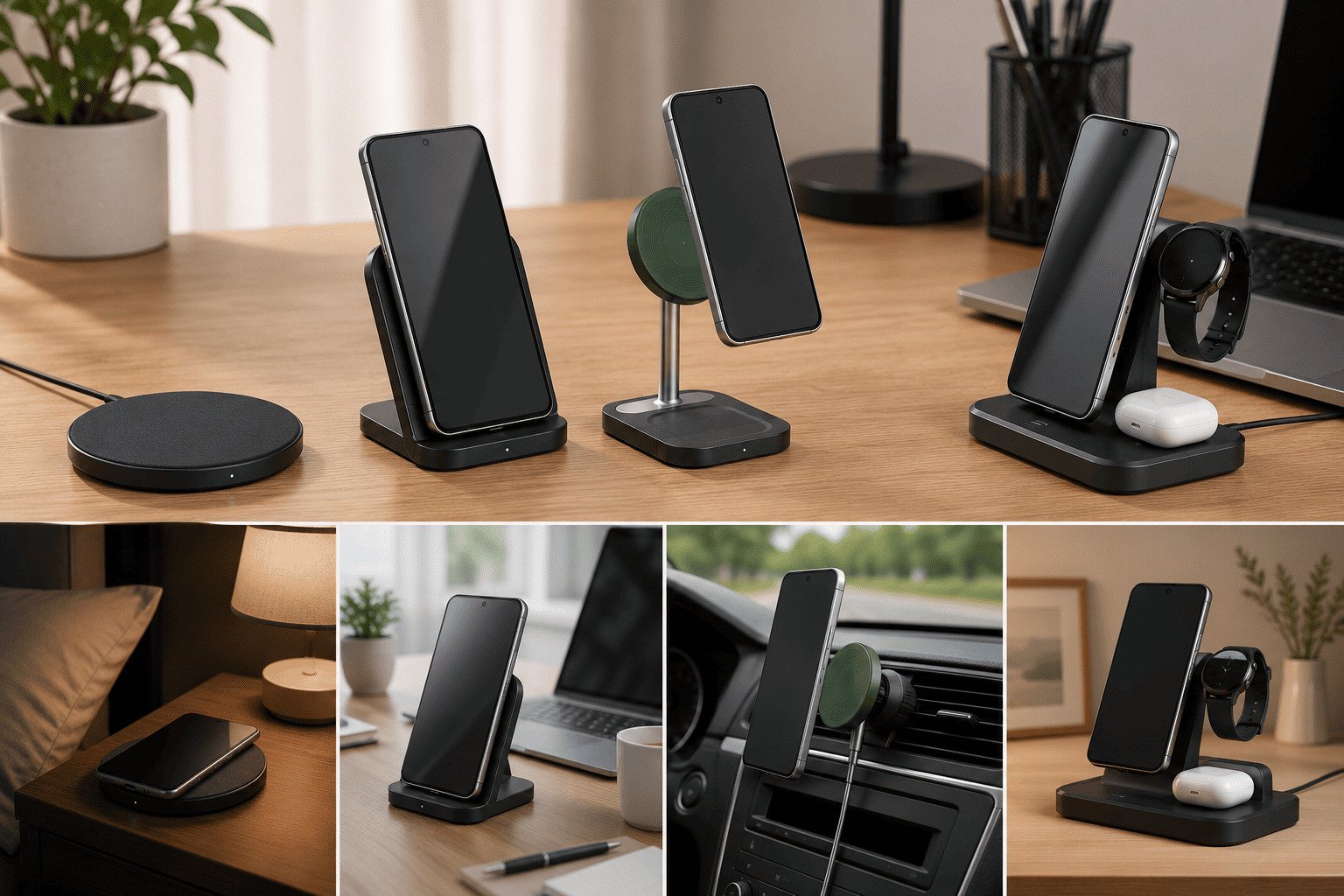
We often help buyers choose between desktop pads, upright stands, magnetic chargers, car mounts, and multi-device stations. The best choice depends on the user habit. A bedside user may care more about silence, low light, and safe overnight charging. An office user may want to see notifications and take video calls while charging. A driver needs a stable car mount that holds the phone during turns and keeps the screen visible for navigation. A family or business traveler may prefer a 3-in-1 station for phone, earbuds, and watch, but Android watch support must be checked carefully because watch charging is often brand-specific.10
| Charger type | Best use case | What we check |
|---|---|---|
| Charging pad | Bedside and simple desk use | Anti-slip surface, low heat, easy placement |
| Upright stand | Office, video calls, messages | Coil height, portrait and landscape support |
| Magnetic charger | Fast placement and clean alignment | Qi2 support, magnet force, Android compatibility |
| Car wireless mount | Navigation and ride use | Clamp strength, vibration, cooling, input power |
| Multi-device station | Desk, hotel, family use | Total power budget and device protocol match |
Foldable Android phones need extra care. Their coil position may not match common stand geometry. Some foldables are heavy, and their camera bump can lift the phone away from the coil. We test foldables in folded and unfolded habits if the buyer targets that segment. Thick protective cases also change the decision. A flat pad may tolerate some shape differences better than a tight magnetic holder, but a good stand may give better visibility. We do not choose by appearance alone. We choose by the phone list, the case style, and the daily task.
For buyers, mechanical stability matters as much as electronics. A charger that slides on a table creates poor alignment. A car mount that shakes will cause power drops. A multi-device station with a weak base will feel cheap and create returns. We also check certification plans early. Products for global markets may need UL, CE, FCC, RoHS, PSE, KC, Qi, or other reports based on region and model.11 Standards and test reports do not make every charger perfect, but they reduce risk and support customs, retail, and channel review.
Conclusion
We choose the best Android wireless charger by matching the phone, protocol, case, adapter, cable, heat design, and real daily use.
"Qi (standard) - Wikipedia", https://en.wikipedia.org/wiki/Qi_(standard). Wireless Power Consortium documentation describes Qi charging as profile- and device-dependent, supporting the point that a charger’s advertised maximum wattage does not by itself establish the power a particular phone will accept. Evidence role: general_support; source type: institution. Supports: Qi wireless charging power delivery depends on supported power profiles and device-side implementation, so a charger’s rated maximum output is not necessarily delivered to every phone.. Scope note: This supports the compatibility principle generally; it may not verify the behavior of every Android model mentioned by implication. ↩
"Inductive charging - Wikipedia", https://en.wikipedia.org/wiki/Inductive_charging. Studies of inductive wireless power transfer report that coupling geometry, separation distance, input-power conditions, and thermal effects can change charging efficiency and delivered power, providing technical context for treating the phone, charger, adapter, cable, case, alignment, and temperature as one system. Evidence role: mechanism; source type: paper. Supports: Inductive charging efficiency and delivered power are influenced by coupling, alignment, distance, input supply conditions, and heat.. Scope note: The evidence is mechanistic and contextual; it does not test this article’s specific charger models. ↩
"Qi (standard) - Wikipedia", https://en.wikipedia.org/wiki/Qi_(standard). Wireless Power Consortium materials define Qi and Qi2 as wireless power standards, and manufacturer specifications commonly distinguish standard Qi charging from brand-specific fast wireless charging modes, supporting the need to verify the phone’s supported protocol before selecting a charger. Evidence role: definition; source type: institution. Supports: Qi and Qi2 are defined wireless power standards, while device makers may implement additional charging modes or constraints.. Scope note: This establishes the protocol distinction; model-by-model confirmation still requires the relevant phone maker’s specification. ↩
"Qi (standard) - Wikipedia", https://en.wikipedia.org/wiki/Qi_(standard). Device specifications from Android phone manufacturers and Qi compatibility listings show substantial variation in supported wireless charging standards and maximum wireless charging power, supporting the characterization of Android wireless charging as device-specific. Evidence role: general_support; source type: institution. Supports: Published phone specifications show that Android devices differ in wireless charging support and maximum supported wireless charging power.. Scope note: The support is comparative rather than exhaustive; it would not prove the claim for every Android device sold in 2026. ↩
"What's the main difference between QC/PD/PPS/PIQ chargers?", https://service.anker.com/article-description/What-s-the-main-difference-between-QC-PD-PPS-PIQ-chargers. USB-IF documentation describes Programmable Power Supply as part of USB Power Delivery, allowing negotiated voltage and current adjustments; this supports the general claim that some higher-power charger configurations may depend on a PPS-capable adapter. Evidence role: mechanism; source type: institution. Supports: USB Power Delivery PPS provides programmable voltage/current supply behavior that can be required by devices or chargers designed for higher sustained power.. Scope note: The source explains PPS capability generally and does not identify which specific Android phones require PPS for wireless charging. ↩
"Energy Efficiency Analysis through Misalignment on New Design of ...", https://www.academia.edu/92386713/Energy_Efficiency_Analysis_through_Misalignment_on_New_Design_of_Hexagonal_Coil_Array_in_Wireless_Power_Transfer. Research on inductive wireless power transfer shows that transmitter-receiver coil misalignment reduces magnetic coupling and transfer efficiency, supporting the article’s statement that coil position materially affects wireless charging. Evidence role: mechanism; source type: paper. Supports: Misalignment between transmitter and receiver coils reduces magnetic coupling and can reduce power transfer efficiency.. Scope note: The evidence is based on general inductive charging physics and may not quantify the exact loss for a particular phone and charger. ↩
"[PDF] Design and Performance Analysis of Misalignment Tolerant ...", https://repository.aus.edu/bitstreams/5c9d09a5-0276-4d65-8dfc-fc66909568fb/download. Experimental and modeling studies of inductive charging report that coil misalignment can lower transfer efficiency and increase resistive or stray-field losses, which provides a mechanism for reduced charging power and additional heat. Evidence role: mechanism; source type: paper. Supports: Misalignment can decrease transfer efficiency and increase losses that appear as heat in wireless charging systems.. Scope note: This supports the mechanism but does not prove that every small movement in consumer use will cause a noticeable temperature increase. ↩
"[PDF] Thermal Design and Optimization of High-Power Wireless Charging ...", https://www.osti.gov/servlets/purl/1871896. Battery charging and wireless power management literature describes thermal regulation mechanisms that reduce charging current or power under elevated temperature conditions, supporting the statement that chargers may begin at higher power and then lower output as heat builds. Evidence role: mechanism; source type: research. Supports: Charging systems use thermal management to limit power or current when temperature rises.. Scope note: The source would support the general control behavior; the exact threshold and reduction pattern vary by device and charger firmware. ↩
"Heat Generation and Degradation Mechanism of Lithium-Ion ... - PMC", https://pmc.ncbi.nlm.nih.gov/articles/PMC9753165/. Peer-reviewed reviews of lithium-ion battery aging and safety identify charging temperature as a significant factor in degradation and risk, while wireless power studies show temperature-related efficiency losses, supporting the article’s emphasis on thermal control. Evidence role: expert_consensus; source type: paper. Supports: Temperature is a major factor in lithium-ion battery performance, aging, and safety, and heat also affects wireless charging efficiency.. Scope note: The citation would provide general battery and wireless-power context rather than direct life-cycle data for the charger discussed in the article. ↩
"List of Wear OS devices - Wikipedia", https://en.wikipedia.org/wiki/List_of_Wear_OS_devices. Manufacturer support documentation for Android-compatible smartwatches commonly specifies approved charging accessories or device-specific wireless chargers, supporting the caution that watch charging compatibility should be checked by brand and model. Evidence role: general_support; source type: institution. Supports: Smartwatch manufacturers publish device-specific charging requirements, and compatibility can be limited even when charging is wireless.. Scope note: The evidence is likely distributed across manufacturer documents and may not establish a single universal rule for all Android watches. ↩
"680106 Wireless Power Transfer (WPT)", https://apps.fcc.gov/oetcf/kdb/forms/FTSSearchResultPage.cfm?switch=P&id=41701. Government market-access guidance, such as FCC equipment authorization rules and European Commission CE/RoHS requirements, shows that electronic charging products may be subject to different compliance obligations by region and product configuration. Evidence role: general_support; source type: government. Supports: Market access for electronic chargers can involve jurisdiction-specific requirements such as FCC authorization in the United States, CE/RoHS requirements in the European Union, and other regional conformity schemes.. Scope note: This supports the regional-compliance principle; the exact report set for a particular charger must be determined from its design, radio features, and target markets. ↩