
A wrong wireless charger looks simple at first. Then charging becomes slow, hot, and unstable. We can avoid that with a clearer buying method.
We should choose an iPhone 16 or iPhone 16 Plus wireless charger by use case first, then check MagSafe or Qi2 alignment, adapter power, case fit, heat control, and certification.The best choice is not always the highest wattage(https://en.wikipedia.org/wiki/Inductive_charging)1. It is the charger that works safely and steadily in our daily routine.
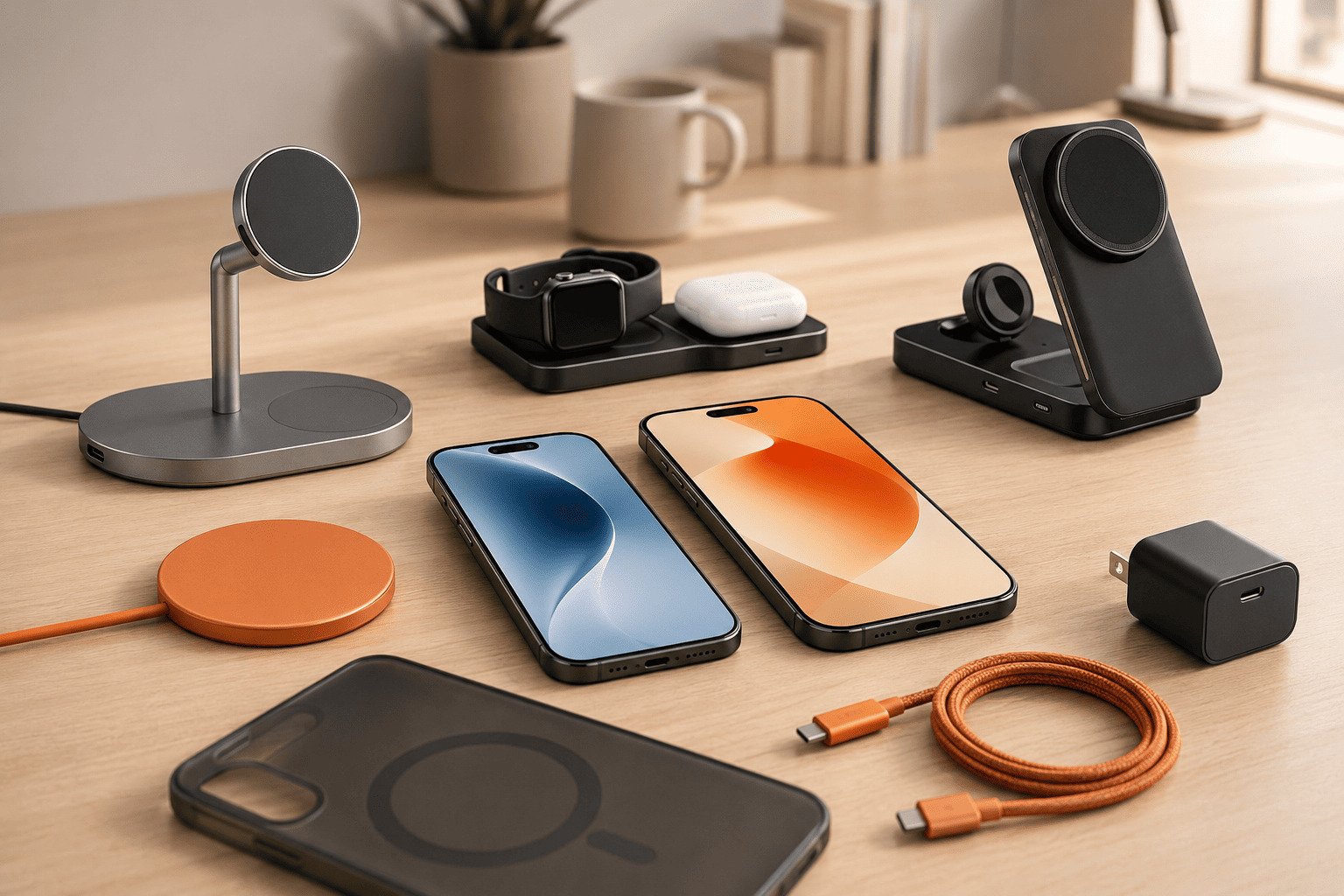
Many buyers ask us which wattage is best. We usually start with another question. Where will we use the charger most often? A bedside charger, a desk stand, a car mount, and a travel charger solve different problems. When we match the product to the scene, we get better value, less heat, and fewer complaints after purchase.
Should we choose by daily use case instead of wattage?
Many people buy by wattage first. This feels easy, but it can lead us to the wrong product. A fast charger is not useful if it does not fit the way we charge.
We should choose by daily use case because each scene needs a different balance of speed, stability, size, viewing angle, and heat control2. Bedside users need quiet and safe charging. Desk users need visibility. Travelers need small size. Car users need strong magnetic hold and good cooling.
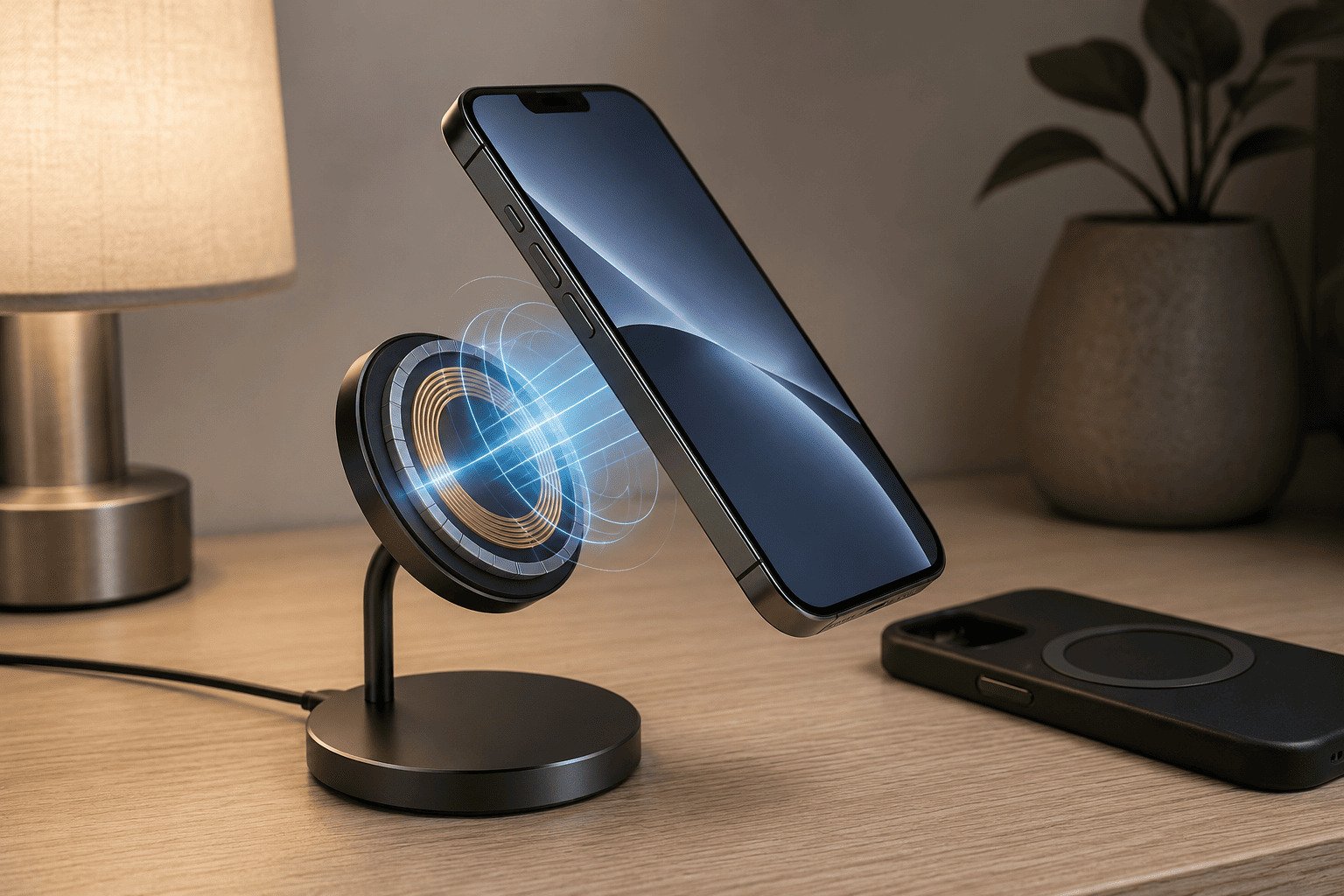
Bedside charging needs comfort and low heat
At night, we do not need the fastest charging every minute. We need safe, stable, and quiet charging for many hours. A simple magnetic stand or pad can work well. A charger with a bright LED may look attractive in a shop, but it can disturb sleep. We often test this point in real rooms, not only in a lab.
Desk charging needs viewing angle
At a desk, we often check messages, join calls, or unlock the phone with Face ID. A stand is usually better than a flat pad. Magnetic alignment helps the phone stay in the right place3. It also reduces the chance that the phone is placed slightly off-center.
| Use case | Better charger type | Main reason |
|---|---|---|
| Bedside | Magnetic pad or low-angle stand | Stable overnight charging |
| Office desk | Magnetic stand | Easy viewing and pickup |
| Travel | Foldable Qi2 charger | Small size and simple packing |
| Car | Magnetic car mount | Strong hold and easy navigation |
| Family charging | 2-in-1 or 3-in-1 station | One place for several devices |
We should also think about cable length and adapter position. A good charger can feel bad if the cable is too short. For bulk buyers, we suggest testing the full setup, not only the charging head. The user experience comes from the charger, USB-C adapter, cable, case, and phone together.
Do MagSafe and Qi2 really matter for iPhone 16 charging?
A cheap pad may charge the phone, but it can be hard to place correctly. Bad alignment wastes time and can create more heat4.
MagSafe and Qi2 matter because magnetic alignment keeps the iPhone 16 in the correct charging position. This improves ease of use and charging stability. It does not mean every magnetic charger performs the same. Design, certification, adapter power, and heat control still matter.
Magnetic alignment is not only about convenience
When the coil in the charger and the coil in the phone are aligned well, charging is usually more stable.5 When alignment is poor, the charger may still work, but it may wastes more energy as heat. We see this often when users place the phone quickly on a flat non-magnetic pad.
Qi2 gives a clearer standard
Qi2 is based on a magnetic power profile from the Wireless Power Consortium.6 It helps brands and users know that the charger follows a known wireless charging standard. MagSafe products and Qi2 products can both be strong choices, but we should check the product details with care.
| Term | What we should understand | Buying note |
|---|---|---|
| MagSafe compatible | May use magnets for iPhone alignment | Check actual certification and power support |
| Official MagSafe | Uses Apple-approved MagSafe technology | Usually higher cost and stronger ecosystem fit |
| Qi2 | WPC magnetic wireless charging standard | Good choice for modern iPhone magnetic charging |
| Qi only | Basic wireless charging standard | May be slower or less convenient |
We should not read “magnetic” as “certified.” Many low-cost chargers use magnets but do not follow Qi2 or strong safety design.7 We should ask for certification records, test reports, and real charging data. For importers and distributors, this step reduces returns and protects the brand. A charger that works well for one day is not enough. We need it to work safely after months of daily use.
What adapter, cable, and case should we check before buying?
Many users blame the wireless charger when charging is slow. In many cases, the real problem is the adapter, cable, or phone case.
We should check that the USB-C PD adapter has enough power, the cable supports stable current, and the phone case is not too thick, metal, or badly aligned. Wireless charging is a full system. One weak part can lower the result.
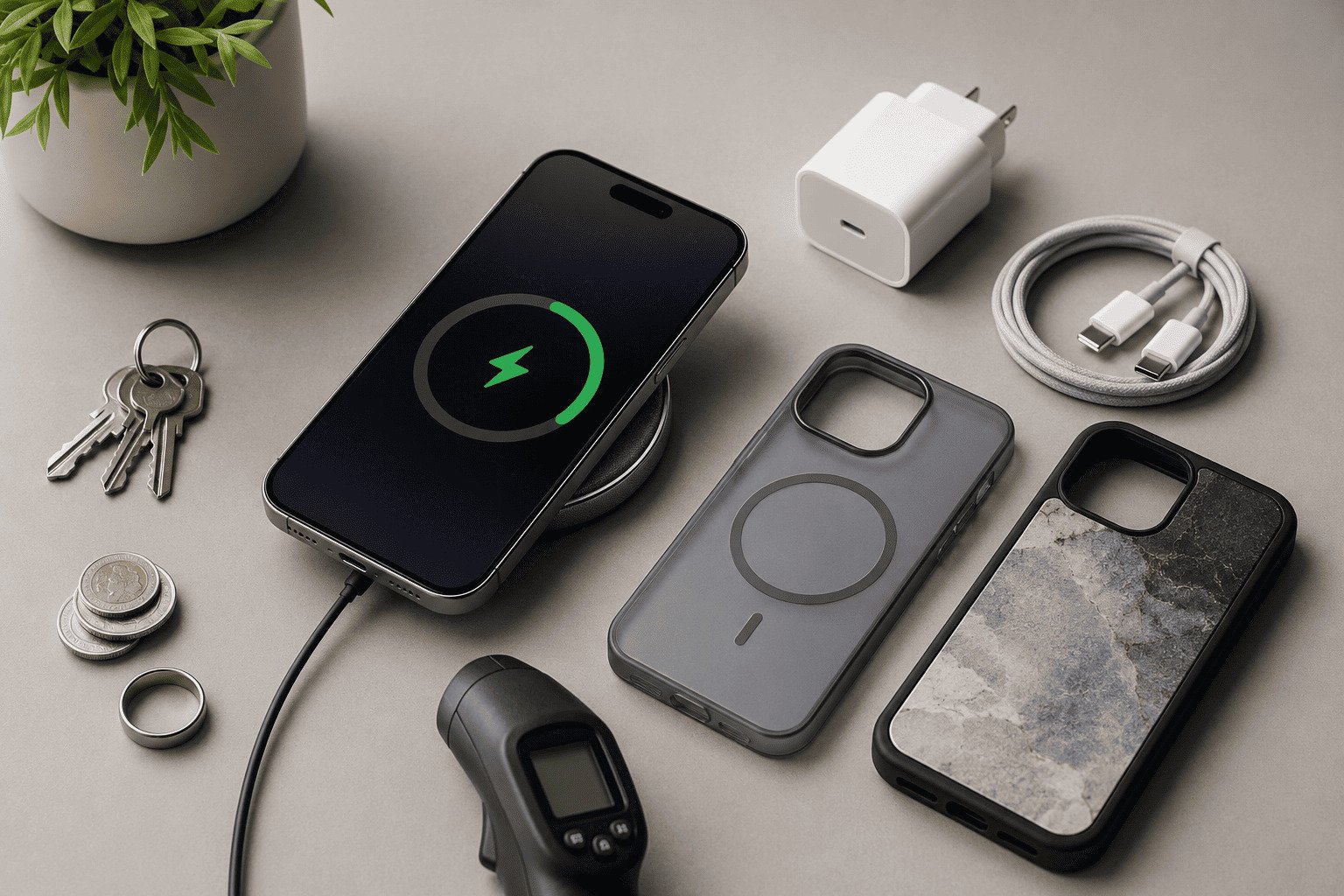
The adapter must match the charger
A wireless charger cannot create power from nothing. If we use a weak 5W or 10W adapter, the charger will not reach its designed output.8 For many magnetic wireless chargers, we should use a quality USB-C PD adapter. For higher performance MagSafe setups, the adapter requirement may be higher. We should follow the charger maker’s instructions instead of guessing.
The case can block the experience
A thin magnetic case usually works better than a thick decorative case. A metal plate can stop wireless charging or create heat.9 Some wallet cases, ring holders, and rugged cases reduce magnetic hold. We should test with the real case that users will use.
| Part to check | Common mistake | Better choice |
|---|---|---|
| Adapter | Old low-power USB adapter | USB-C PD adapter with enough wattage |
| Cable | Thin or damaged cable | Certified USB-C cable from a reliable source |
| Case | Thick, metal, or misaligned case | MagSafe-compatible thin case |
| Placement | Phone placed off-center | Magnetic alignment or clear positioning |
| Surface | Hot desk or closed space | Open area with airflow |
We also need to think about heat. Wireless charging always creates some heat because energy moves through coils.10 A well-designed charger controls this with coil design, materials, firmware, and temperature protection.11 We should avoid products that become very hot during normal use. Heat can slow charging and may reduce long-term user trust. In our product checks, we care about steady performance more than one short peak number.
How should we compare price, certification, and long-term reliability?
A very cheap charger can look like a good deal. Then returns, complaints, and safety concerns can cost more than the saving.
We should compare price with certification, materials, thermal design, warranty support, and supplier ability. A reliable charger may cost more at purchase, but it can reduce after-sales work and protect the sales channel.
Certification is a buying filter
For iPhone 16 and iPhone 16 Plus users, we should look for Qi or Qi2 certification when wireless charging performance matters. For different markets, we may also need CE, FCC, RoHS, UL, PSE, KC, or other approvals. These marks should match the real product model. We should ask for reports when we buy in bulk.
Reliability comes from design and production control
A wireless charger has a simple outside, but the inside is not simple. Coil quality, PCBA layout, magnets, temperature sensors, firmware, glue, housing material, and final aging tests all affect the result. We have seen attractive products fail because the heat design was weak. We have also seen simple-looking models perform well because the design was correct.
| Buying factor | Why it matters | What we should ask |
|---|---|---|
| Qi2 or Qi status | Confirms standard-based design | WPC listing or valid proof |
| Safety approvals | Supports legal market entry | CE, FCC, RoHS, UL, PSE, KC as needed |
| Heat control | Affects speed and comfort | Temperature test data |
| Factory process | Affects batch quality | QC flow and aging test method |
| After-sales support | Affects channel cost | Warranty terms and spare parts policy |
For retailers, importers, and brand owners, we should not only buy a sample that looks good. We should test several units, use real iPhone 16 and iPhone 16 Plus devices, try common cases, and run longer charging sessions. We should also check packaging claims. If the package promises unrealistic speed, customers may feel cheated. Honest claims build trust and reduce disputes.
What is the best simple checklist before we place an order?
Buying pressure can make us skip basic checks. That is when small problems become large after shipment.
We should use a short checklist before buying: define the main use case, choose MagSafe or Qi2 if alignment matters, match the USB-C PD adapter, test the case, confirm certifications, and check heat during real charging.
A practical checklist for users and buyers
We can use this checklist before we buy one unit or prepare a bulk order.
| Step | Question we should ask | Good sign |
|---|---|---|
| 1 | Where will we use it most? | The charger type matches the scene |
| 2 | Do we need magnetic alignment? | MagSafe or Qi2 design is clear |
| 3 | Is the adapter strong enough? | USB-C PD requirement is stated |
| 4 | Will our case work? | Thin magnetic case charges well |
| 5 | Is it certified? | Reports or listings are available |
| 6 | Does it control heat? | Charging stays stable in a real test |
| 7 | Is the supplier reliable? | Clear warranty, QC, and delivery support |
We should also compare convenience against portability. A 3-in-1 station is great at home, but it is not always ideal for travel. A foldable magnetic charger is easy to carry, but it may not feel as solid on a desk. A car charger needs a stronger magnet and a stable mount more than a beautiful box. When we choose with the real scene in mind, we avoid the common mistake of chasing the largest wattage on the label.
For iPhone 16 and iPhone 16 Plus, we should treat wireless charging as a system. The phone, charger, adapter, cable, case, and environment all work together. If one part is poor, the final result becomes poor. This is why a certified and well-designed 15W Qi2 charger can feel better than a cheap charger with a bigger claim.
Conclusion
We should choose an iPhone 16 wireless charger by real use, safe standards, proper accessories, and heat control, not by wattage claims alone.
"Inductive charging - Wikipedia", https://en.wikipedia.org/wiki/Inductive_charging. Apple’s iPhone charging guidance describes charging as subject to device power management and thermal conditions, supporting the view that advertised wattage alone is not a sufficient measure of practical charging performance. Evidence role: general_support; source type: institution. Supports: A source should support that iPhone charging speed is managed by device conditions such as temperature and power delivery, so higher advertised wattage does not always translate into better practical charging.. Scope note: This is contextual support for the buying principle; it does not compare every iPhone 16 wireless charger model. ↩
"ISO 9241-11:2018(en), Ergonomics of human-system interaction", https://www.iso.org/obp/ui/#iso:std:iso:9241:-11:ed-2:v1:en. Human-factors and usability research treats context of use, user tasks, and environment as determinants of product requirements, which supports evaluating wireless chargers by bedside, desk, travel, or car use rather than by a single specification. Evidence role: general_support; source type: research. Supports: A source should support that usability requirements depend on the user's context, tasks, and environment, making a use-case-first selection method reasonable.. Scope note: This evidence supports the framework generally and does not directly test wireless chargers for iPhone 16. ↩
"Qi (standard) - Wikipedia", https://en.wikipedia.org/wiki/Qi_(standard). The Wireless Power Consortium describes Qi2 as incorporating a Magnetic Power Profile that aligns the device with the charger, supporting the claim that magnetic alignment helps maintain correct placement. Evidence role: definition; source type: institution. Supports: A source should explain that Qi2 includes a magnetic alignment feature or Magnetic Power Profile intended to align devices with wireless chargers.. ↩
"Energy Efficiency Analysis through Misalignment on New Design of ...", https://www.academia.edu/92386713/Energy_Efficiency_Analysis_through_Misalignment_on_New_Design_of_Hexagonal_Coil_Array_in_Wireless_Power_Transfer. Engineering studies of inductive wireless power transfer report that transmitter-receiver coil misalignment lowers coupling efficiency and increases electrical losses, providing a physical basis for greater heat during poorly aligned wireless charging. Evidence role: mechanism; source type: paper. Supports: A source should show that lateral or angular coil misalignment in inductive wireless power transfer reduces coupling or efficiency and can increase losses that appear as heat.. ↩
"[PDF] Design and Performance Analysis of Misalignment Tolerant ...", https://repository.aus.edu/bitstreams/5c9d09a5-0276-4d65-8dfc-fc66909568fb/download. Research on inductive wireless power transfer shows that coil alignment improves magnetic coupling and power-transfer efficiency, which provides a technical basis for more stable charging when phone and charger coils are properly aligned. Evidence role: mechanism; source type: paper. Supports: A source should support that aligned coils maintain stronger coupling and more consistent power transfer in inductive charging systems.. ↩
"Qi (standard) - Wikipedia", https://en.wikipedia.org/wiki/Qi_(standard). The Wireless Power Consortium identifies Qi2 as a wireless charging standard built around the Magnetic Power Profile, confirming that Qi2 is tied to a defined magnetic alignment standard. Evidence role: definition; source type: institution. Supports: A source should confirm that Qi2 is a Wireless Power Consortium standard and that it includes or is based on the Magnetic Power Profile.. ↩
"Qi (standard) - Wikipedia", https://en.wikipedia.org/wiki/Qi_(standard). Wireless Power Consortium certification materials distinguish certified Qi/Qi2 products from uncertified devices, supporting the point that the presence of magnets does not by itself establish compliance with the Qi2 standard. Evidence role: general_support; source type: institution. Supports: A source should support that Qi or Qi2 certification requires compliance testing or listing, and that magnetic hardware alone is not equivalent to certification.. Scope note: This supports the certification distinction; it does not establish that all low-cost magnetic chargers are unsafe. ↩
"MagSafe Charger (1 m) - Apple", https://www.apple.com/shop/product/mgd74ll/a/magsafe-charger-1-m. Apple’s MagSafe charging guidance specifies adapter power requirements for achieving expected wireless charging performance, illustrating that a low-power adapter can prevent a wireless charger from reaching its rated output. Evidence role: mechanism; source type: institution. Supports: A source should show that wireless charging accessories specify minimum adapter wattage or USB-C Power Delivery requirements to achieve rated output.. Scope note: This directly supports the adapter-dependency mechanism, though exact wattage requirements vary by charger model. ↩
"[PDF] A review of foreign object detection (FOD) for inductive ... - Chris Mi", https://chrismi.sdsu.edu/publications/170.pdf. Apple’s wireless charging guidance warns that metal objects between an iPhone and a charger can interfere with charging and may become warm, supporting the recommendation to avoid metal plates in cases used for wireless charging. Evidence role: mechanism; source type: institution. Supports: A source should support that metal objects between a phone and wireless charger can interfere with charging and may become warm or create a safety issue.. ↩
"Wireless power transfer - Wikipedia", https://en.wikipedia.org/wiki/Wireless_power_transfer. Educational explanations of inductive wireless power transfer describe energy transfer through electromagnetic coils and note that imperfect efficiency produces resistive and electromagnetic losses, which appear as heat during charging. Evidence role: mechanism; source type: education. Supports: A source should explain that inductive wireless power transfer uses coils and that resistive and electromagnetic losses produce heat.. ↩
"[PDF] Thermal Design and Optimization of High-Power Wireless Charging ...", https://www.osti.gov/servlets/purl/1871896. Engineering literature on wireless power-transfer systems identifies coil design, material losses, control electronics, and temperature monitoring as factors in thermal management, supporting the claim that charger design can regulate heat generation and charging behavior. Evidence role: mechanism; source type: paper. Supports: A source should support that coil geometry, materials, control circuits, and temperature monitoring affect thermal management in wireless charging systems.. ↩