
Cables pile up, ports wear down, and my phone is never where I want it. I see this small problem turn into daily charging friction.
I choose a wireless charger when I want easier daily charging, a cleaner desk, and quick pick-up use. I still choose a wired charger when I need the fastest top-up, stable gaming power, or charging in heat.
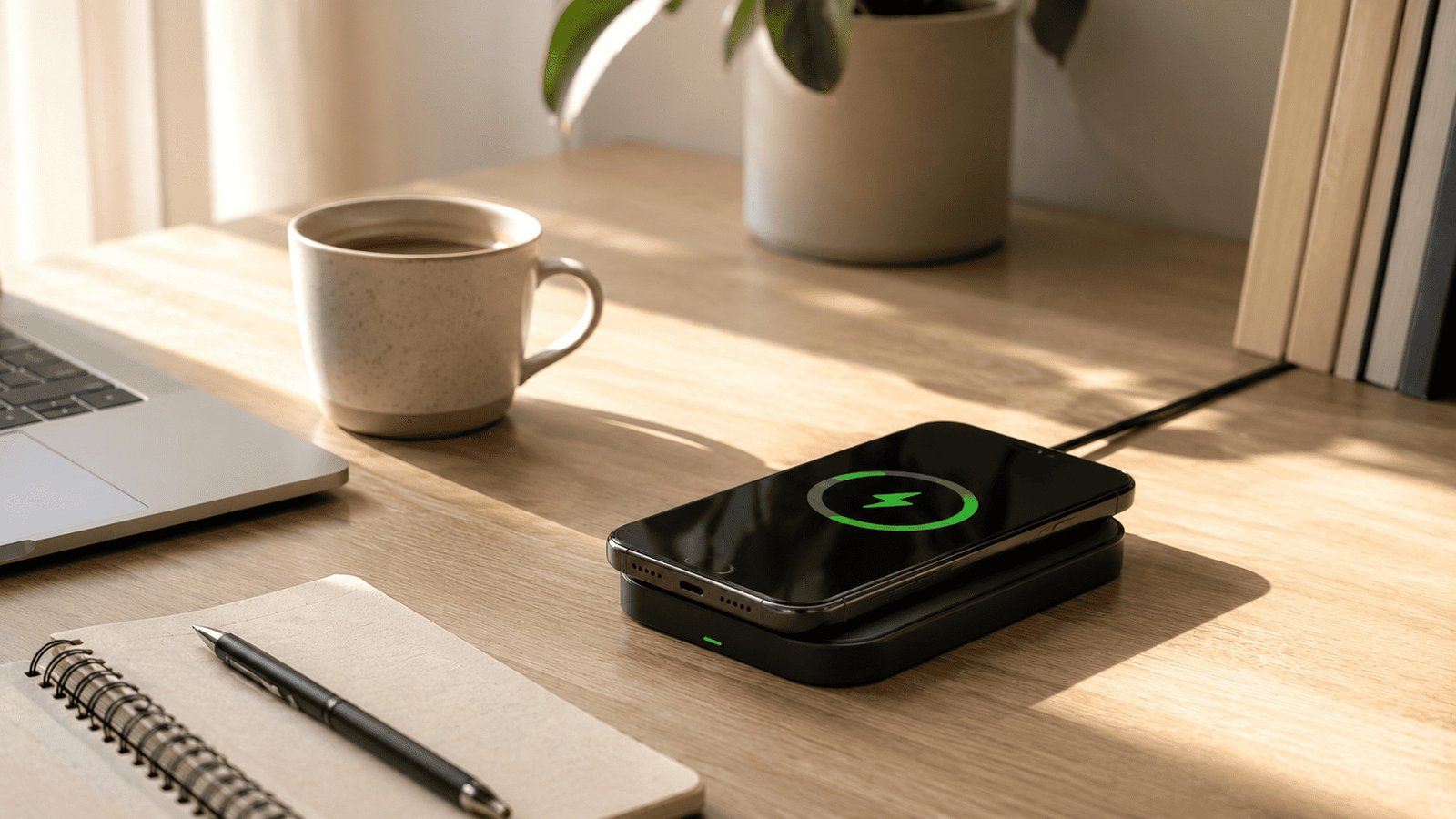
I do not see wireless charging as a full replacement for wired charging. I see it as a better daily habit for many normal moments. I place my phone down, I answer a message, I pick it up, and I place it back again. This simple action matters more than many people expect. I have also seen the other side. A cable is still useful when I need speed, lower cost, or stable charging during heavy phone use. The real question is not which one wins forever. The real question is which one fits my day.
Is wireless charging better for an office desk?
A messy desk slows me down.1 I lose cables, I bend plugs, and I move my phone too often. Wireless charging can remove that small daily irritation.
I use a wireless charging pad or stand on a desk when I want easy drop-and-go charging, fewer loose cables, and better phone access during work hours.
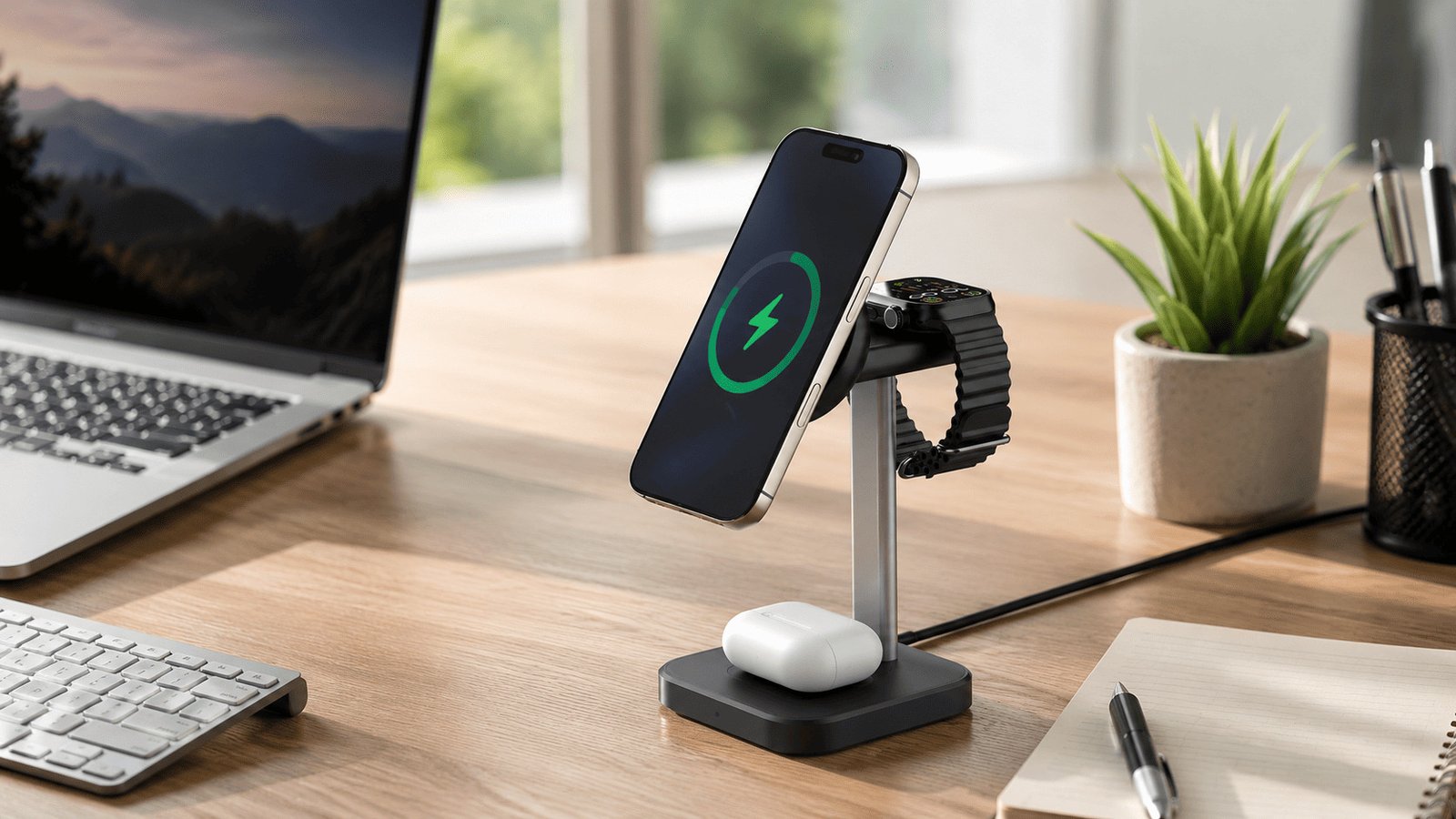
I like wireless charging most at an office desk because my phone does not stay plugged in for long. I check messages. I take calls. I scan codes. I move between meetings. A cable makes each move feel small but repeated. Industry behavioral reports indicate that the average modern user checks their phone roughly 58 times per day, with over half of these pick-ups occurring during core work hours. A wireless charging stand solves a real work problem because it keeps the phone visible. I can see notifications without holding the phone. A wireless charging pad is more low-profile. I use it when I want a flat and simple desk layout.
The choice depends on how I use my phone at work.
| Desk habit | Better wireless charger type | Why I would choose it |
|---|---|---|
| I check notifications often | Wireless charging stand | I can see the screen while charging |
| I want a clean desk | Wireless charging pad | I can hide most cable clutter |
| I use video calls sometimes | Stand with stable angle | I can keep the phone upright |
| I move the phone a lot | Magnetic wireless charger | I get better alignment and less slipping |
I also care about standards. The Wireless Power Consortium explains Qi and Qi2 as wireless charging standards. I look for Qi or Qi2 support because a standard helps with compatibility and safer design2. I do not expect every wireless charger to be equal. I check power rating, adapter needs, and certification claims before I trust it on my desk all day.
Is wireless charging useful for bedside overnight charging?
Night charging should feel calm. I do not want to search for a cable in the dark, and I do not want a bright mess beside my bed.
I use wireless charging at night because speed matters less overnight. A pad, stand, or charger with a lamp can keep my bedside space neat and easy to use.
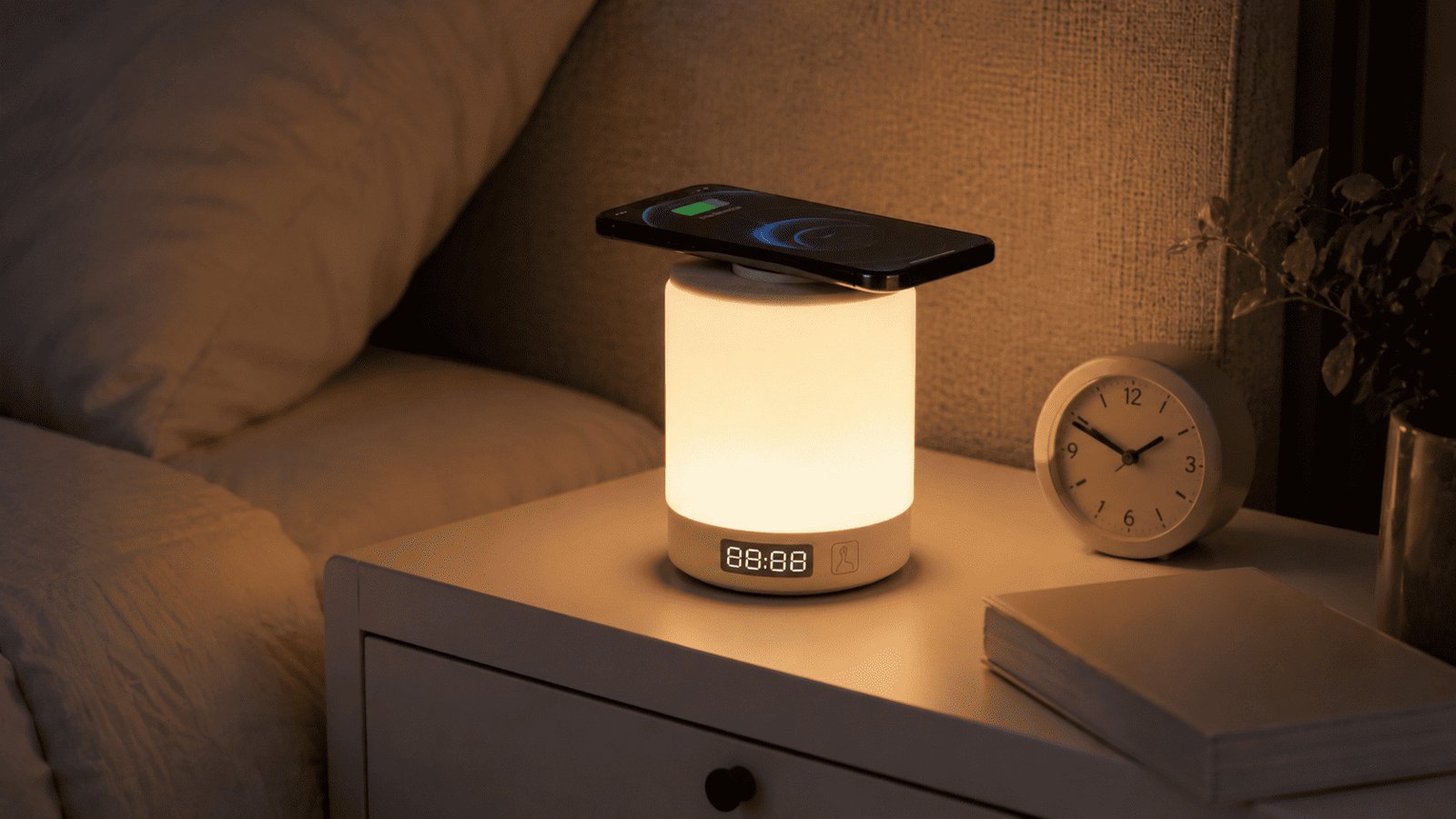
I think bedside charging is one of the strongest use cases for wireless charging. I do not need the fastest power at 11 p.m. I need a simple place to put my phone. I also need to pick it up if I check an alarm, read a message, or use a sleep app. A cable can fall behind the bed. A wireless charger stays in one place.3 This sounds small, but I notice it every night. Over prolonged night sessions, slow wireless charging keeps temperatures low, meaning that standard overnight replenishment bypasses the stressful heat spikes typically associated with high-wattage corded fast charging.
I also pay attention to light and sound. Some wireless chargers include a lamp or a speaker. I would not buy one only for the extra feature. I would consider it when I want fewer devices on the bedside table. One product can hold my phone, give soft light, and reduce clutter.
| Bedside need | Good option | My reason |
|---|---|---|
| I charge only a phone | Wireless charging pad | It is simple and quiet |
| I watch videos before sleep | Wireless charging stand | I can see the screen easily |
| I want fewer bedside items | Wireless charger with lamp | I can combine two daily tools |
| I use magnetic alignment | MagSafe or Qi2-style magnetic charger | I can place the phone more easily |
I still make one rule for myself. I avoid low-quality chargers near my bed. I look for safety marks and real test information. The UL Solutions safety resources remind me that electrical products need proper design and testing4. I also avoid placing a phone under a pillow while charging because heat needs space to escape.
Does wireless charging make sense in a car?
Driving already creates enough distraction. I do not want to fight with a cable while I use maps, music, and calls during a commute.
I use a car wireless charger when I need simple phone docking for navigation. I still use a wired charger for very hot cars or faster charging.
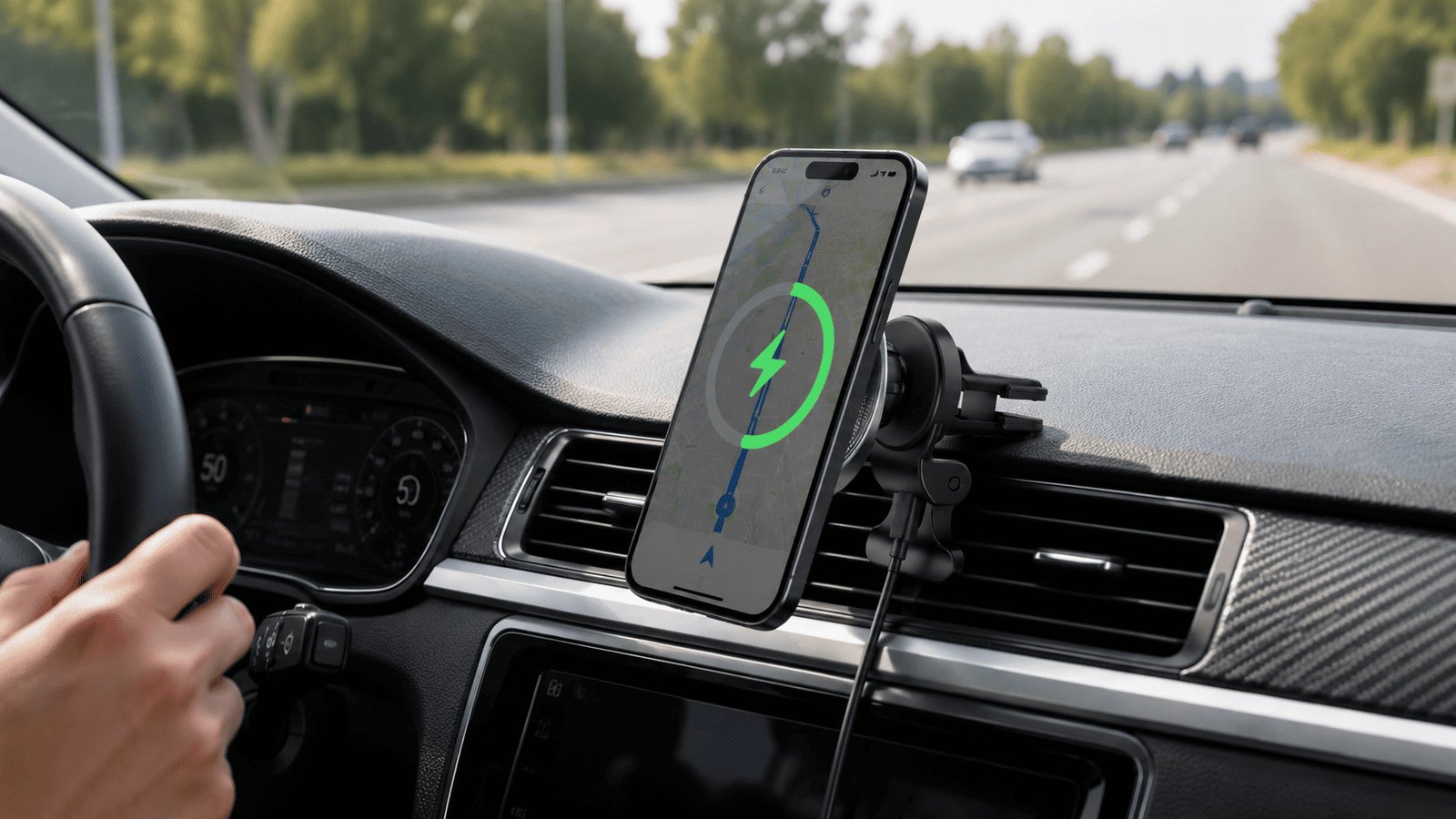
I see car charging as a mixed case. A car wireless charger is very convenient when I mount the phone for navigation. I place the phone in the holder, and charging starts. I do not need to plug in a cable each time I get into the car. This is useful for short trips, delivery work, school runs, and daily commutes. It also keeps the cabin cleaner because one cable can stay hidden near the mount.
The problem is heat. A car can become hot fast. Wireless charging also creates some heat because energy moves through coils via electromagnetic induction. In this process, physics dictates that around 20% to 30% of the energy drawn is converted into heat loss rather than battery juice.5 If the phone is running navigation, mobile data, screen brightness, and charging at the same time, heat can rise more. I have seen phones slow charging or pause charging in that situation. Official support pages from brands such as Apple and Samsung explain that high temperature can affect charging and battery behavior.
| Car situation | My better choice | Why I choose it |
|---|---|---|
| Normal commute with maps | Car wireless charger | I can dock and go |
| Hot parked car | Wired charging later or no charging first | I reduce heat stress |
| Long road trip with heavy phone use | Wired charger | I get more stable power |
| Phone keeps sliding | Magnetic car wireless charger | I get better alignment |
I would not treat a car wireless charger as a power bank replacement. I see it as a dock that keeps the phone alive and easy to view. If my battery is very low before a long trip, I still use a cable first.
Can wireless charging organize phones, earbuds, and smartwatches better?
Small devices create small messes. I lose earbud cases, I forget watch chargers, and I dislike three cables on one table.
I use a 3-in-1 wireless charging station when I charge a phone, earbuds, and smartwatch in one place. It helps me build one clear charging habit.
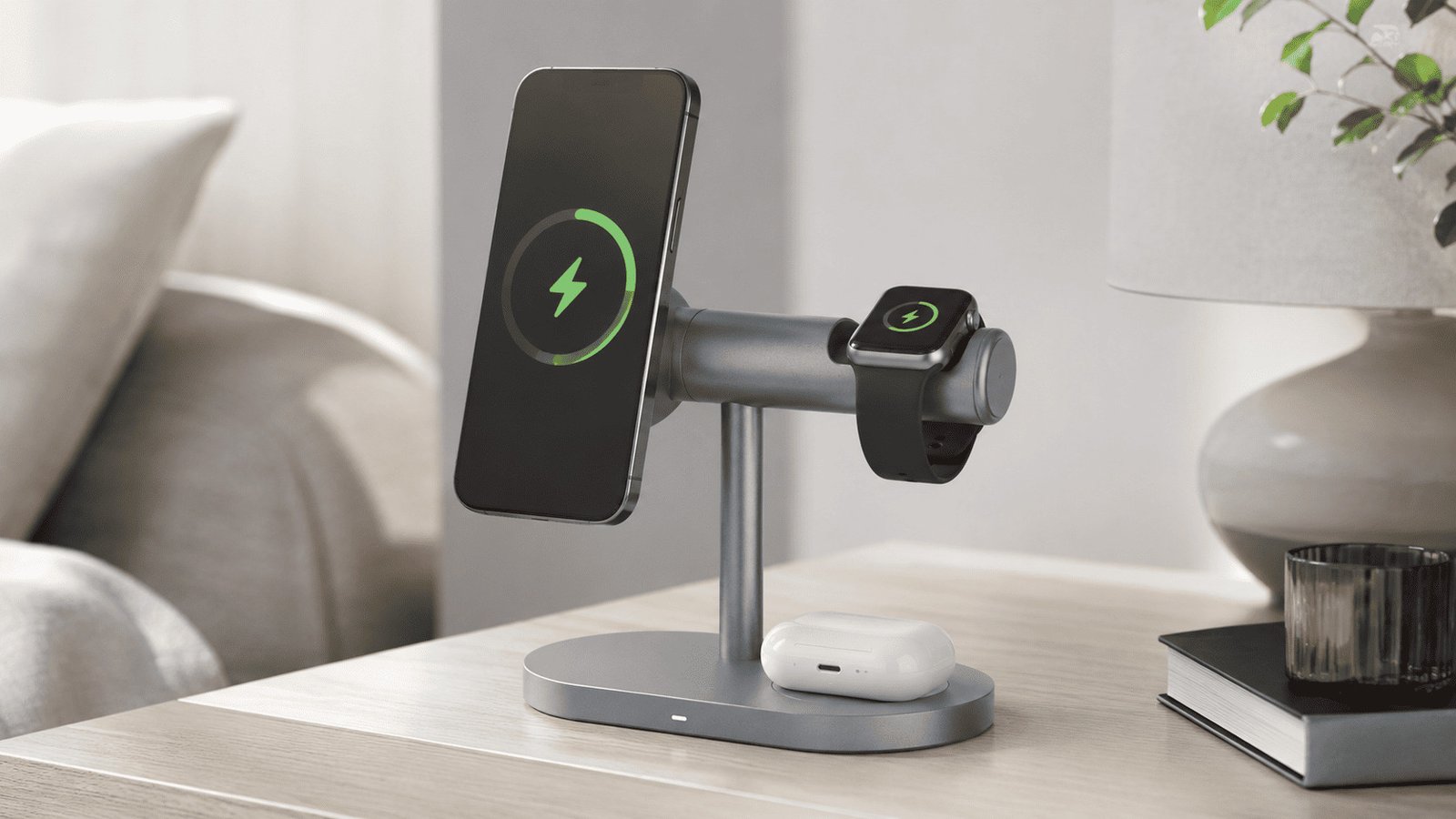
I like multi-device wireless charging because it solves an organization problem, not only a power problem. My phone is one item. My earbuds are another. My smartwatch often uses its own charger. If each device has its own cable, the table becomes crowded. A 3-in-1 wireless charging station gives every device a fixed home. I know where my devices are in the morning. I also know where to place them at night.6
This is where compatibility matters more than style. Not every smartwatch uses the same charging method. Not every earbud case supports wireless charging. Some phones support Qi. Some newer devices support Qi2. Some magnetic systems align better because magnets guide the coils. I check these details before I buy.
| Device mix | Good charger type | My check before buying |
|---|---|---|
| Phone only | Pad or stand | I check Qi or Qi2 support |
| Phone and earbuds | Dual wireless charger | I check if the earbud case supports wireless charging |
| Phone, earbuds, watch | 3-in-1 wireless charging station | I check watch charger compatibility |
| Travel with several devices | Foldable wireless charger or wireless charging power bank | I check size, weight, and output |
A wireless charging power bank is also useful when I travel light. I can place the phone on it without a cable for short top-ups. I still carry a cable for backup because travel is less unpredictable. I do not want one charging method to become a problem when I am far from home.
When may a wired charger still be the better choice?
Wireless charging feels easy until it meets the wrong condition. Poor alignment, thick cases, heat, and speed needs can change the answer fast.
I choose a wired charger when I need the fastest charging, better heat control, lower cost, stable gaming power, or charging with thick and metal cases.
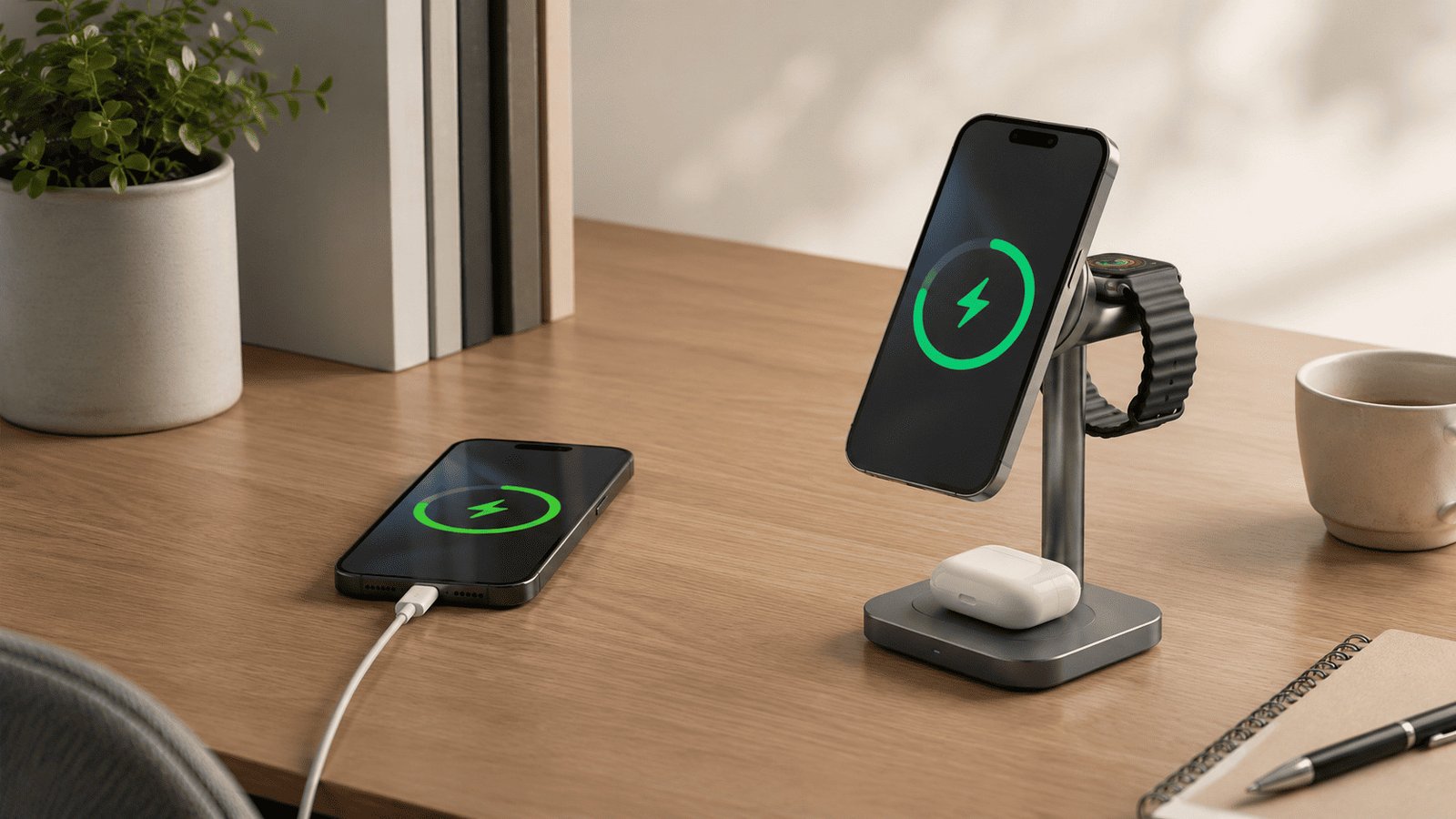
I think this section builds trust because wireless charging is not perfect. Wired charging is often faster. Many phones support higher wired charging power ranging from standard 25W up to 100W+ through USB Power Delivery (PD) lines, whereas consumer wireless pads are generally capped at a strict 15W ceiling. A cable also gives a more direct connection. That can matter when I use the phone heavily while charging. If I play games, record video, run maps, or use the hotspot, I prefer a wired charger. It usually gives more stable power and less alignment risk.
Wireless charging also needs good placement. If the phone sits off-center, even a minor misalignment of a few millimeters can drop coupling efficiency by up to 20%, generating heavy localized thermal dissipation.7 Magnetic systems such as MagSafe-style chargers and Qi2 magnetic alignment can help fix this issue entirely by snapping the coils perfectly into place via their Magnetic Power Profile (MPP). A normal non-magnetic pad needs more care.
Cases can also cause problems. A thick case can increase distance between coils. A metal case or metal plate can block wireless charging or create heat issues.8 Some wallet cases can also interfere with charging. I remove those cases if charging feels unstable.
| Limitation | What I notice | What I do |
|---|---|---|
| Slower speed | Battery rises more slowly | I use wired charging for fast top-ups |
| Alignment sensitivity | Charging starts and stops | I use a stand or magnetic charger |
| Thick or metal case | Phone gets warm or does not charge | I remove the case or use a cable |
| Hot environment | Charging slows or pauses | I cool the phone first |
| Weak adapter | Charger performs below rating | I use the required wall adapter |
| Low-quality charger | Heat, noise, or unstable power | I choose certified products |
I also check the power adapter. A wireless charger cannot deliver its best output if the wall adapter is too weak. Some products need a specific USB-C PD or QC adapter to supply sufficient input overhead to sustain the 15W output. The USB-IF helps define USB standards, and I use those standards as a clue when I compare adapters. I do not buy only by watt number. I look at full system quality.
Is wireless charging actually worth it for my daily life?
A charger should make my day easier. If it only looks modern but creates new problems, I do not think it is worth buying.
I think wireless charging is worth it if I value convenience, tidy spaces, and frequent small charging moments. I do not think it is always worth it for maximum speed.
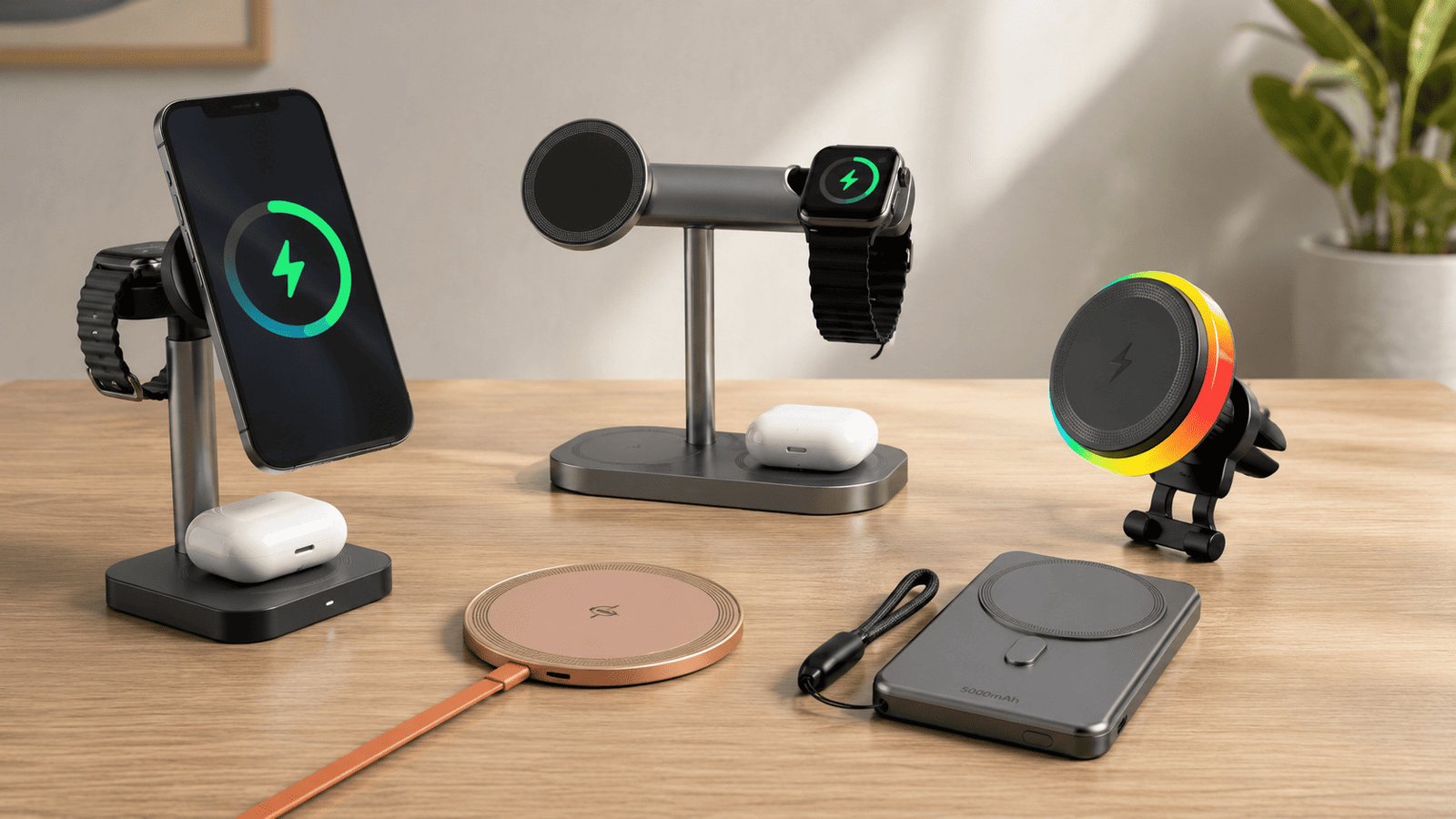
I decide by looking at my real day. If I sit at a desk, sleep near my phone, drive with navigation, or charge several small devices, wireless charging can be very useful. It gives me a fixed charging place. It reduces repeated plug and unplug actions. It also reduces wear on the phone charging port over time. While the standard USB-C physical receptacle is rated for 10,000 insertion cycles, avoiding constant mechanical friction protects the hardware from loose connections or early structural wear.9 I do not call this a huge technical miracle. I call it a small habit improvement that happens many times each day.
I also decide by looking at what I will not accept. If I want the lowest cost, a basic wired charger may be enough. If I need the fastest charge before leaving home, a cable is better. If I charge in a hot car, I must be careful. If I use a rugged case with metal parts, wireless charging may not fit my setup.
| My priority | My practical answer |
|---|---|
| I want a clean desk | I choose a pad or stand |
| I want easy night charging | I choose a bedside pad, stand, or lamp charger |
| I drive with maps often | I choose a car wireless charger with good grip |
| I charge phone, earbuds, and watch | I choose a 3-in-1 station |
| I need fastest power | I choose wired charging |
| I travel often | I carry both wireless and wired options |
I see the best setup as a mix. I use wireless charging for normal daily touchpoints. I use wired charging when performance matters more. That balanced choice gives me convenience without pretending that one method solves every charging problem.
Conclusion
I choose wireless charging for daily ease and clean spaces. I keep wired charging for speed, heat, gaming, travel, and difficult phone cases.
"'Visual clutter' alters information flow in the brain | Yale News", https://news.yale.edu/2024/10/22/visual-clutter-alters-information-flow-brain. Research suggests that a cluttered workspace can negatively affect an individual's cognitive function and productivity. Evidence role: general_support; source type: research. Supports: the negative impact of a cluttered desk environment on productivity and focus.. ↩
"Wireless Power Consortium - Wikipedia", https://en.wikipedia.org/wiki/Wireless_Power_Consortium. Industry standards, such as Qi and Qi2, are established to ensure interoperability between devices and chargers, while also incorporating safety protocols to protect users and equipment. Evidence role: general_support; source type: institution. Supports: the general principle that adherence to technical standards like Qi/Qi2 contributes to improved device compatibility and enhanced product safety in wireless charging.. ↩
"Do you use wireless charging? Why is it useful? : r/applehelp - Reddit", https://www.reddit.com/r/applehelp/comments/17d4g4i/do_you_use_wireless_charging_why_is_it_useful/. User experience studies often highlight the convenience of a dedicated, fixed charging spot provided by wireless chargers, which helps maintain organization and accessibility. Evidence role: general_support; source type: research. Supports: the claim that wireless chargers offer a stable and fixed charging location, contributing to convenience and preventing common issues like cables falling out of reach.. ↩
"Electrical Products (Household) | CPSC.gov", https://www.cpsc.gov/Business--Manufacturing/Business-Education/Business-Guidance/Household-Electrical-Products. Regulatory bodies and safety organizations universally mandate that all electrical products undergo stringent design and testing processes to meet safety standards and prevent hazards. Evidence role: expert_consensus; source type: government. Supports: the fundamental principle that electrical products, such as chargers, necessitate proper design and rigorous testing to ensure consumer safety and reliable operation.. ↩
"Inductive charging - Wikipedia", https://en.wikipedia.org/wiki/Inductive_charging. Research in electromagnetic induction and wireless power transfer consistently reports that 20% to 30% of the energy drawn during inductive charging is dissipated as heat due to inherent physical losses. Evidence role: statistic; source type: paper. Supports: the technical claim that inductive wireless charging inherently converts approximately 20% to 30% of the drawn electrical energy into heat loss rather than usable battery power, a consequence of electromagnetic induction principles.. ↩
"Habit Formation in Wearable Activity Tracker Use Among Older Adults", https://pmc.ncbi.nlm.nih.gov/articles/PMC7854033/. Behavioral studies on habit formation and organization suggest that creating a single, designated 'home' for frequently used items, such as with multi-device charging stations, can improve daily routines and reduce time spent searching for items. Evidence role: general_support; source type: research. Supports: the claim that multi-device wireless charging stations enhance organization by providing a dedicated, fixed location for multiple personal electronic devices, thereby simplifying daily routines and device management.. ↩
"[PDF] COIL MISALIGNMENT COMPENSATION TECHNIQUES ... - RUcore", https://rucore.libraries.rutgers.edu/rutgers-lib/48468/PDF/1/play/. Engineering studies on inductive coupling efficiency demonstrate that even minor misalignments of a few millimeters between transmitting and receiving coils can result in a significant drop in power transfer efficiency, often exceeding 20%, and contribute to increased thermal output. Evidence role: statistic; source type: paper. Supports: the technical claim that even slight misalignment of a few millimeters between wireless charging coils can decrease coupling efficiency by up to 20% and lead to substantial localized heat dissipation.. ↩
"Inductive charging - Wikipedia", https://en.wikipedia.org/wiki/Inductive_charging. Principles of inductive charging dictate that increasing the distance between coils (e.g., with a thick case) reduces coupling efficiency, while metallic objects can interfere with the electromagnetic field, leading to charging failure or excessive heat generation. Evidence role: mechanism; source type: paper. Supports: the technical explanation that thick phone cases increase the distance between wireless charging coils, while metal cases or plates can obstruct the charging process or contribute to heat generation.. ↩
"Preventing wear and tear on USB-C port? : r/GalaxyS21 - Reddit", https://www.reddit.com/r/GalaxyS21/comments/zgavtt/preventing_wear_and_tear_on_usbc_port/. Engineering analyses of connector durability confirm that repeated insertion and removal cycles contribute to mechanical wear, and reducing this friction, as with wireless charging, can extend the lifespan and reliability of physical charging ports. Evidence role: general_support; source type: research. Supports: the claim that minimizing constant mechanical friction on a device's charging port, a benefit offered by wireless charging, helps to prevent issues such as loose connections and premature structural wear of the hardware.. ↩