
Sourcing wireless chargers seems easy. But hidden quality issues can destroy your profits and reputation. This guide helps you avoid common pitfalls and choose a reliable supplier for your business.
Look beyond the unit price. Focus on critical factors like component quality, heat management, official certifications (like Qi, MFi, CE), and the supplier's manufacturing experience. These details determine long-term product performance, safety, and your brand's success.
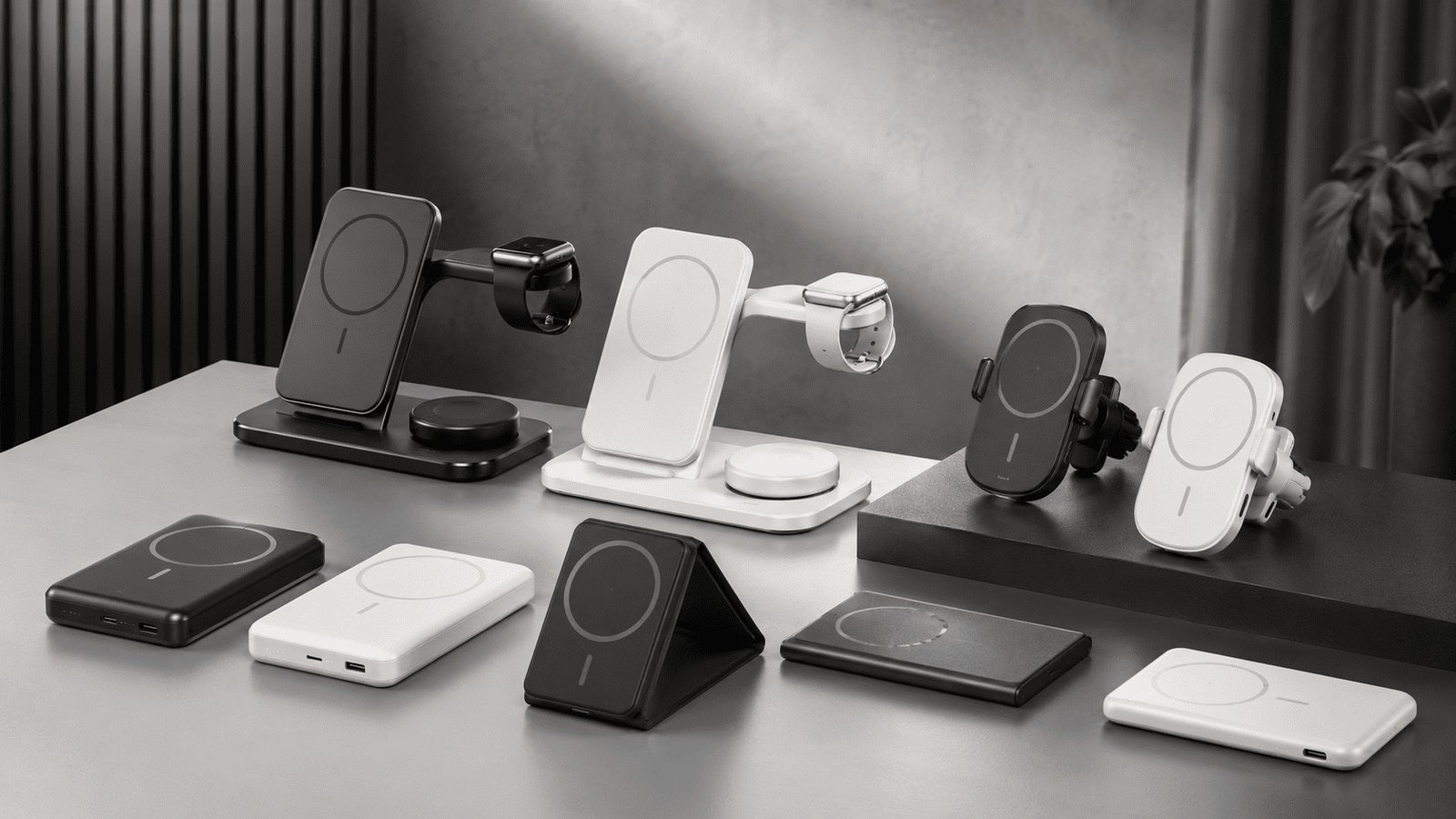
The right charger depends on its intended use. A power bank has different needs than a car charger or a desktop station. To make the best choice for your market, you need to understand the specific risks and quality markers for each type. Let's break them down.
What Really Matters When Sourcing Magnetic Power Banks?
You need a magnetic power bank that customers will love. But many cheap models have weak magnets, fake capacities, and overheat easily. Let's look at what separates a good product from a bad one.
A great magnetic power bank uses strong N52 magnets for a secure connection, high-density battery cells for true capacity, and multiple safety circuits to prevent overheating. Also, ensure your supplier provides UN38.3 reports for safe and legal air shipment.
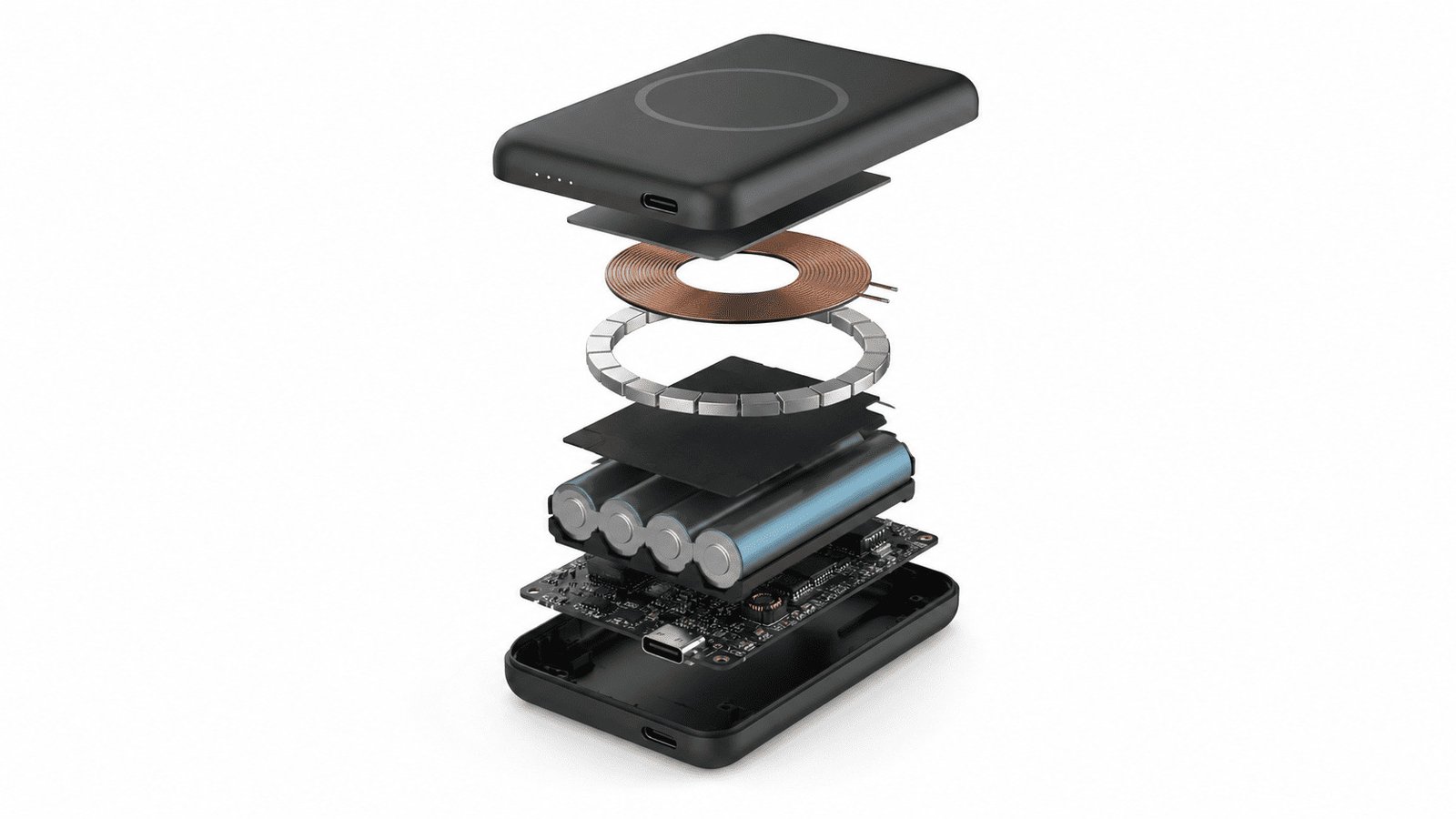
From my experience in OEM manufacturing, the spec sheet doesn't tell the whole story. The real value is in the details that prevent customer returns. First is the magnetic force. We insist on using premium N52 magnets because lower-grade materials lack the necessary maximum energy product. Anything weaker leads to poor magnetic alignment, massive inductive coupling efficiency losses, and phones that easily fall off under minor movement. Second is heat control. This is a major safety issue. A good power bank has temperature sensors and a protection IC to manage heat. We always ask about the battery cells. Are they brand new, A-grade cells, or recycled? Utilizing unverified or recycled cells introduces severe thermal runaway risk, which triggers explosive internal gas buildup and constitutes a massive fire hazard. Finally, ask about compliance. For international shipping, a UN38.3 test report is not optional; it's a legal requirement for transporting lithium batteries by air. Overlooking this can get your entire shipment confiscated.
| Feature to Check | Why It Matters for Bulk Buyers |
|---|---|
| Magnet Grade (N52) | Ensures a strong, secure lock for efficient charging. Prevents customer complaints. |
| Battery Cell Quality | A-grade cells provide true capacity and safety. Avoids overheating and fire hazards. |
| Protection Circuits | Prevents over-charging, over-discharging, and short circuits. Protects the user's phone. |
| UN38.3 Certification | Legally required for air freight. A supplier without it is a major shipping risk. |
How Do You Select a Reliable Car Wireless Charger?
In-car chargers are a hot item. But cars are a tough environment with constant vibration and extreme temperatures. A cheap charger will quickly fail, leading to unhappy customers and bad reviews.
For car chargers, prioritize a stable and durable mounting system that won't break in the heat. It must have an adjustable clamp for different phone sizes and cases. Efficient cooling and a high-quality car adapter are essential for reliable charging during a drive.
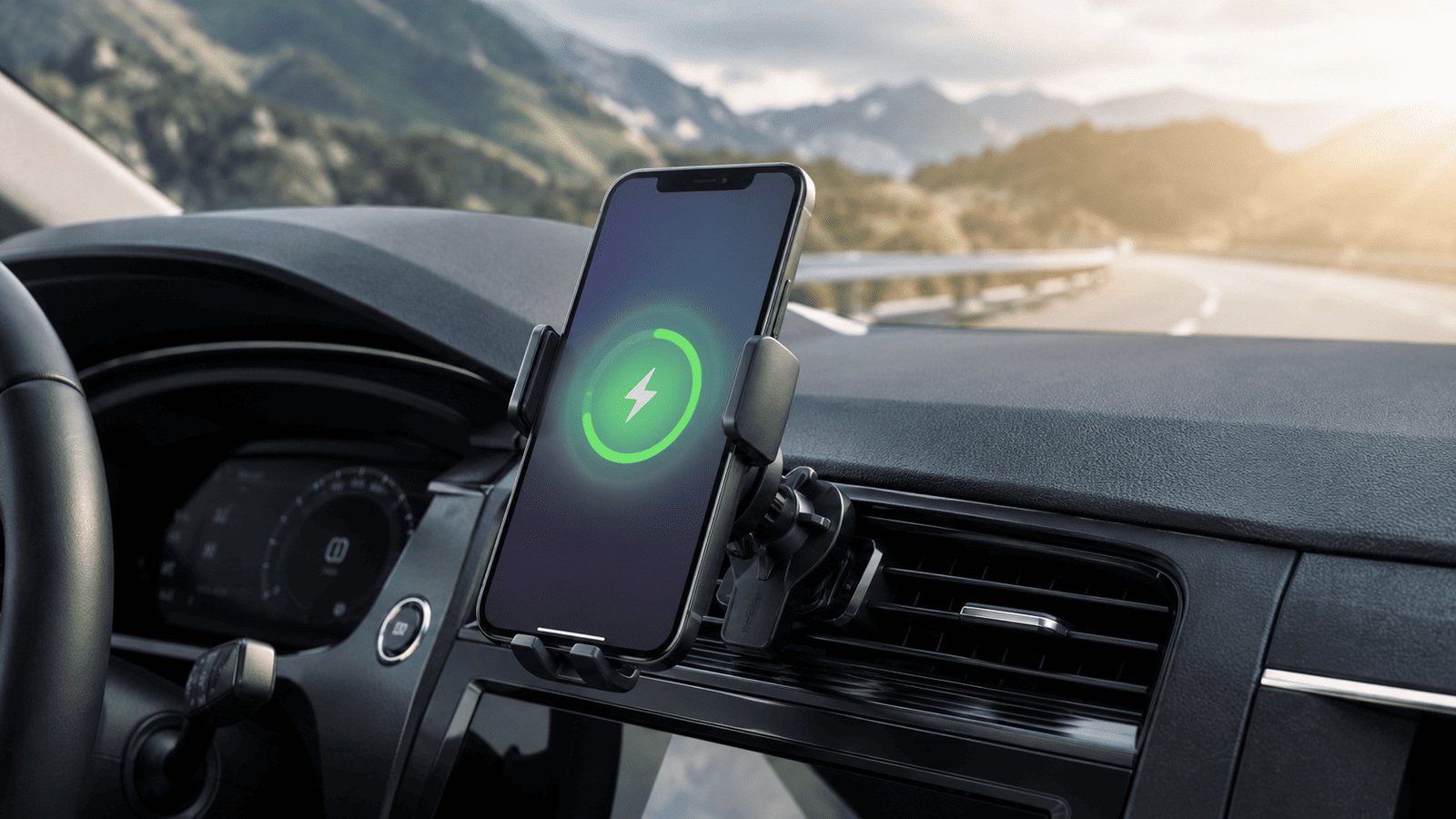
A car is one of the most demanding places for electronics. I've seen countless samples fail because they weren't designed for it. The first thing to test is the mounting mechanism. Whether it's a vent clip or a dashboard mount, it must be made from temperature-resistant plastic like ABS+PC. During summer peaks, greenhouse entrapment inside a vehicle causes the car dashboard temperature to easily skyrocket over 60°C to 70°C (140°F to 160°F), according to vehicular environmental studies. Cheap plastics under these conditions trigger rapid polymer degradation and evaporation of structural plasticizers, making components extremely brittle until they snap under regular road vibration. The mount also needs to hold the phone securely during bumps and turns. Next, consider heat. The charger needs excellent heat dissipation—either through clever vent design or even a small, quiet fan in more premium models. Without it, the charger will overheat and stop working. Also, verify it comes with a capable car adapter, like one that supports Quick Charge 3.0. Without enough input power, the wireless charger can't deliver its promised speed.
| Factor | What to Test in a Sample |
|---|---|
| Mounting Durability | Check material quality. Does it feel flimsy? Leave it on a sunny dash to test for warping. |
| Vibration Resistance | Shake the mount with a phone in it. Does it rattle or come loose? |
| Heat Management | Let it charge a phone for 30 minutes. Does it get excessively hot to the touch? |
| Phone/Case Fit | Test with various phone sizes and common case thicknesses to ensure compatibility. |
What Defines a High-Quality Desktop Wireless Charger?
All-in-one desktop chargers are incredibly popular. But many budget models can't charge everything at once, get dangerously hot, or have issues with Apple devices after a software update.
A superior 3-in-1 station delivers stable power to all devices simultaneously without slowing down. For Apple users, an official MFi-certified Apple Watch module is non-negotiable for guaranteed compatibility. Look for a smart design that manages heat and includes a powerful wall adapter.
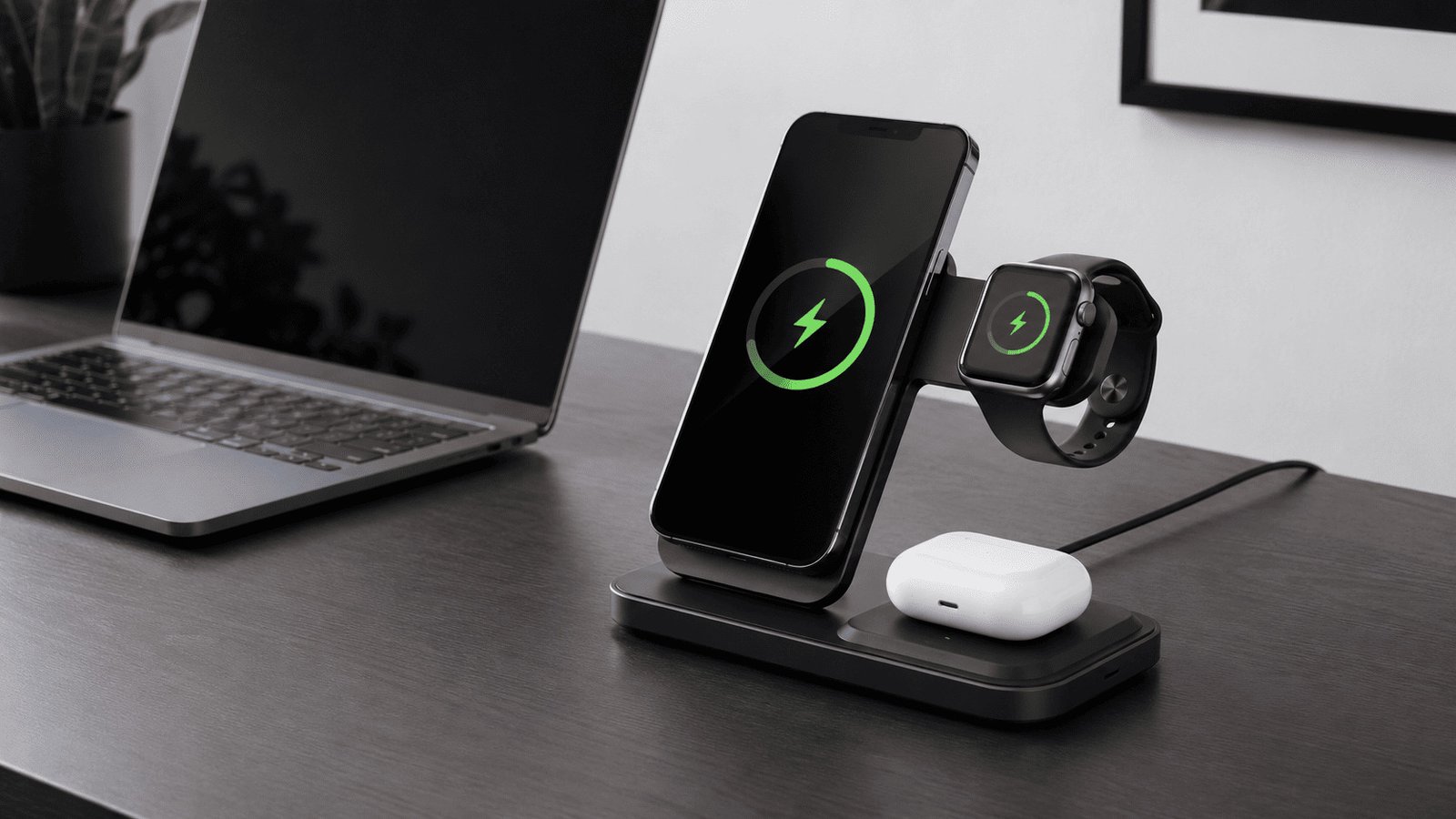
Based on the OEM projects we handle, building a great multi-device charger is complex. The biggest challenge is power management. A cheap unit might have a total output below 15W and struggles to divide that power effectively between a phone, watch, and earbuds. This results in slow, unreliable charging. A quality charger uses a smart IC to distribute power where it's needed. For any product targeting Apple users, the Apple Watch charger is critical. Using a non-certified, "cracked" module is a huge risk. Whenever a new watchOS update rolls out, Apple's integrity check routinely triggers an accessory not supported firmware block on unauthorized wireless coils, rendering the device completely unable to charge and leading to mass product returns for your brand. As an MFi-authorized manufacturer, we only use official modules. It costs more, but it guarantees performance and customer satisfaction. Finally, don't forget the power adapter. A 3-in-1 station needs at least a 20W or 30W adapter to function properly. A supplier that doesn't include a suitable adapter is just pushing the problem onto your customers.
| Aspect | Low-Quality Indicator | High-Quality Indicator |
|---|---|---|
| Power Delivery | Charging slows down with multiple devices. | Consistent speed for all devices. |
| Apple Watch Module | "Compatible with" Apple Watch. | Official MFi certification logo. |
| Heat | Base gets very hot during use. | Warm to the touch, with vents for cooling. |
| Included Adapter | No adapter, or a weak 5W/10W one. | A powerful 20W+ PD adapter included. |
Conclusion
Choosing the right wireless charger supplier is about protecting your investment. Look past the price tag to verify the quality, compliance, and reliability that will build your brand's reputation.