
High-Wattage Wireless Chargers can promise faster charging, but heat often makes buyers question real performance. If a charger gets too warm, charging speed drops1, user experience suffers, and after-sales risk increases. The practical solution is not chasing peak wattage, but engineering stable, safe, sustained wireless power.
Yes, High-Wattage Wireless Chargers can stay fast without overheating when they are designed to deliver the highest safe sustained power, not just a short peak number. Real speed depends on adapter output, cable quality, coil alignment, charger efficiency, heat dissipation, phone thermal control, battery level, case thickness, and ambient temperature.
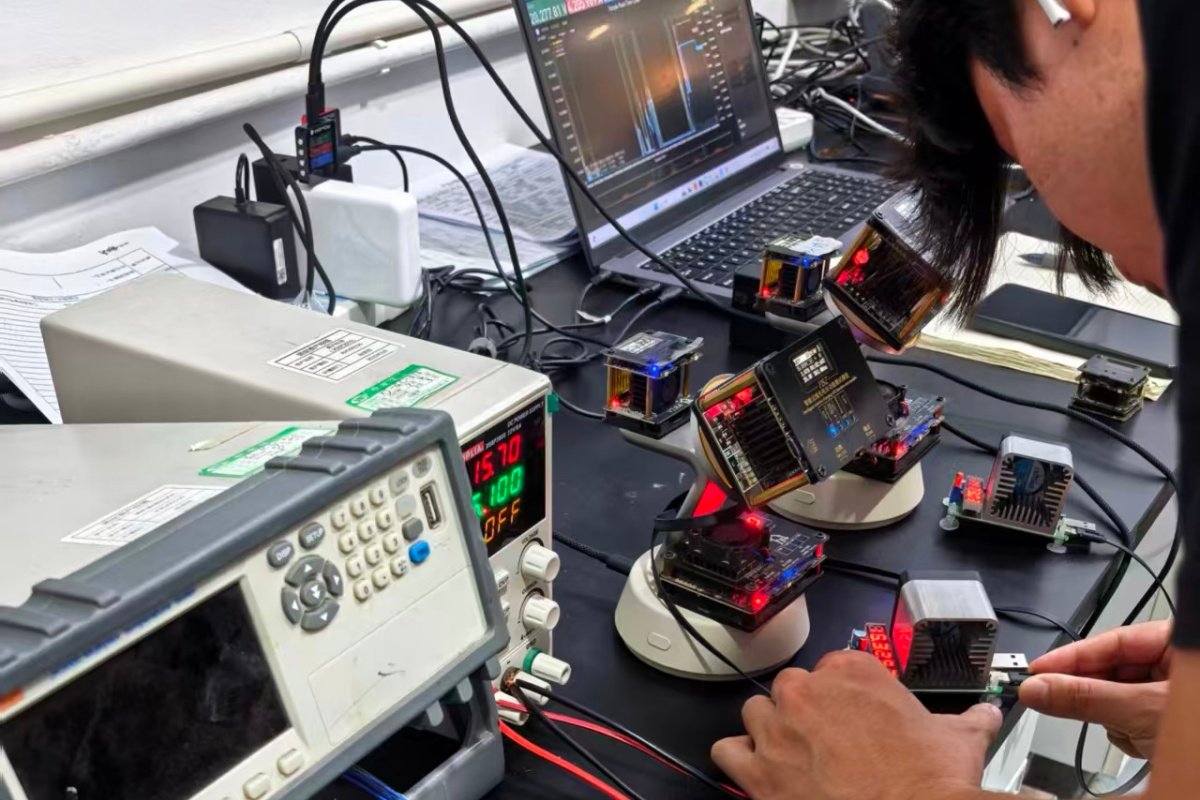
A 25W label does not mean a phone receives 25W from 0% to 100%. Wireless charging is a complete system.2 To judge quality, we need to look at charging curves, temperature control, compatibility, and repeatability under realistic use conditions.
How Do High-Wattage Wireless Chargers Stay Fast Without Overheating?
High power creates more heat when energy is lost during conversion. If alignment is poor or components are inefficient, the charger wastes power and the phone gets warmer. A well-designed charger keeps speed stable by reducing losses before heat becomes a problem.
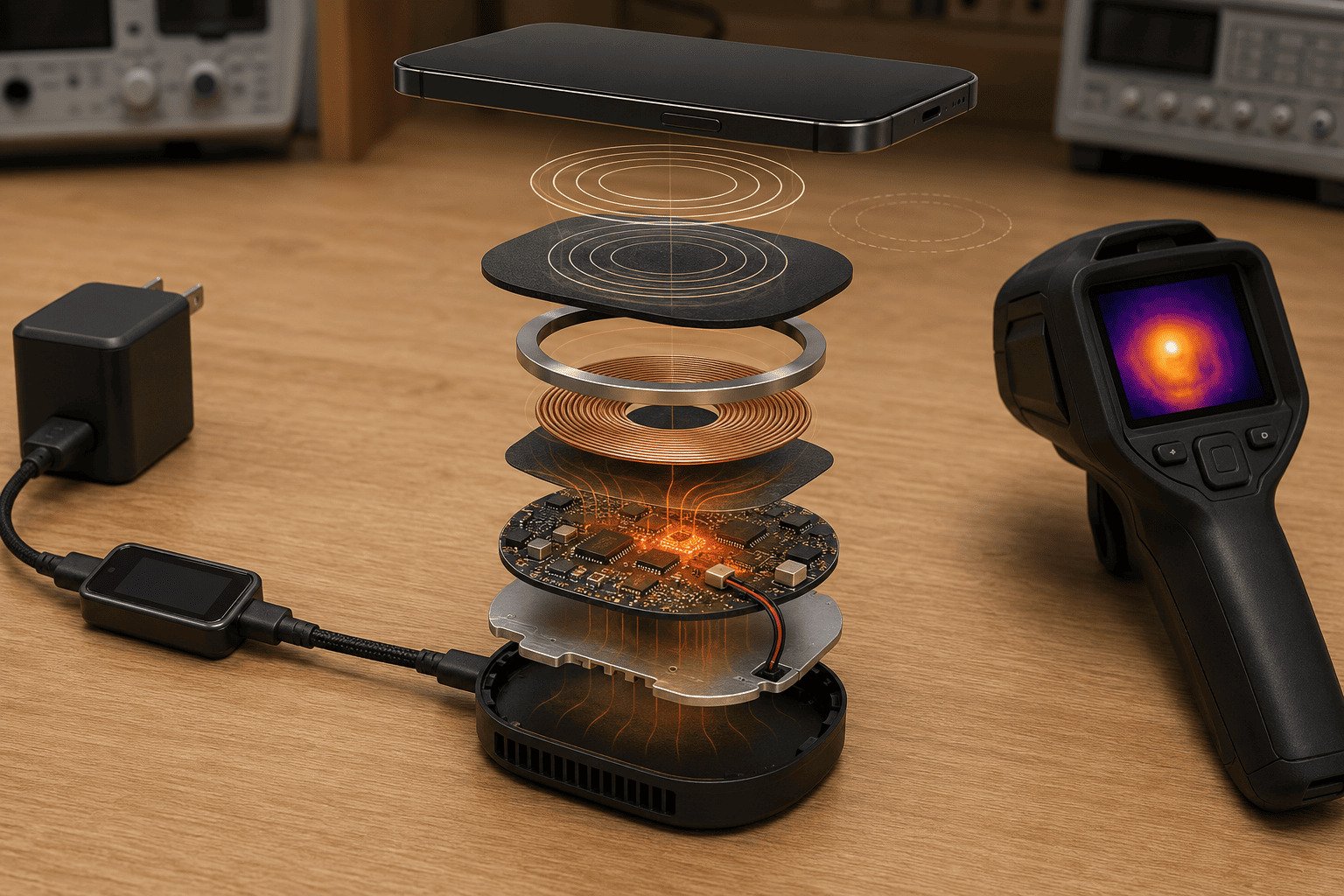
High-Wattage Wireless Chargers stay fast through efficient coil design, accurate magnetic positioning, optimized PCB layout, heat-spreading materials, temperature sensors, foreign-object detection, and firmware that adjusts power smoothly.3 These features help the charger maintain safe sustained output instead of unstable peak performance.
The real goal is sustained charging, not peak charging
In procurement, we often see buyers compare only the largest wattage printed on packaging. That number matters, but it is only one part of the story. A charger that briefly reaches 25W and then drops sharply may feel slower than a charger that holds a lower but more stable power level.4
A reliable high-wattage wireless charging system usually depends on:
- A compatible PD or PPS adapter
- A USB-C cable that supports the required current
- Efficient transmitter and receiver communication
- Accurate coil-to-coil alignment
- Good heat transfer from PCB and coil areas
- Temperature monitoring inside the charger
- Phone-side thermal management
- Reasonable ambient temperature
Why alignment matters so much
Wireless charging uses electromagnetic energy transfer. When the phone coil and charger coil are well aligned, less energy is wasted. When they are offset, the system needs more input power to deliver the same useful output. That extra loss becomes heat.
Magnetic alignment can help reduce this problem5, especially for newer phone models that support magnetic positioning. However, the magnet structure must be designed carefully. Strong magnets alone do not guarantee better performance.6 The coil position, magnetic ring tolerance, surface friction, and phone compatibility all matter.
What good thermal design looks like
A high-quality charger does not depend on one single part. It uses a full thermal strategy.
| Design Area | Why It Matters |
|---|---|
| Coil design | Reduces energy loss during power transfer |
| PCB layout | Controls current paths and heat concentration |
| Heat-spreading material | Moves heat away from hot spots |
| Temperature sensors | Detect unsafe or rising temperature early |
| Firmware logic | Adjusts output gradually instead of suddenly |
| FOD function | Helps detect metal objects that may heat up |
For business buyers, this means the best product is not always the one with the most aggressive advertised wattage. The best product is the one that balances charging speed, efficiency, safety, and long-term reliability.
Why Do High-Wattage Wireless Chargers Reduce Power During Charging?
Many users think power reduction means the charger is defective. That is not always correct. Wireless charging systems reduce power when temperature rises, battery level increases, or the phone requests lower input to protect its battery and internal components.
High-Wattage Wireless Chargers reduce power because safe charging requires thermal control. Temporary power reduction is a normal protection function. The key question is whether the charger lowers power smoothly and maintains a stable charging curve without repeated throttling, large fluctuations, or excessive charging time.
Power reduction is part of safe charging
Phones do not charge at maximum power during the entire session. Battery charging usually moves through different stages. At lower battery levels, the phone may accept higher power. As the battery becomes fuller, the phone often reduces charging power to protect battery health.
Wireless charging also adds another variable: heat from energy conversion. Some warmth is normal.7 Excessive heat is not.
Common reasons for power reduction include:
- Battery state of charge is already high
- Phone temperature rises during charging
- Phone is running heavy apps or navigation
- The charger and phone are not aligned well
- The phone case is too thick or contains metal
- The adapter or cable cannot provide stable input
- Ambient temperature is high
- The charger firmware reduces output for safety
Normal warmth vs. risky heat
A wireless charger should become warm during operation because no energy conversion is 100% efficient. However, rapid temperature rise is a warning sign. It may indicate poor alignment, low-efficiency components, weak heat spreading, unsuitable accessories, or poor power-management logic.
We should not judge a product only by touching the surface for a few seconds. Surface feel is subjective.8 A better method is to measure:
- Charger surface temperature
- Phone back-cover temperature
- Input voltage and current
- Charging power over time
- Battery percentage change
- Ambient test temperature
- Case condition
- Adapter and cable model
Stability matters more than one screenshot
A single peak-power screenshot can be misleading. A charger may show strong output for a short moment, then drop repeatedly because of heat. For buyers, the real quality indicator is the charging curve.
A stable charger should show:
- No repeated thermal throttling
- No large power swings under normal conditions
- No unsafe surface temperature
- No unnecessary increase in total charging time
- Consistent results across multiple samples
- Compatible performance across major phone models
This is why we treat power reduction as a function to evaluate, not a problem to reject automatically.
How Should Buyers Test High-Wattage Wireless Chargers Before Bulk Orders?
Procurement risk increases when buyers rely only on packaging claims or short demo videos. A charger may perform well in one ideal setup but fail under real market conditions. Testing must reflect actual user behavior and regional compliance needs.
Buyers should test High-Wattage Wireless Chargers with controlled conditions: fixed ambient temperature, specified adapter and cable, compatible phones, case and no-case scenarios, repeated samples, full charging curves, temperature records, and input-power data. This gives a realistic view of speed, safety, and consistency.
What test data should buyers request?
Before confirming a bulk order, buyers should ask suppliers for structured test reports, not only marketing claims. A useful test report should include:
- Phone models tested
- Adapter type, such as PD or PPS
- USB-C cable specification
- Ambient temperature
- Starting battery percentage
- Charging time to key levels, such as 50%, 80%, and 100%
- Input voltage and current
- Charger surface temperature
- Phone temperature
- Case thickness or no-case condition
- Repeated results from multiple samples
This information helps buyers understand whether the charger is truly stable or only optimized for one situation.
Suggested comparison method
| Test Item | Why Buyers Need It |
|---|---|
| Peak power | Shows maximum capability under ideal conditions |
| Sustained power | Shows real charging performance |
| Full charging time | Reflects user experience |
| Temperature curve | Shows thermal-control quality |
| Multi-phone testing | Confirms compatibility |
| Multi-sample testing | Checks production consistency |
| Case testing | Reflects real consumer use |
Compliance and manufacturing consistency matter
For wholesalers, importers, distributors, and brand owners, charging speed is only one requirement. A high-wattage wireless charger also needs regulatory compliance and stable production quality.
As a manufacturer, we consider these points critical:
- Qi-related wireless charging requirements
- UL, CE, FCC, RoHS, PSE, KC, or other market certifications when applicable
- Foreign-object detection
- Temperature protection
- Stable production process
- Clear OEM/ODM specifications
- Repeatable quality across batches
A strong supplier should be able to explain the design logic, provide test data, and support customization without weakening safety or reliability.
Frequently Asked Questions
Does a 25W wireless charger always charge at 25W?
No. A 25W rating usually means peak capability under compatible conditions. The actual wireless power changes during charging based on phone model, battery level, temperature, adapter, cable, alignment, case condition, and the phone’s own charging strategy.
Is heat always bad for wireless charging?
Some warmth is normal because wireless charging involves energy conversion. However, excessive or quickly rising heat suggests energy loss, poor alignment, weak heat dissipation, unsuitable accessories, or unstable power control. Buyers should check measured temperature data, not only hand feel.
Why does charging slow down after some time?
Charging slows down when the phone manages heat or battery protection. It may also slow because the battery level is higher. This behavior can be normal. The concern is repeated throttling, unstable power jumps, or much longer charging time than expected.
What should wholesalers check before ordering?
Wholesalers should request full charging curves, temperature records, adapter and cable details, multi-phone compatibility tests, case-condition tests, certification documents, and repeated sample results. This reduces procurement risk and helps confirm real market performance.
Conclusion
High-Wattage Wireless Chargers can stay fast without overheating when the design focuses on safe sustained performance instead of short peak wattage. Buyers should evaluate efficiency, alignment, heat dissipation, firmware control, compatibility, and real test data. The most trustworthy charger is the one that balances speed, temperature, safety, and reliability. If you need OEM or ODM wireless charging products for bulk supply, we can support testing, customization, certification coordination, and stable production for your target market.
"[PDF] Thermal Design and Optimization of High-Power Wireless Charging ...", https://www.osti.gov/servlets/purl/1871896. A technical source on lithium-ion charging control or wireless-power thermal management supports that charging systems may reduce input power when temperature rises in order to keep the battery and electronics within safe operating limits. Evidence role: mechanism; source type: paper. Supports: Temperature rise during charging can trigger power limitation or altered charging behavior to protect electronics and batteries.. Scope note: The source may describe battery or power-management behavior generally rather than testing the specific charger model discussed in the article. ↩
"Qi (standard) - Wikipedia", https://en.wikipedia.org/wiki/Qi_(standard). The Wireless Power Consortium’s Qi materials describe wireless charging as a transmitter-receiver system with communication and control functions, supporting the article’s framing of charging performance as more than a printed wattage rating. Evidence role: definition; source type: institution. Supports: Wireless charging standards define charging as a coordinated system involving a power transmitter, a power receiver, communication, and control.. Scope note: The source is standards-contextual and does not independently verify the performance of any particular charger. ↩
"History of the Qi Specifications | Wireless Power Consortium", https://www.wirelesspowerconsortium.com/knowledge-base/qi-specification/history-of-the-qi-specifications/. Wireless charging standards and technical guidance identify transmitter-receiver coupling, thermal monitoring, control logic, and foreign-object detection as relevant design considerations for safe wireless power delivery. Evidence role: general_support; source type: institution. Supports: Wireless charging systems commonly use design and control features such as coil optimization, alignment control, temperature monitoring, and foreign-object detection to manage safety and performance.. Scope note: The source would support the listed features as recognized design controls, not prove that every listed feature is present or effective in a specific product. ↩
"State of charge - Wikipedia", https://en.wikipedia.org/wiki/State_of_charge. Battery-charging literature on charging profiles supports that accumulated energy delivery over the full charging curve determines charge time, so a brief peak-power event is insufficient to characterize real charging speed. Evidence role: mechanism; source type: paper. Supports: Total charging time is determined by the charging power profile over time, including reductions caused by battery state and thermal limits, rather than by peak power alone.. Scope note: The evidence is general to charging behavior and may not quantify the exact user experience difference between two specific wireless chargers. ↩
"Qi Wireless charging", https://www.wirelesspowerconsortium.com/standards/qi-wireless-charging/. Wireless Power Consortium materials on Qi2’s Magnetic Power Profile describe magnetic alignment as a means of improving device positioning for wireless charging, supporting the article’s claim that magnetic positioning can reduce alignment-related performance problems. Evidence role: mechanism; source type: institution. Supports: Magnetic alignment systems in compatible wireless chargers are intended to improve transmitter-receiver positioning and support more consistent wireless power transfer.. Scope note: This supports the intended alignment mechanism and standards context, not a guarantee of better performance for all magnet designs or phone models. ↩
"Improving Coil Misalignment Performance in Wireless Power ... - MDPI", https://www.mdpi.com/2032-6653/17/2/81. Research on inductive power-transfer coupling shows that coil geometry, relative position, magnetic materials, and control strategy affect efficiency, supporting the claim that stronger magnets alone cannot guarantee better charging performance. Evidence role: mechanism; source type: paper. Supports: Wireless charging efficiency depends on electromagnetic coupling, coil geometry, alignment, and control design, so magnet strength alone does not determine charging performance.. Scope note: The evidence is mechanistic and does not directly compare commercial magnet assemblies of different strengths. ↩
"Wireless power transfer - Wikipedia", https://en.wikipedia.org/wiki/Wireless_power_transfer. Technical literature on wireless power transfer indicates that finite transfer efficiency and conversion losses generate heat during normal operation, supporting the article’s distinction between expected warmth and excessive temperature rise. Evidence role: mechanism; source type: research. Supports: Normal wireless charging produces heat due to conversion and coupling losses, even when the system is functioning as intended.. Scope note: The source would support normal heat generation generally, while acceptable surface temperature depends on product design and applicable safety standards. ↩
"Drivers of diversity in human thermal perception – A review ... - PMC", https://pmc.ncbi.nlm.nih.gov/articles/PMC6298492/. Studies of contact thermal perception show that perceived surface warmth varies with material properties, contact duration, and individual sensitivity, supporting the article’s preference for measured temperature data over brief hand-feel judgments. Evidence role: general_support; source type: paper. Supports: Human perception of surface warmth varies with material, contact time, skin condition, and context, making measured temperature more reliable for evaluation.. Scope note: This supports the reliability concern around subjective touch perception, not a specific pass/fail temperature threshold for wireless chargers. ↩