
A wrong Qi2 25W supplier can look cheap first, then create heat issues, failed tests, delayed launches, and after-sales pressure.
Choose a reliable Qi2 25W wireless charger China manufacturer by checking real Qi2 25W certification, thermal control, magnetic alignment, FOD safety, adapter requirements, phone compatibility, ODM support, production control, and clear test records. Do not judge the supplier by price or peak wattage alone.
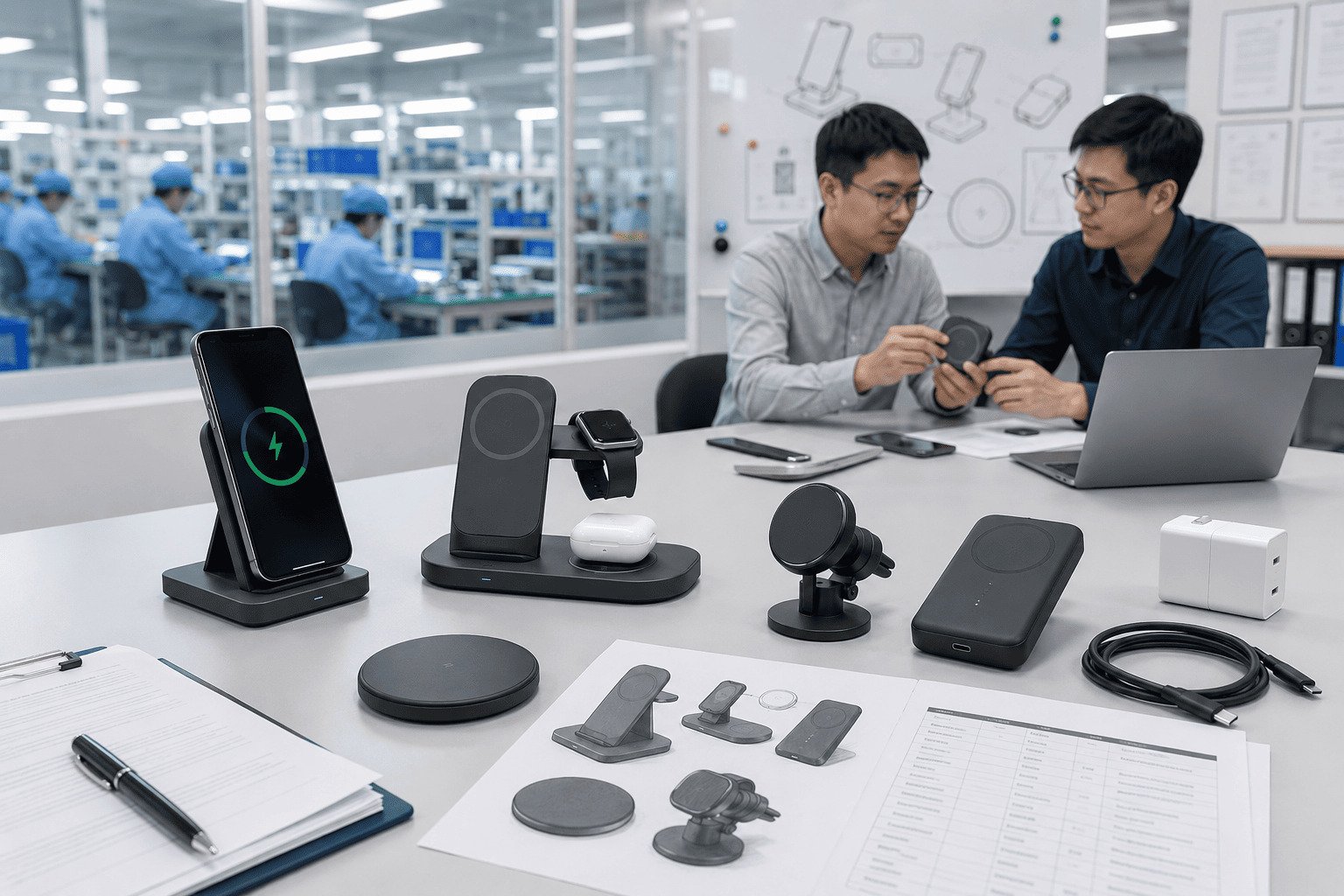
We have seen many buyers start a Qi2 25W project with one simple question: “What is your best price?” We understand that price matters. We also know that price is only one small part of the real sourcing risk. A Qi2 25W wireless charger is not just a coil, a magnet, and a plastic shell. It is a full system. The system includes the transmitter module, magnetic structure, thermal design, firmware, USB-C PD input, cable selection, case compatibility, safety protection, test process, and final mass-production control. If one part is weak, the product can fail in the market. For a 2026 product line, we should ask a better question: “Can this factory prove stable 25W performance from sample stage to mass production?”
Why Should Qi2 25W Supplier Selection Start With Certification, Not Price?
Cheap quotes can hide serious risk. A product may claim Qi2 25W, but it may not pass real certification or stable long-term charging tests.
A reliable Qi2 25W supplier should provide valid certification proof, product test data, WPC-related documents, and clear model information. Buyers should confirm that the quoted product is the same product that passed testing.1
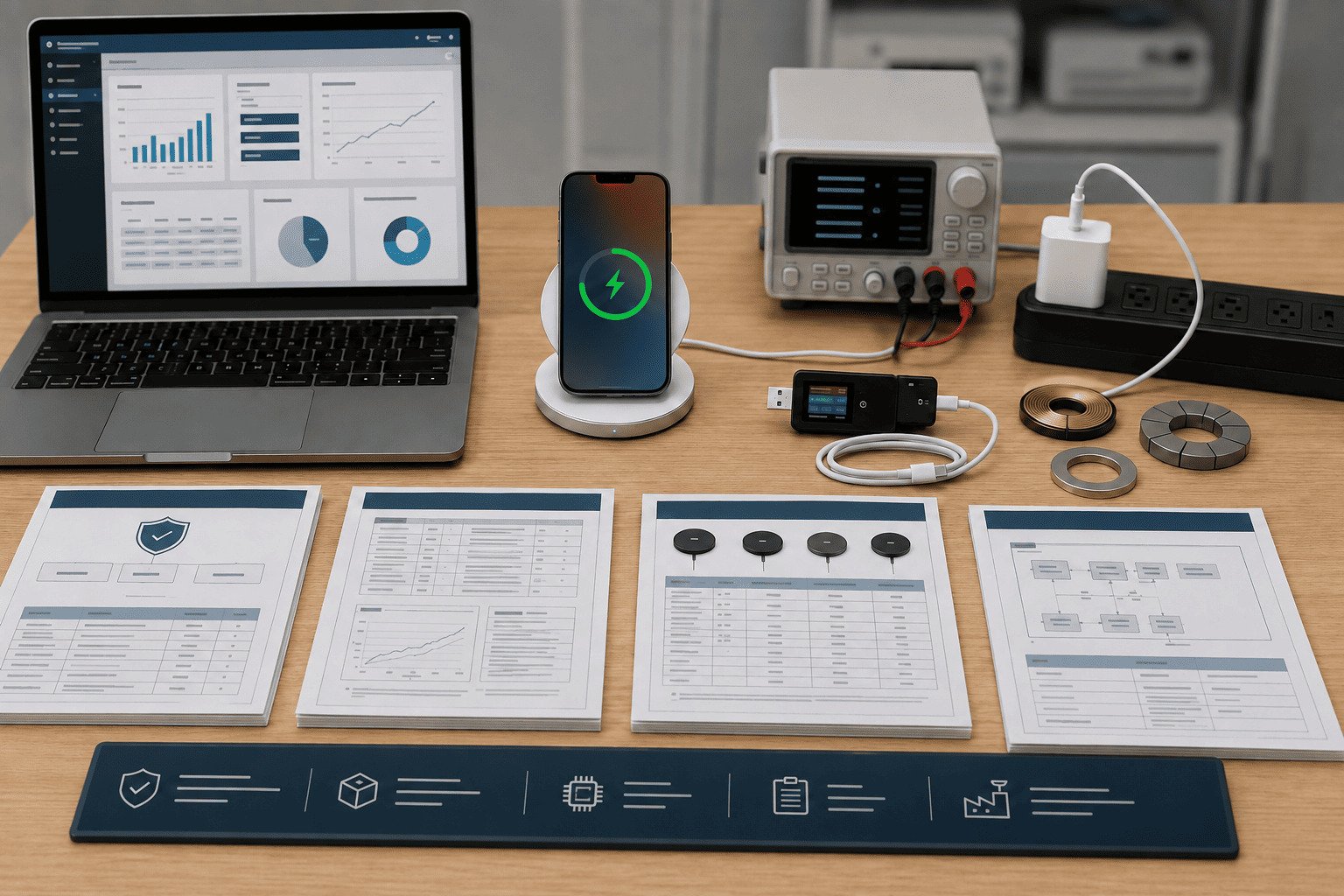
Qi2 25W is not only a marketing word. It is linked with a standard, a test process, and a product identity.2 We always tell buyers to separate three things: the sample on the desk, the test report, and the final mass-production unit. These three things must match. If a supplier shows a certificate for another model, another coil design, or another magnetic structure, the risk is still there.
We have met buyers who received a “Qi2-ready” offer. The sample looked fine at first. The charging icon also looked fast. After deeper checking, the product did not have completed Qi2 25W certification. The factory only meant that the product was “designed for Qi2.” That small word difference can become a big launch delay.
| What We Check | Why It Matters | What Buyers Should Ask |
|---|---|---|
| Qi2 25W certification status | It proves the product passed a formal standard path | “Can you share the valid certificate or listing proof?” |
| Model consistency | It prevents report misuse | “Is this certificate for the exact model we will buy?” |
| Firmware version | It affects charging behavior | “Can you lock the firmware for mass production?” |
| Coil and magnet design | It affects alignment and output | “Will mass production use the same design?” |
| Test lab data | It shows real support | “Can we review key test results before order?” |
Sourcing Note: Price should come after proof. We do not mean buyers should ignore cost. We mean cost should be compared only after the technical base is clear. A low price from an unclear product is not a saving. It is an open risk.
How Can We Verify Real 25W Performance Instead Of Peak Wattage Claims?
Peak wattage is easy to show for a short moment. Stable 25W charging is harder because heat, phone control, adapter power, cable quality, and alignment all affect performance.3
Buyers should ask for full charging curves, thermal records, input power conditions, compatible phone lists, and test methods. A real 25W supplier should explain when 25W appears and how long it can stay stable.
Many factories can show a power meter photo. That photo may show 25W, 27W, or even more for a short time. We should not use that photo as the full proof. Wireless charging power changes during charging. The phone controls part of the behavior.4 The charger also changes output based on temperature, foreign object detection, and communication with the receiver. A real test should show a curve, not only a number.
We usually ask these questions when we review a Qi2 25W project:
| Test Item | Good Evidence | Weak Evidence |
|---|---|---|
| Charging curve | A time-based curve from low battery to higher battery | One photo of a meter |
| Input condition | Clear adapter and cable specification | “Any PD adapter is okay” |
| Thermal record | Temperature at coil, shell, phone back, and room condition | “It is not hot” |
| Phone model list | Tested iPhone models and other compatible devices | “It works with all phones” |
| Case test | Test with common case thickness and material | No case data |
We also check the USB-C PD adapter requirement. A Qi2 25W charger cannot perform well if the input side is weak. The adapter must support the right PD power profile. The cable must handle the needed current.5 If a buyer plans to sell a charger without an adapter, the user instruction must be very clear. If the end user uses a low-power adapter, the charger will not reach the expected speed. The user may blame the product. The brand may receive complaints. That is why we see input specification as part of product quality, not as a small accessory detail.
What Heat, FOD, And Compatibility Tests Should The Factory Show?
Fast charging creates heat.6 If the factory cannot control heat, the charger may slow down, stop charging, damage user trust, or increase after-sales claims.
A qualified manufacturer should show thermal tests, FOD tests, long-duration charging tests, case compatibility tests, and safety protection behavior under abnormal conditions. These tests help reduce user complaints and recall risk.
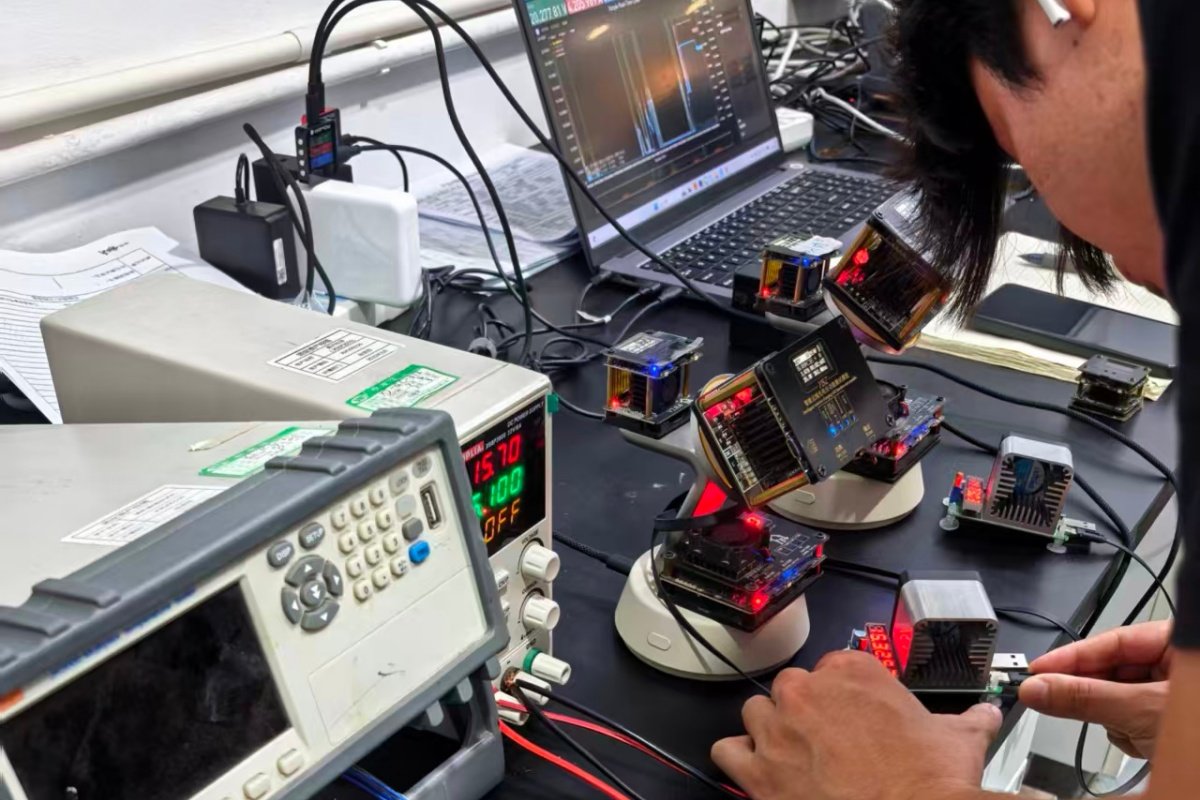
Heat is one of the most important topics in Qi2 25W sourcing. Buyers often ask whether the charger can reach 25W. We also ask whether the charger can stay safe when the user charges overnight, uses a phone case, places the phone slightly off center, or uses the charger in a warm room. These situations are common in real life. A product line should be built for real use, not only for a clean lab photo.
FOD is also important. FOD means foreign object detection. The charger should detect metal objects, such as coins, keys, or metal plates, and reduce risk.7 This is not only a technical feature. It is a safety layer. If FOD is weak, a metal object can heat up.8 The user may not understand the cause. The brand will still carry the complaint.
| Risk Area | Test We Expect | Buyer Benefit |
|---|---|---|
| Long charging heat | 2 to 8 hour charging test under set room temperature | Lower after-sales risk |
| High temperature condition | Charging in warmer room conditions | Better real-use confidence |
| FOD safety | Coin, ring, metal sheet, and misplacement tests | Lower safety risk |
| Case compatibility | Thin case, thicker case, magnetic case, and non-magnetic case tests | Fewer user complaints |
| Misalignment behavior | Slight offset position test | Better practical performance |
Phone and case compatibility should not be treated as an afterthought. Magnetic alignment is one of the key values of Qi2.9 If the magnet design is weak, the phone may move. If the magnet is too strong or poorly placed, the user experience may also suffer. The best result is a stable hold, a natural snap position, and controlled heat. We believe the factory should have repeatable test jigs and clear test conditions. Verbal promises are not enough for a 2026 product plan.
Why Does ODM Engineering Matter For A 2026 Product Line?
A 2026 product line needs more than one ready model. Buyers may need new structure, new material, new color, new functions, and new market positioning.
Strong ODM engineering helps buyers build a complete Qi2 25W range with stable performance, clear design control, faster problem solving, and better market difference.
A buyer may start with one Qi2 25W charging pad. After the first launch, the market may ask for a 3-in-1 wireless charging station, a foldable travel charger, a wireless charger with lamp, a desktop stand, or a magnetic power bank. If the supplier only sells one standard model, the buyer may need to change suppliers for each new item. That creates new testing work, new communication cost, new compliance risk, and new quality differences.
We think ODM ability is not only about making a new look. It is about keeping the electrical, thermal, magnetic, and mechanical system stable while the design changes. A thin product may look better, but it may have less space for heat control. A metal body may feel premium, but it may affect heat and FOD design.10 A soft-touch surface may improve touch feeling, but it must still pass aging and surface tests.
| ODM Topic | What The Factory Should Control | Why It Matters |
|---|---|---|
| ID design | Size, shape, surface, color, logo, packaging | It supports brand position |
| Mechanical design | Magnet position, coil gap, stand angle, hinge life | It affects daily use |
| Thermal design | Heat path, material choice, internal space | It affects 25W stability |
| Electrical design | PCBA layout, firmware, PD input, protection | It affects safety and performance |
| Compliance planning | Certification path and document control | It affects launch schedule |
We often suggest that buyers discuss the whole 2026 roadmap early. The buyer does not need to reveal every business detail. Yet the supplier should understand the planned product types, target markets, expected certifications, packaging language, adapter strategy, and sales channels. With this information, the factory can choose better platforms, avoid repeated redesign, and prepare testing in a better order.
How Can Buyers Judge Mass Production Quality And Delivery Risk?
A perfect sample does not guarantee a stable order.11 The real question is whether the factory can repeat the same quality across thousands or millions of units.
Buyers should audit production capacity, incoming material control, process testing, aging tests, final inspection, traceability, and delivery planning. Stable mass production reduces launch delay, defect rate, and channel complaints.
Mass production is where many sourcing problems appear. A handmade sample can be adjusted many times. A production unit must follow a fixed process. The supplier needs clear work instructions, trained workers, test fixtures, material records, and final inspection standards. For Qi2 25W, small changes can cause real differences. A different magnet batch can change alignment. A different cable can change input behavior. A different thermal pad can change temperature. A small firmware change can change charging stability.12
We advise buyers to check the factory system, not only the sales response. A professional sales person is helpful, but the production system decides the final shipment quality.
| Production Area | What Buyers Should Check | Risk If Ignored |
|---|---|---|
| Incoming quality control | Coils, magnets, PCBA, cable, housing, thermal material | Hidden material variation |
| In-process testing | Power test, alignment test, firmware check, safety check | Unstable unit performance |
| Aging test | Charging under load for set time | Early failure in market |
| Final inspection | Appearance, function, packaging, label, accessories | Customer complaints |
| Traceability | Batch code, material records, test records | Hard problem analysis |
| Delivery planning | Capacity, lead time, buffer stock, export process | Launch delay |
We also look at communication habits. A reliable factory does not only say “yes.” It asks questions. It explains limits. It shares test data. It warns buyers when a design choice may create heat, cost, or certification risk. We see this as a sign of responsibility. Transparent communication can feel slower at the beginning, but it often saves time later. When a buyer plans a product line for North America, Europe, Japan, South Korea, South America, or Southeast Asia, compliance and timing are not small issues. The factory should help prepare documents such as CE, FCC, RoHS, UL-related information, PSE, KC, Qi documents, and test reports when needed.
What Questions Should Procurement Teams Ask Before Placing A Qi2 25W Order?
A weak question creates a weak answer. If buyers only ask for price, MOQ, and lead time, they may miss the real risks behind the product.
Procurement teams should ask technical, compliance, production, and after-sales questions before order confirmation. The answers should be written, specific, and linked to real documents or test records.
We have learned that a good question list can protect both sides. It helps the buyer avoid unclear promises. It also helps the manufacturer understand the target market and sales plan. For a Qi2 25W wireless charger, the question list should cover the full product life cycle. It should start from design and end with after-sales support.
| Question Area | Questions We Recommend |
|---|---|
| Certification | “Is this exact model Qi2 25W certified or under certification?” |
| Performance | “Can you provide full charging curves and test conditions?” |
| Heat | “What is the shell and phone temperature during long charging?” |
| Input | “What PD adapter and cable are required for best performance?” |
| Compatibility | “Which phone models and cases have been tested?” |
| FOD | “What foreign object tests have been completed?” |
| ODM | “Can you support structure, color, logo, packaging, and firmware changes?” |
| Production | “What tests are done on each unit during mass production?” |
| Compliance | “Which reports can support our target market?” |
| After-sales | “How do you handle failure analysis and replacement support?” |
The answers should not be too general. “Yes, we can do it” is not enough. A better answer includes a document, a test report, a photo of the test setup, a clear condition, or a production control point. We also suggest asking for a golden sample process. The golden sample should be approved before mass production. The factory should keep one sample. The buyer should keep one sample. Both sides can use it as the quality reference.
For 2026, buyers should also think about product line risk. A supplier may be able to ship one order, but may not support a full line for twelve months or more. A better supplier can support model updates, packaging updates, market feedback, spare parts, certification changes, and repeat orders. This is where long-term cooperation becomes more valuable than a one-time low quote.
Conclusion
A reliable Qi2 25W supplier proves the full system, not only fast charging claims. We should buy evidence, control, and long-term support.
"ISO/IEC 17065:2012(en), Conformity assessment — Requirements ...", https://www.iso.org/obp/ui/#iso:std:iso-iec:17065:ed-1:v1:en. Conformity-assessment standards such as ISO/IEC 17065 treat certification as applying to specified products within a defined scope, which supports verifying that the quoted charger is the same model covered by the test or certificate. Evidence role: expert_consensus; source type: institution. Supports: The source should support that product certification applies to defined products, models, or scopes rather than to unrelated designs.. Scope note: This supports the certification principle generally; it may not describe Qi2 model-matching rules in detail. ↩
"Qi (standard) - Wikipedia", https://en.wikipedia.org/wiki/Qi_(standard). The Wireless Power Consortium describes Qi2 as a formal wireless power standard and maintains product information for certified devices, supporting the distinction between a marketing claim and a standards-based certified product identity. Evidence role: definition; source type: institution. Supports: The source should show that Qi2 is a Wireless Power Consortium standard and that certified products are listed or validated through WPC processes.. ↩
"Maximizing wireless power transfer efficiency at exceptional points", https://pmc.ncbi.nlm.nih.gov/articles/PMC12152173/. Studies of inductive wireless power transfer report that delivered power and efficiency vary with coupling conditions such as coil alignment and load state, and that thermal constraints can influence sustained operation, supporting the need to evaluate charging curves rather than isolated peak readings. Evidence role: mechanism; source type: paper. Supports: The source should explain that inductive wireless charging performance depends on coil alignment, thermal behavior, receiver/load control, and power-transfer conditions.. Scope note: The evidence is mechanism-level and may not test this exact Qi2 25W charger category. ↩
"Qi (standard) - Wikipedia", https://en.wikipedia.org/wiki/Qi_(standard). Technical descriptions of Qi wireless power transfer describe communication between receiver and transmitter for power control, and battery-charging guidance notes that charging rates can vary with charge state and temperature, supporting the article’s statement that wireless charging power changes over time. Evidence role: mechanism; source type: research. Supports: The source should support that wireless power systems use communication/control between transmitter and receiver and that charging power can vary during the battery charge cycle.. Scope note: This supports the general control mechanism; actual power curves depend on the phone model, firmware, adapter, and charger design. ↩
"USB hardware - Wikipedia", https://en.wikipedia.org/wiki/USB_hardware. USB-IF specifications for USB Power Delivery and USB Type-C define negotiated source power capabilities and cable current limits, supporting the requirement that the adapter and cable match the charger’s input-power needs. Evidence role: definition; source type: institution. Supports: The source should show that USB Power Delivery defines negotiated voltage/current power capabilities and that USB-C cable current ratings affect supported power.. ↩
"Wireless power transfer - Wikipedia", https://en.wikipedia.org/wiki/Wireless_power_transfer. Research on battery fast charging and inductive wireless power transfer identifies resistive and conversion losses as sources of heat, supporting the need for thermal management in higher-power wireless chargers. Evidence role: mechanism; source type: paper. Supports: The source should explain that electrical losses during charging and wireless power transfer produce heat, especially at higher power levels.. Scope note: The source may address charging systems generally rather than Qi2 25W products specifically. ↩
"History of the Qi Specifications | Wireless Power Consortium", https://www.wirelesspowerconsortium.com/knowledge-base/qi-specification/history-of-the-qi-specifications/. Wireless charging standards and technical literature describe foreign object detection as a safety function for identifying conductive objects that may absorb energy and heat during inductive power transfer, supporting the article’s explanation of FOD risk reduction. Evidence role: definition; source type: institution. Supports: The source should support that Qi wireless charging includes foreign object detection to detect conductive objects that can heat during power transfer.. ↩
"[PDF] A review of foreign object detection (FOD) for inductive ... - Chris Mi", https://chrismi.sdsu.edu/publications/170.pdf. Research on foreign objects in inductive wireless power systems shows that conductive items can experience induced-current heating, supporting the safety rationale for robust foreign object detection. Evidence role: mechanism; source type: paper. Supports: The source should explain that conductive foreign objects in an alternating magnetic field can heat due to induced currents, creating a safety concern in wireless charging.. Scope note: This supports the physical mechanism; it does not quantify the risk for every charger design or object geometry. ↩
"Qi (standard) - Wikipedia", https://en.wikipedia.org/wiki/Qi_(standard). The Wireless Power Consortium describes Qi2 as incorporating a Magnetic Power Profile designed to improve alignment between charger and device, supporting the article’s characterization of magnetic alignment as a central Qi2 feature. Evidence role: definition; source type: institution. Supports: The source should show that Qi2 uses a Magnetic Power Profile or magnetic alignment approach as a defining element of the standard.. ↩
"Wireless Power Transfer: Systems, Circuits, Standards, and Use ...", https://pmc.ncbi.nlm.nih.gov/articles/PMC9371050/. Engineering studies of wireless power systems indicate that materials, spacing, and enclosure geometry can affect electromagnetic coupling, losses, and heat dissipation, providing contextual support for evaluating thin or metal-bodied charger designs carefully. Evidence role: mechanism; source type: paper. Supports: The source should support that enclosure geometry and material selection influence heat dissipation and electromagnetic behavior in wireless power systems.. Scope note: This is contextual engineering support; it does not prove that every thin or metal Qi2 design will perform poorly. ↩
"Questions and Answers on Current Good Manufacturing Practice", https://www.fda.gov/drugs/guidances-drugs/questions-and-answers-current-good-manufacturing-practice-regulations-production-and-process. Quality-management standards such as ISO 9001 emphasize controlled production processes, monitoring, documented information, and verification activities, supporting the article’s point that an approved sample alone does not guarantee consistent mass-production quality. Evidence role: expert_consensus; source type: institution. Supports: The source should support that consistent production quality depends on controlled processes, documented procedures, monitoring, and verification rather than sample approval alone.. Scope note: This supports general manufacturing quality principles rather than wireless chargers specifically. ↩
"21 CFR Part 1010 -- Performance Standards for Electronic Products", https://www.ecfr.gov/current/title-21/chapter-I/subchapter-J/part-1010. Reliability and electronics-manufacturing literature shows that component tolerances, material substitutions, thermal-interface properties, and software or firmware revisions can change product performance, supporting the article’s warning that small production changes may affect charger behavior. Evidence role: mechanism; source type: research. Supports: The source should support that tolerances, component substitutions, thermal-interface materials, and firmware changes can affect electronic product performance and reliability.. Scope note: The support is general to electronics manufacturing and reliability; it may not isolate each listed Qi2 charger component in one study. ↩