
We often see buyers worry when a wireless charger feels warm. The real risk starts when heat becomes high, unstable, or hard to control.
Wireless charging generates heat because part of the electrical energy is lost while power moves through the adapter, cable, transmitter circuit, coil, air gap, receiver coil, and phone battery system1. Normal warmth is expected, but excessive heat usually means poor alignment, weak design, bad input power, or poor compatibility2.
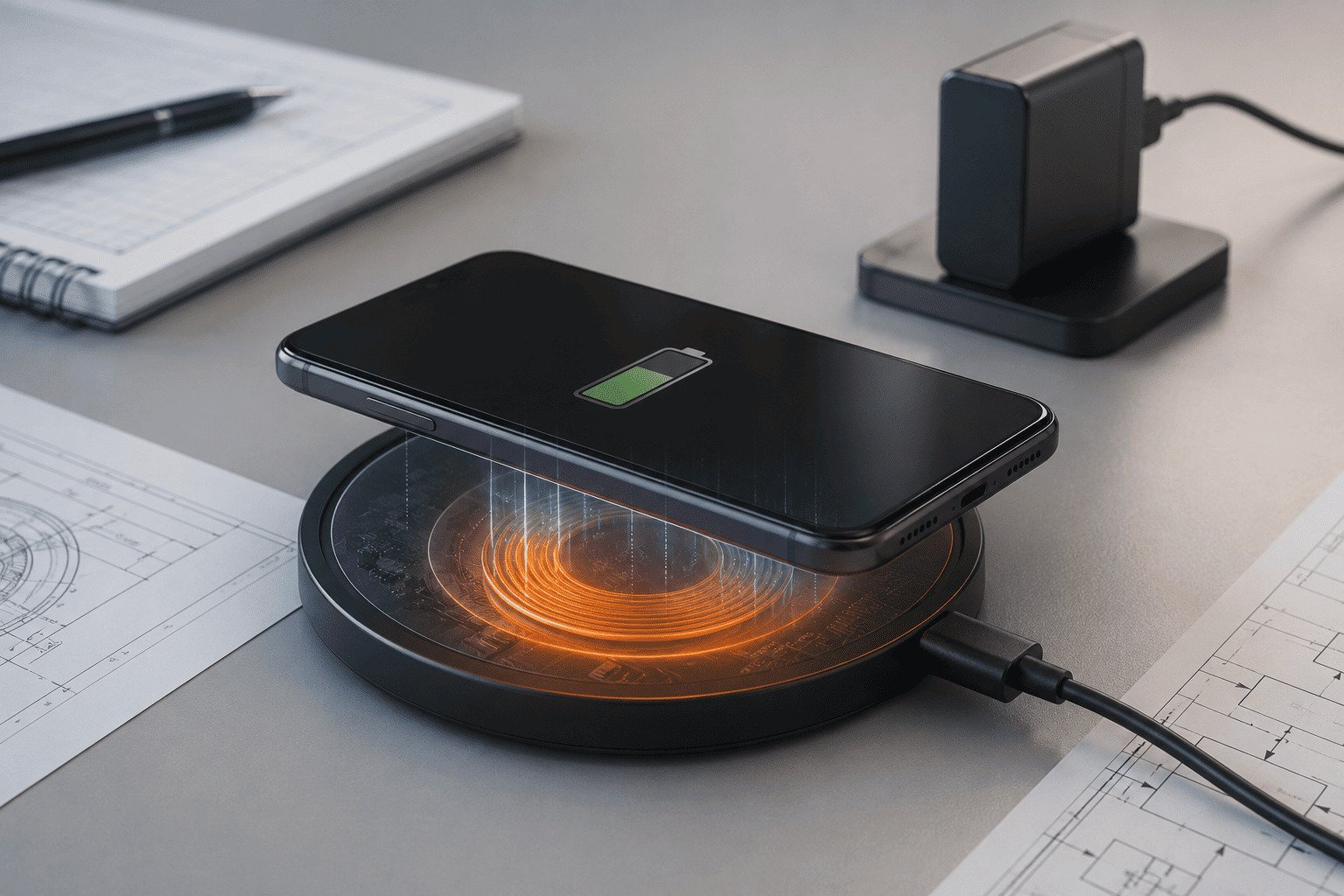
We build and test wireless chargers every day, so we do not see heat as one small problem. We see heat as the visible sign of energy loss inside the full charging system. A good charger does not remove heat completely. It controls where loss happens, how fast heat rises, and whether the phone and charger can stay safe during real use.
Is Heat in Wireless Charging Normal?
We hear this question often from importers and brand owners. They see a warm sample and worry about safety, returns, and customer complaints.
Some heat is normal in wireless charging because power moves through coils and an air gap instead of a direct metal connector.3 Problematic heat is different. It is high, fast rising, uneven, or linked with charging drops, phone warnings, smell, deformation, or shutdown.
We need to separate normal warmth from overheating. Normal warmth usually appears during fast charging, when the phone battery is low, or when the room temperature is high. We often see the surface temperature rise first and then become stable. This is a healthy curve. Problematic heat keeps rising. It may appear with poor charging speed, repeated power drops, or phone temperature warnings.
How We Judge Heat in Real Testing
| Heat Condition | What We Usually See | What It Often Means |
|---|---|---|
| Mild and stable warmth | Charger and phone feel warm but charge normally | Normal energy loss |
| Fast temperature rise | Surface gets hot in a short time | Poor design or poor compatibility |
| Heat near one small area | One point is much hotter than others | Coil or component stress |
| Heat with charging drops | Phone starts and stops charging | Alignment, input, or control issue |
| Heat with foreign object | Metal item becomes hot | FOD protection issue |
We do not judge heat by touch alone. Human touch is subjective. A charger may feel hot at a temperature that is still within [safety limits](https://en.wikipedia.org/wiki/Qi_(standard)).4 So we use thermal cameras, surface probes, long-duration charging tests, and different phone models. We also test with cases, different adapters, and different cable lengths. This matters because a product that looks fine in a short lab demo may fail in a real bedroom, office, car, or retail display. For B2B buyers, the key point is simple. Do not ask only, “Is it hot?” Ask, “What is the thermal curve under real charging conditions?”
Where Does Energy Loss Happen in a Wireless Charging System?
We sometimes compare wireless charging to a supply chain. If one link is weak, the whole delivery becomes less efficient.
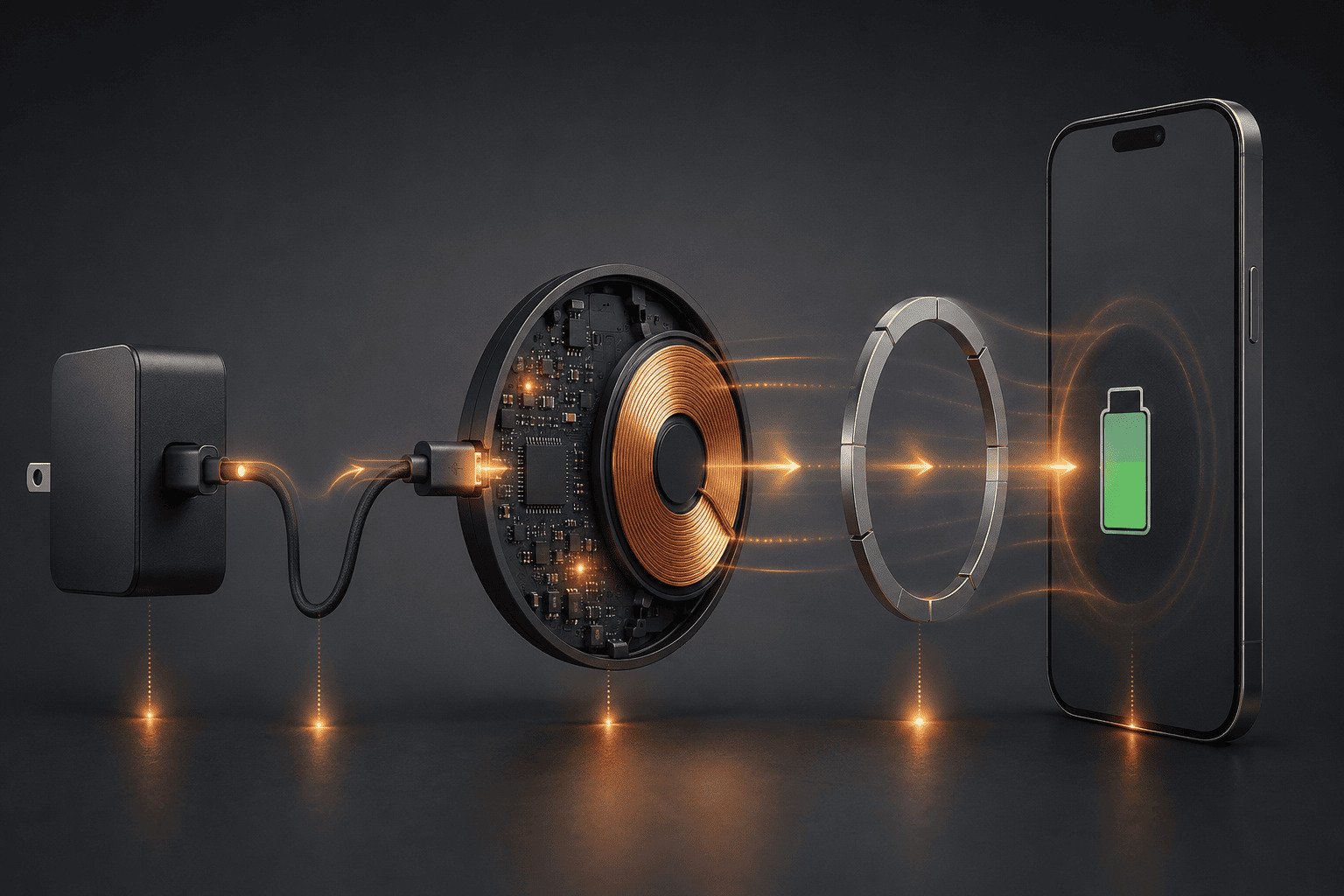
Energy loss happens at many points: the power adapter, cable, transmitter circuit, charging coil, magnetic alignment, air gap, phone case, receiver coil, and the phone battery management system.5 Heat is the result of these small losses adding together.
Wireless charging is not only “one coil sending power to another coil.” We design it as a full power path. The adapter must provide stable input. The cable must carry enough current with low loss. The transmitter circuit must convert power cleanly. The coil must be shaped and placed correctly. The phone must sit in the right position. The case must not block the magnetic field too much. The receiver coil and battery system inside the phone must also accept power safely.
The Full Power Chain
| Step in the Chain | Possible Weak Point | Result Seen by the User |
|---|---|---|
| Adapter | Low quality or wrong output | Slow charging, heat, shutdown |
| Cable | Thin wire or unstable connection | Voltage drop, unstable power |
| Transmitter circuit | Poor layout or low-grade parts | Extra loss and board heat |
| Transmitter coil | Bad coil size or position | Weak transfer and hot spots |
| Alignment | Phone not centered | Lower efficiency and more heat |
| Air gap | Thick case or raised camera area | More loss across distance |
| Receiver coil | Phone model difference | Different heat behavior |
| Battery system | Phone limits power for safety | Slower charging or power drop |
We pay close attention to this chain in product design. A charger with a good coil but a weak circuit will still waste power. A charger with a strong circuit but poor alignment will still heat more than expected. A 15W label also does not mean the phone receives 15W into the battery.6 Some power is lost before it reaches the battery. This is why advertised wattage is not the same as real charging efficiency. We prefer to test real output over time, not only peak power in the first few minutes. Stable delivery is more useful than a short high number.
Why Do Coil Alignment, Cases, and Foreign Objects Cause More Heat?
We often see samples fail because of simple real-world details. The phone is slightly off center. The case is thick. A coin is nearby.
Poor coil alignment, thick phone cases, and metal foreign objects increase energy loss because they disturb the magnetic field.7 The charger must work harder, the phone receives less useful power, and more energy becomes heat instead of battery charge.
Coil alignment is one of the most important causes of heat. When the transmitter coil and receiver coil are well aligned, energy transfers more cleanly. When they are offset, the magnetic field does not couple well. The system may increase effort, but the phone still receives less useful power. The lost part becomes heat in the charger, the phone, or nearby objects.
Common Real-World Causes
| Cause | Why It Matters | What We Test |
|---|---|---|
| Off-center phone position | Coils do not match well | Center, side shift, and angle tests |
| Thick phone case | Air gap becomes larger | 2 mm, 3 mm, 5 mm, and case material tests |
| Metal ring or plate | Metal absorbs energy | FOD and temperature rise tests |
| Raised camera area | Phone cannot lie flat | Air gap and stability tests |
| Weak magnets | Phone position changes easily | Magnetic pull and drop tests |
We have seen good-looking chargers perform poorly when a phone case is added. This is important for brands and distributors because end users rarely remove cases before charging, even though thick barriers can cut charging speed by 20% to 50%8 (https://www.wirelesspowerconsortium.com/). We also see car wireless chargers face more alignment risk because vibration and movement change phone position. For Qi2 and magnetic products, magnet layout becomes part of thermal design. Strong magnetic alignment can reduce user error. It can also improve transfer stability. But magnets alone do not solve everything. The coil, shielding sheet, circuit control, and phone compatibility still need proper design. Foreign Object Detection is also critical. If a metal object sits between the phone and charger, the product must detect abnormal loss and reduce or stop power.9 This protects the user and reduces after-sales risk.
How Do Professional Manufacturers Control Heat?
We do not solve heat by adding one bigger part. We control heat by managing design, materials, firmware, safety rules, and production quality together.
Professional manufacturers control heat through coil design, magnetic alignment, circuit layout, thermal materials, FOD protection, power management, certification testing, long-duration aging tests, and stable mass production. Heat control is a system job, not a single component choice.
A strong engineering process starts before tooling. We review the target phone models, target power, adapter plan, product size, housing material, coil position, and user scenario. A desktop charging stand has different thermal needs from a car mount. A 3-in-1 charging station has more heat sources than a single pad. A charger with a lamp or Bluetooth speaker must manage both charging heat and other device heat.
Heat Control Methods We Use
| Control Area | What We Do | Why It Helps |
|---|---|---|
| Coil design | Match coil size, winding, and position | Improves transfer efficiency |
| Magnetic alignment | Use correct magnet layout and strength | Reduces misalignment loss |
| Circuit layout | Reduce current path loss and hot points | Keeps board temperature lower |
| Thermal material | Use graphite, metal plate, or heat spreader | Spreads heat more evenly |
| [Firmware control | Adjust power by temperature and phone status | Prevents unstable overheating10 |
| FOD protection | Detect metal and abnormal loss | Improves safety |
| Certification | Follow Qi, Qi2, CE, FCC, UL, PSE, KC needs | Reduces compliance risk |
| Production control | Keep coil position and parts stable | Keeps quality consistent |
We also test products for hours, not only minutes. A charger may pass a short function test but fail after long charging, high room temperature, or repeated phone placement. We use thermal chambers when needed. We compare different adapters. We check whether the charger returns to normal after power changes. We also look at mass production consistency. This is important because a sample made by an engineer can perform well, but large-volume production must keep the same coil position, same solder quality, same material thickness, and same firmware version. For buyers, stable mass production is part of heat control. It is not only a factory promise. It must be proven by records, test plans, and sample validation.
Why Is Advertised Wattage Not Enough for B2B Buyers?
We often meet buyers who start with one question: “Is this 15W or 30W?” That question matters, but it is not enough.
Advertised wattage shows a possible power level, but it does not prove real charging speed, efficiency, or thermal stability. B2B buyers should review thermal data, adapter requirements, case tests, Qi or Qi2 proof, and real samples before bulk orders.
A high wattage label can attract retail buyers. But wireless charging performance depends on the phone model, protocol, adapter, cable, alignment, case, and temperature control. Some phones accept high wireless power only under certain conditions. Some phones reduce power when they become warm.11 Some chargers show high peak power at the start, then drop quickly. This creates a gap between the marketing number and the user experience.
Questions We Suggest Buyers Ask
| Buyer Question | Why It Matters |
|---|---|
| Can we see thermal test data for 1 to 3 hours? | It shows whether heat becomes stable |
| Which adapter and cable are required? | Wrong input increases loss and complaints |
| Was the product tested with phone cases? | Real users charge with cases |
| Is there Qi or Qi2 certification proof? | It reduces technical and compliance risk |
| How does FOD protection behave? | It protects users from metal object heating |
| Which phone models were tested? | Compatibility affects heat and speed |
| Can we test pre-production samples? | Samples reveal real-world problems early |
| Are test reports available for CE, FCC, RoHS, UL, PSE, or KC? | Target markets need proof |
We recommend that buyers compare products by stable charging behavior, not only by peak power. A good 15W product with stable thermal control may create fewer complaints than a poorly designed high-wattage product. This is very important for importers, wholesalers, and brand owners. Returns are expensive. Heat complaints damage channel trust. Compliance issues can stop shipments. We also suggest checking the factory’s quality system, such as ISO 9001 and BSCI, and checking whether the supplier understands WPC, Qi, and Qi2 requirements. A supplier that can explain test conditions clearly is usually safer than a supplier that only sends a low price and a wattage number.
How Can Buyers Tell Normal Warmth From Poor Design?
We see many buyers make decisions too fast. They touch a sample once, or they compare two products without using the same phone and adapter.
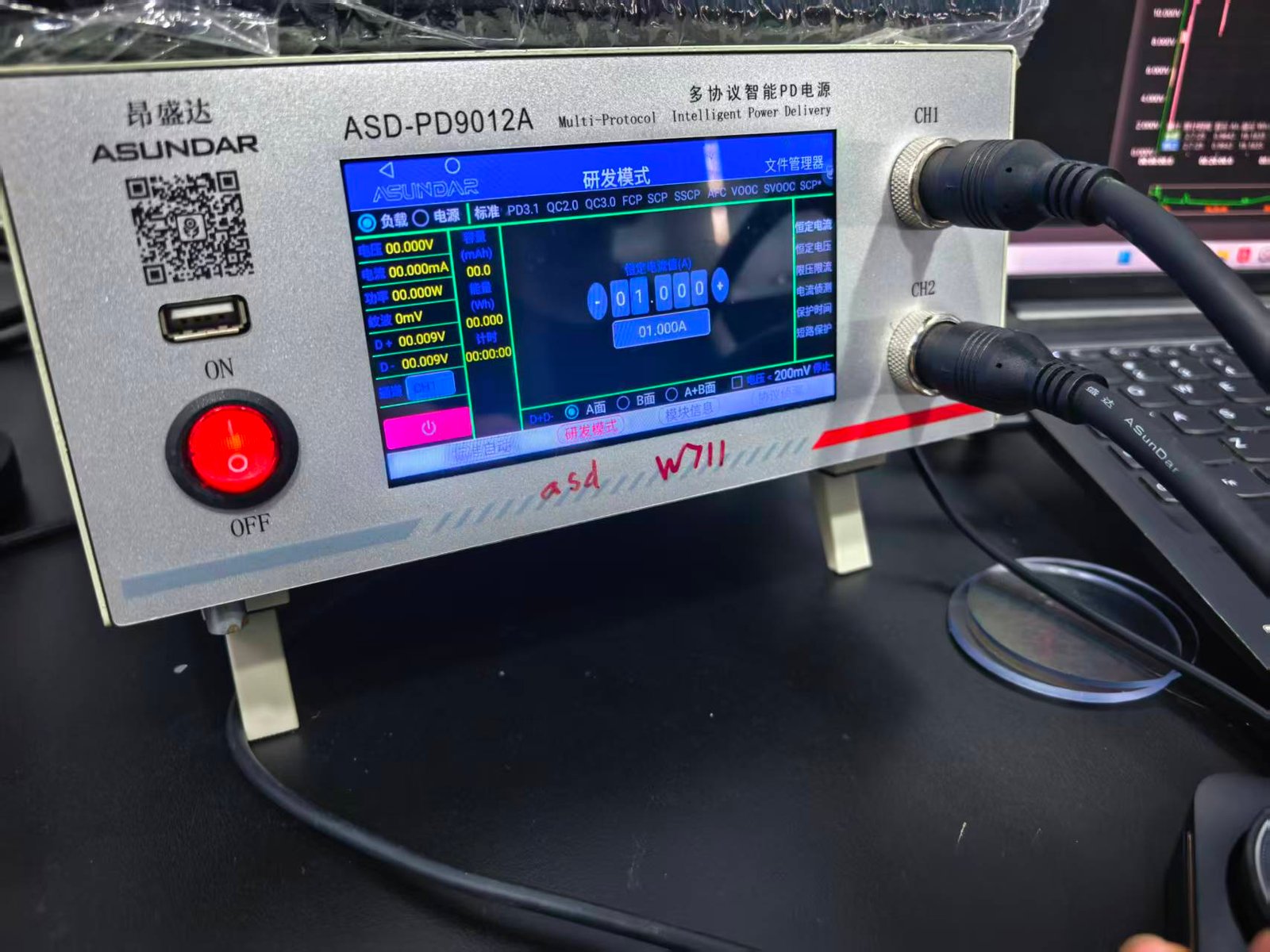
Buyers can judge heat better by testing the same phone, case, adapter, cable, room temperature, and charging time across samples. Normal warmth becomes stable. Poor design often shows fast heat rise, unstable charging, hot spots, or repeated power reduction.
A fair comparison needs controlled conditions. We usually define the phone model, battery starting percentage, adapter output, cable length, case thickness, room temperature, charging position, and test duration. If these factors change, the result may not be useful. For example, a phone at 10% battery may request more power than a phone at 80%12. A room at 30°C will create more heat stress than a room at 22°C. A thick case can turn a normal charger into a hot charger. These details matter in B2B sample review.
Simple Sample Test Plan
| Test Item | Recommended Method |
|---|---|
| Starting battery level | Start at the same level, such as 20% |
| Room temperature | Keep the same room condition |
| Adapter | Use the supplier recommended adapter |
| Cable | Use the same cable for all samples |
| Phone case | Test with and without case |
| Alignment | Test centered and slightly shifted positions |
| Duration | Test at least 1 to 3 hours |
| Temperature record | Use probe or thermal camera if possible |
| Charging behavior | Record power drops, phone warnings, and shutdowns |
We also suggest testing the product in the real use scene. A bedside charger needs silent and stable overnight behavior. A car charger needs vibration, heat, and movement testing. A 3-in-1 station needs full-load testing with phone, watch, and earbuds charging together. A wireless charger with a lamp or Bluetooth speaker needs testing with all functions turned on. We do this because heat sources add together. A product may pass when only the phone charges, but it may become warmer when all functions run. Good design leaves margin. Poor design works only in ideal conditions.
Conclusion
We control wireless charging heat by treating it as system energy loss. Buyers should verify real thermal data, compatibility, certification, and sample performance before bulk orders.
"Wireless power transfer - Wikipedia", https://en.wikipedia.org/wiki/Wireless_power_transfer. A peer-reviewed engineering source on inductive wireless power transfer supports that imperfect coupling and resistive or conversion losses in the transmitter, receiver, and intervening gap reduce efficiency and are dissipated primarily as heat. Evidence role: mechanism; source type: paper. Supports: Inductive wireless power transfer is not perfectly efficient and electrical losses in coils, power electronics, coupling distance, and receiver circuitry are dissipated as heat.. ↩
"[PDF] A review of foreign object detection (FOD) for inductive ... - Chris Mi", https://chrismi.sdsu.edu/publications/170.pdf. Technical material from a wireless-power standards body supports that alignment, compatible power negotiation, and protection controls are central to limiting abnormal losses and heat in inductive charging systems. Evidence role: expert_consensus; source type: institution. Supports: Wireless charging systems use alignment, control, and protection requirements because poor coupling or abnormal operating conditions can increase losses and heating.. Scope note: Standards material may support the general relationship between abnormal operating conditions and heating, but it may not rank these causes by frequency in commercial returns. ↩
"Inductive charging - Wikipedia", https://en.wikipedia.org/wiki/Inductive_charging. An encyclopedic technical overview of inductive charging supports that power is transferred by electromagnetic coupling across a gap rather than by direct metal contact, and that transfer efficiency is affected by coupling and losses. Evidence role: definition; source type: encyclopedia. Supports: Inductive charging transfers energy through electromagnetic coupling between coils rather than direct electrical contact, with losses that can produce heat.. Scope note: An encyclopedia source is suitable for background explanation, not for product-specific thermal limits. ↩
"An investigation on humans' sensitivity to environmental temperature", https://pmc.ncbi.nlm.nih.gov/articles/PMC10695924/. Electrical-equipment safety standards and human thermal-perception studies support that surfaces may be perceived as hot at temperatures below regulated contact-temperature limits. Evidence role: expert_consensus; source type: institution. Supports: Safety standards define allowable touch temperatures, and human perception of heat can occur below injury or compliance thresholds.. Scope note: The cited limits should be matched to the relevant product category, material, contact duration, and market standard. ↩
"Wireless Power Transfer: Systems, Circuits, Standards, and Use ...", https://pmc.ncbi.nlm.nih.gov/articles/PMC9371050/. A systems-level study of inductive charging efficiency supports that losses arise across power conversion, coil coupling, receiver electronics, and battery-charging stages rather than at a single component. Evidence role: mechanism; source type: paper. Supports: A wireless charging system has losses in input conversion, power electronics, coils, magnetic coupling, receiver rectification, and battery charging control.. ↩
"[PDF] assessing roles of inductive opportunity charging in battery electric ...", https://rosap.ntl.bts.gov/view/dot/77855/dot_77855_DS1.pdf. Experimental studies of inductive charging efficiency support that rated transmitter power or input power is not identical to battery-side charging power because intermediate conversion and coupling losses occur. Evidence role: mechanism; source type: paper. Supports: Measured battery-side power is lower than transmitter or input power because of wireless-transfer and conversion losses.. Scope note: The magnitude of the difference depends on phone model, protocol, alignment, adapter, battery state, and test method. ↩
"[PDF] Foreign Object Detection for Wireless Power Transfer Based on ...", https://tentzeris.ece.gatech.edu/WPTC20_Ote.pdf. Wireless-power-transfer literature supports that misalignment and increased coil separation lower coupling efficiency, and that conductive foreign objects can absorb field energy through induced currents and become heat sources. Evidence role: mechanism; source type: paper. Supports: Coil misalignment and increased separation reduce coupling efficiency, while conductive metal objects can absorb electromagnetic energy and heat.. ↩
"Can Wireless Charging Work with Case? Compatibility Guide - Anker", https://www.anker.com/blogs/wireless-chargers/can-wireless-charging-work-with-case. An experimental study of inductive charging under varying coil separation or phone-case thickness supports that added distance can substantially reduce delivered power or charging efficiency. Evidence role: statistic; source type: paper. Supports: Increased separation or case thickness can measurably reduce wireless charging efficiency or delivered power, potentially within the stated range under tested conditions.. Scope note: The specific 20% to 50% range should be cited only if the source reports comparable measurements; otherwise the source supports the directional effect, not the exact range. ↩
"Qi (standard) - Wikipedia", https://en.wikipedia.org/wiki/Qi_(standard). Wireless charging standards documentation supports that foreign-object detection is used to identify abnormal power loss from metallic objects and to limit or terminate power transfer for safety. Evidence role: expert_consensus; source type: institution. Supports: Qi-type wireless charging systems include foreign-object detection to identify abnormal losses from metal objects and limit power transfer.. Scope note: Public standards summaries may describe the requirement generally without disclosing all proprietary compliance-test procedures. ↩
"Research on fast-charging battery thermal management system ...", https://pmc.ncbi.nlm.nih.gov/articles/PMC10359346/. Battery-management and wireless-charging control literature supports that temperature feedback can be used to reduce charging power or current to maintain operation within thermal limits. Evidence role: mechanism; source type: paper. Supports: Charging controllers can use temperature feedback and device state to reduce power, current, or duty cycle when thermal limits are approached.. ↩
"Lithium-Ion Batteries under Low-Temperature Environment - PMC", https://pmc.ncbi.nlm.nih.gov/articles/PMC9698970/. Research on lithium-ion battery management and smartphone thermal control supports that charging power may be reduced when device or battery temperature rises beyond control thresholds. Evidence role: mechanism; source type: research. Supports: Smartphones and battery-management systems may limit charging current or power in response to elevated temperature to protect the battery and device.. Scope note: The exact threshold and response vary by phone model, battery chemistry, firmware, and charging protocol. ↩
"[PDF] On state-of-charge determination for lithium- ion batteries", https://inldigitallibrary.inl.gov/sites/sti/sti/Sort_1351.pdf. Educational and technical sources on lithium-ion charging support that charging current is typically higher during the lower state-of-charge constant-current phase and tapers as the cell approaches higher state of charge. Evidence role: mechanism; source type: education. Supports: Lithium-ion charging commonly uses a constant-current phase at lower states of charge and tapers current during the constant-voltage phase near higher states of charge.. Scope note: Phone-level wireless charging power also depends on thermal controls, charger protocol, and manufacturer-specific battery-management software. ↩