
A charger can say 25W and still feel slow.1 That gap wastes time, creates heat, and makes buyers doubt the whole wireless charging setup.
For iPhone 17, iPhone 17 Pro, and iPhone 17 Pro Max, we should choose MagSafe 25W for the most Apple-first experience, and Qi2 25W for wider certified accessory choices. Real speed depends on the phone, certification, adapter, cable, alignment, case, heat control, and use scenario.2
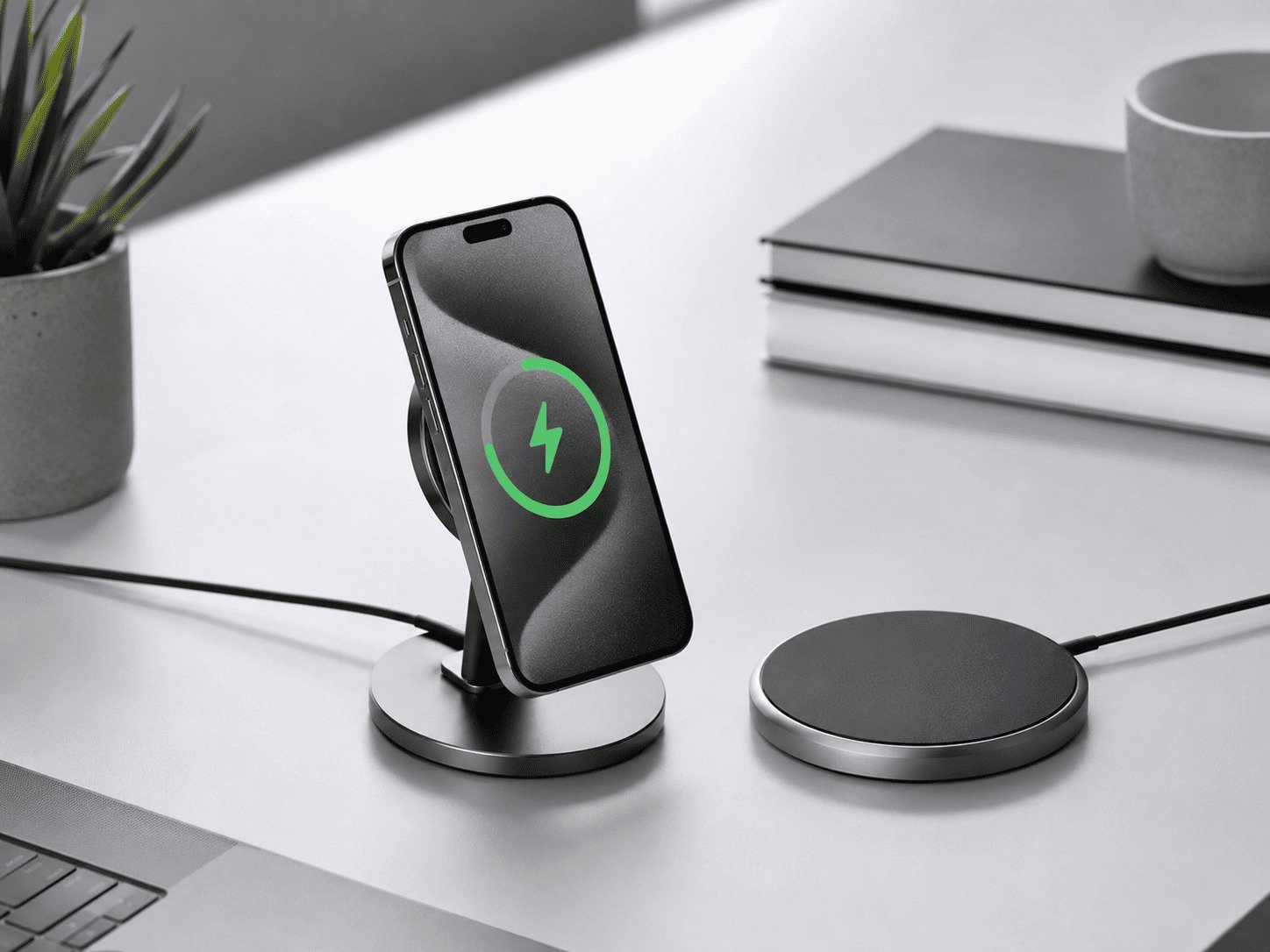
Many buyers ask one direct question. Is MagSafe 25W better, or is Qi2 25W better? We think this question is too simple. In real use, wireless charging is not only about the number printed on the box.
We have seen many products in the market use words like “25W magnetic charging,” “MagSafe compatible,” or “fast wireless charger.” These words may sound strong. But they do not always mean the product can give stable 25W charging to an iPhone 17 series device.3
The better question is this. Which charging setup gives safe, stable, and easy charging in the place where we use the phone every day? That place may be a desk, a bedside table, a car, a suitcase, or a 3-in-1 station. Once we look at the real scene, the choice becomes much clearer.
What Does “Up to 25W” Really Mean for iPhone 17 Wireless Charging?
A 25W label can hide many weak points. If one part is wrong, the phone may charge slower, run hotter, or stop charging too often.
“Up to 25W” means the whole system can reach 25W under the right conditions. The phone model, certified standard, USB-C PD adapter, cable, magnetic alignment, case thickness, temperature control, and firmware behavior all affect the real charging result.
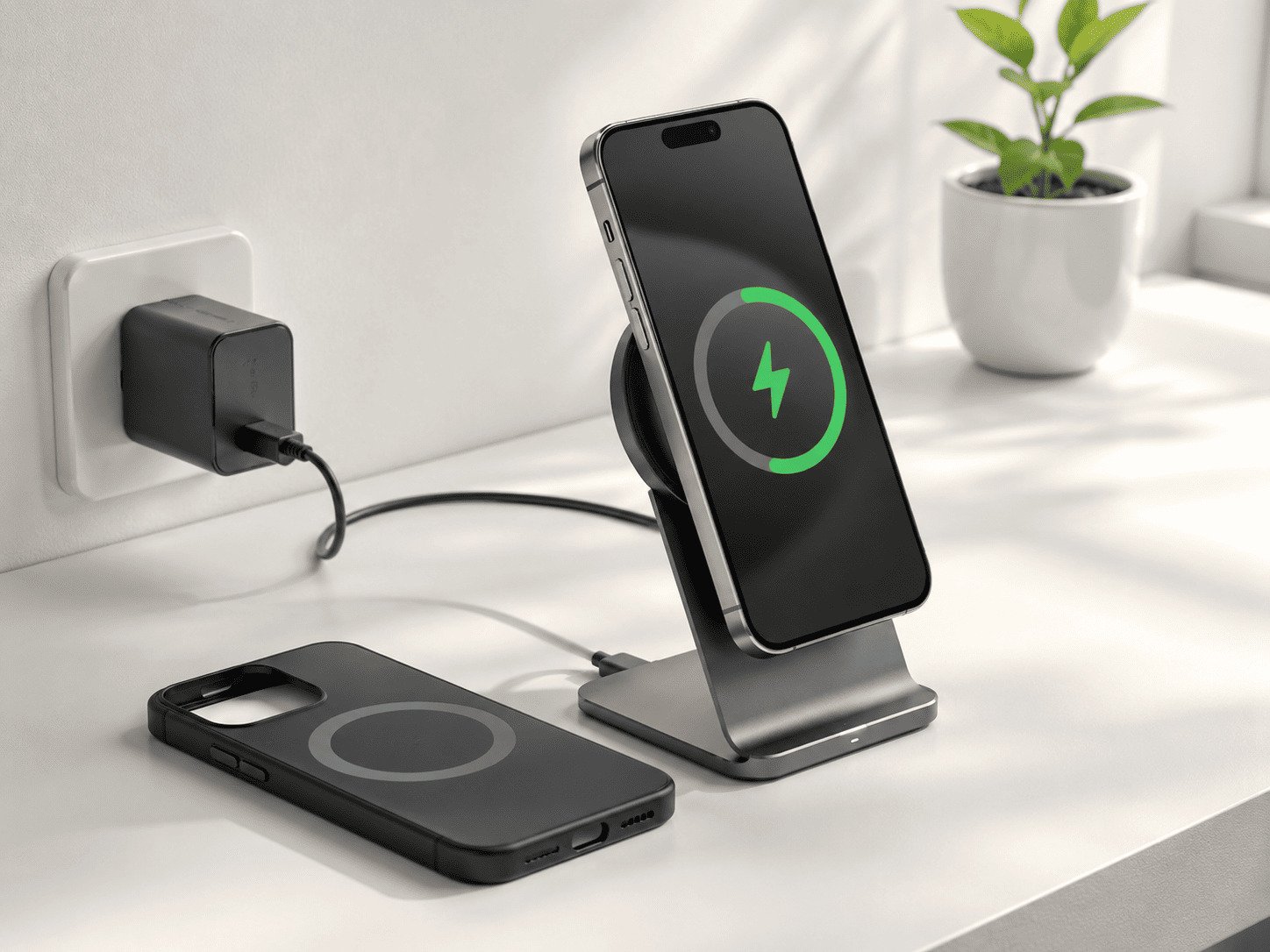
We should treat 25W wireless charging as a complete system. It is not only a charger label. It is also not only a phone feature. The charger, adapter, cable, phone, and environment must work together.
For example, if we use a 25W wireless charger with a weak USB-C adapter, the charger may not get enough input power. Apple also states that up to 25W faster wireless charging with MagSafe requires a 30W or greater power adapter. If we use a long, poor cable, voltage drop may reduce performance.4 If the phone case is too thick, the magnetic alignment may be poor. If the room is hot, iPhone may slow down or pause charging to protect the battery.
This is why two chargers with the same “25W” claim may give very different results. One charger may hold stable power with good heat control. Another charger may start fast, then drop power after a few minutes.5
| Factor | What We Should Check | Why It Matters |
|---|---|---|
| Phone model | iPhone 17, iPhone 17 Pro, or iPhone 17 Pro Max support details | The phone decides the final charging behavior |
| Charging standard | MagSafe 25W or certified Qi2 25W | Certification helps reduce unclear claims |
| Adapter | USB-C PD output and required wattage | The charger needs enough input power |
| Cable | Good USB-C cable with stable current | A weak cable can limit power |
| Magnetic alignment | Strong and centered magnets | Poor alignment creates heat and lowers speed |
| Case | Thin magnetic case or approved case | Thick cases can block efficient charging6 |
| Heat control | Temperature design and safety protection | Heat can slow charging and affect battery comfort |
| Use scene | Desk, bedside, car, travel, or multi-device | The best design changes by place |
We often remind buyers not to judge a charger by peak wattage only. A product that gives steady charging, low heat, and clean daily use is often better than a product that only shows a high number in marketing. The iPhone 17 series may support a higher wireless charging ceiling, but the real user experience still comes from stable design.
Should We Choose MagSafe 25W or Qi2 25W for Daily iPhone 17 Use?
Many users fear choosing the wrong standard. That fear is normal, because vague product names make MagSafe and Qi2 sound more confusing than they should be.
We should choose MagSafe 25W when we want the safest Apple-first path. We should choose Qi2 25W when we want more certified third-party choices. The best option depends on trust, certification, design quality, and where we charge.
We do not see MagSafe 25W and Qi2 25W as a simple winner-or-loser match. They serve different buying needs.
MagSafe 25W is the familiar Apple-first choice. It fits users who want the most direct ecosystem experience. These users may already use Apple cases, Apple adapters, and Apple-approved accessories. They often care less about having many accessory styles. They care more about a known path and fewer questions.
Qi2 25W is different. Qi2 is an open certified standard. It can give users more third-party product choices, such as stands, pads, folding travel chargers, car mounts, and 3-in-1 stations. But the key point is certification. A product that only says “Qi2 style” or “Qi2 compatible” is not the same as a certified Qi2 product.
| User Need | Better Starting Point | What We Should Watch |
|---|---|---|
| Most Apple-first experience | MagSafe 25W | Use proper adapter, cable, and case |
| More third-party options | Certified Qi2 25W | Check real Qi2 certification |
| Desk charging | MagSafe or Qi2 stand | Stable angle and heat control matter |
| Bedside charging | Low-heat pad or stand | LED brightness and fan noise matter |
| Car charging | Strong magnetic mount | Heat from sunlight can reduce speed7 |
| Travel charging | Foldable Qi2 or MagSafe design | Cable, adapter, and portability matter |
| Multi-device charging | 3-in-1 certified design | Total power budget is important |
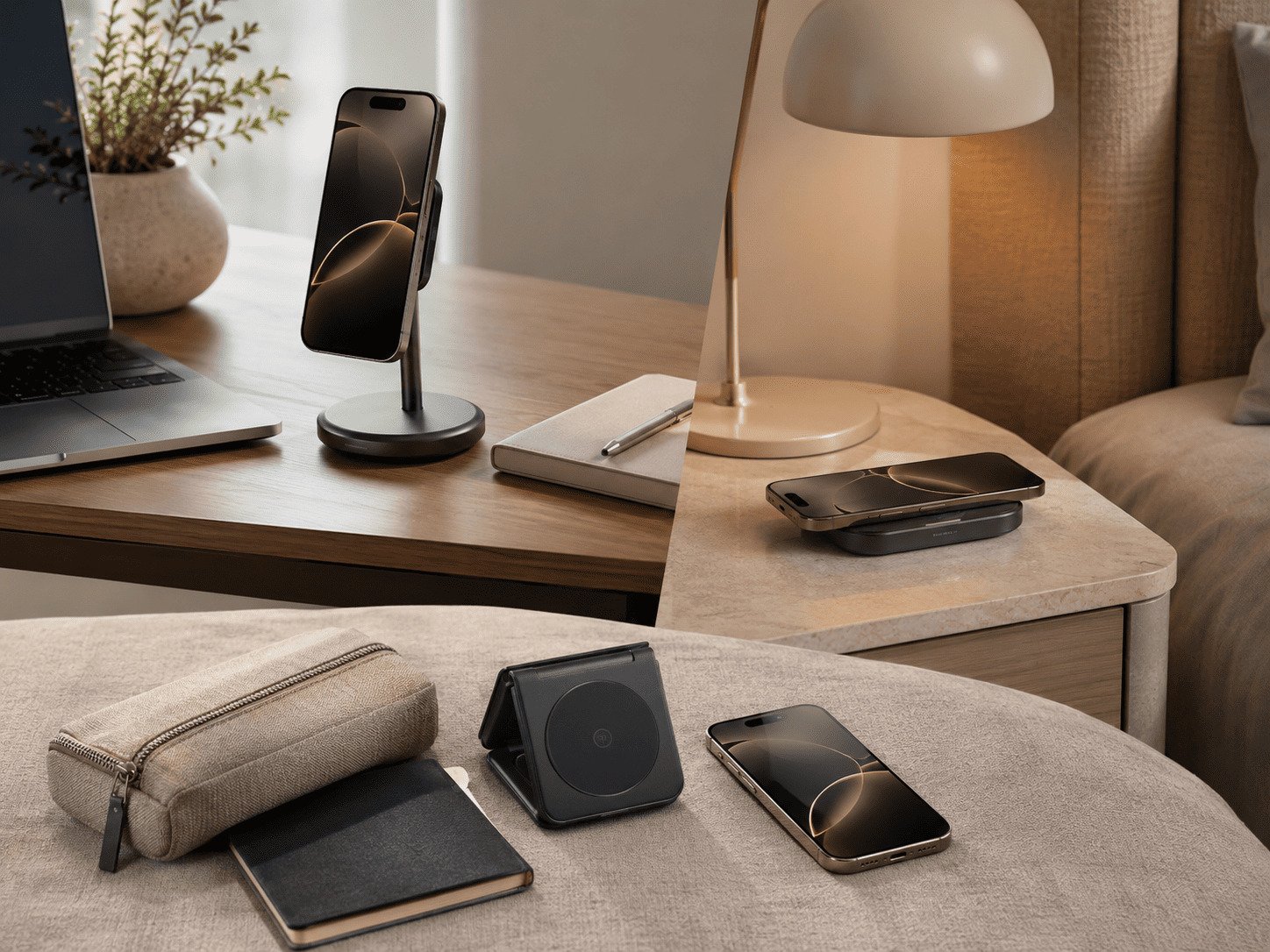
For a desk, we usually prefer a stand. It lets us see notifications, make video calls, and place the phone with one hand. For a bedside table, we care more about quiet charging, low heat, and a soft indicator light. For a car, we care about magnet strength, air vent stability, and heat resistance. For travel, we care about size, folding design, and adapter support. For a 3-in-1 station, we care about total power input, because the phone, watch, and earbuds may charge together.
This is why the best charger is not always the one with the highest number. The best charger is the one that fits the real charging habit. We should choose the charging standard and product shape together.
How Should We Verify a Wireless Charger Before We Buy It or Sell It?
A product page can look polished, but the details may be weak. If we do not check the proof, we may buy a charger that creates support problems later.
We should verify certification, input adapter requirements, cable quality, magnetic strength, case compatibility, heat performance, and safety reports before we trust any 25W wireless charger claim. For bulk buyers, written test data and compliance documents are not optional.8
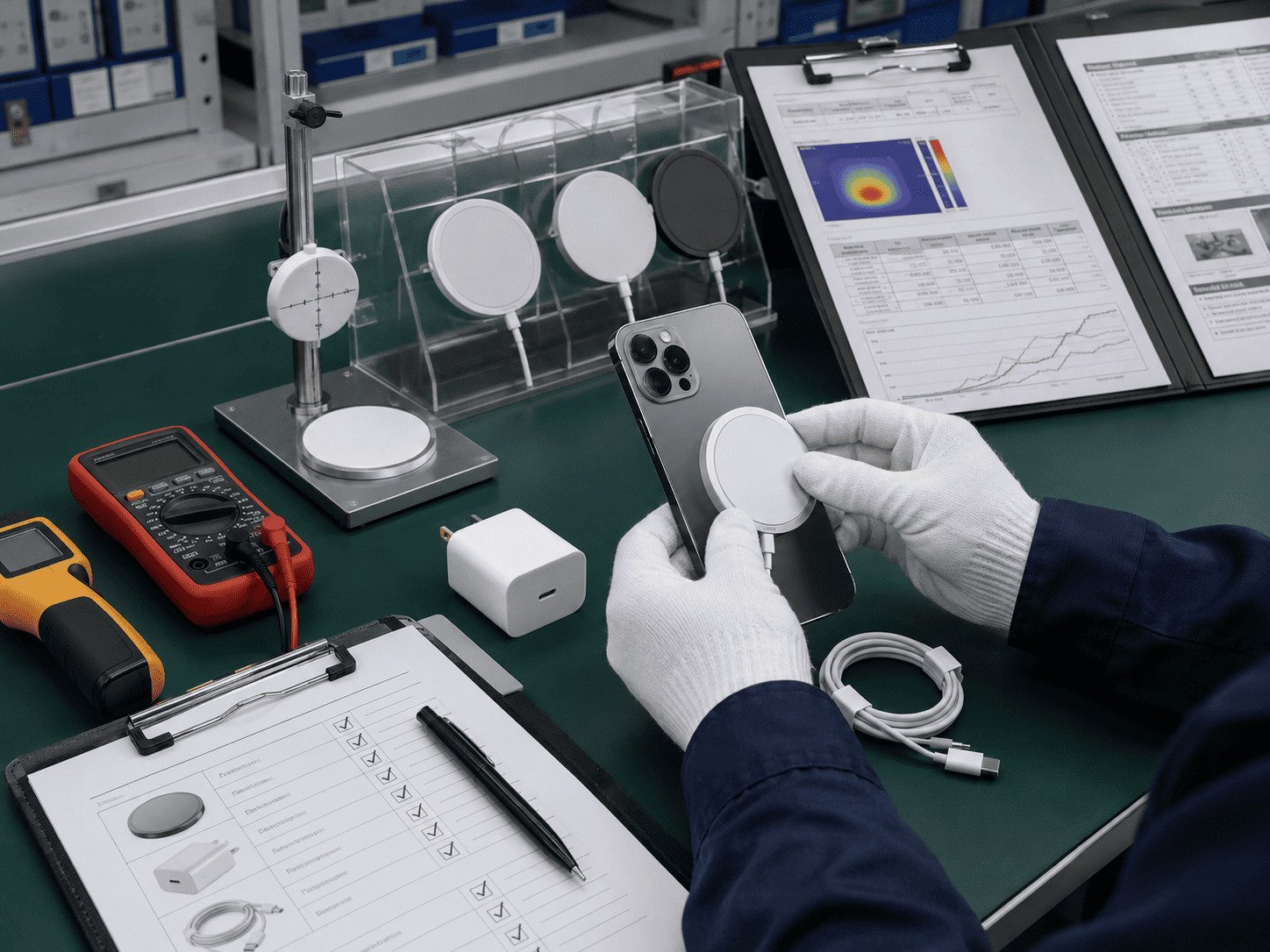
We work with wholesalers, importers, brand owners, and distributors. Their main risk is not only one bad charger. Their real risk is repeat customer complaints, return costs, customs issues, and channel damage. A vague “25W magnetic” claim can create these problems if the product is not built and tested well.
The first step is to check the exact wording. “MagSafe compatible” may only mean the charger has magnets and can hold an iPhone. It does not always mean official MagSafe performance. “Qi2 compatible” may also be unclear. We should ask for real certification status and model number support. We should also check whether the product is listed in the WPC Qi Certified Products Database or supported by valid test documents.
The second step is to check the input requirement. A 25W wireless charger may need a higher wattage USB-C PD adapter than users expect. If the package does not include an adapter, the manual must state the correct adapter clearly. This matters because many users still use old low-power adapters.
| Check Point | Good Sign | Red Flag |
|---|---|---|
| Certification | Clear MagSafe or Qi2 certification proof | Only says “compatible” with no proof |
| Adapter requirement | Clear USB-C PD input specs | No adapter details on package or manual |
| Cable | Tested USB-C cable included or specified | Thin cable with no rating |
| Heat test | Temperature data under real charging use | Only peak power test shown |
| Magnetic design | Centered alignment and stable hold | Phone slides or shifts easily |
| Case support | Clear case thickness guidance | Claims “works with all cases” |
| Safety | CE, FCC, RoHS, UL-related, PSE, KC, or regional reports when needed | No test reports available |
| Multi-device power | Clear total output and input budget | Phone power claim ignores watch and earbuds |
For daily users, this checklist helps avoid disappointment. For business buyers, it helps reduce risk before a bulk order. We should ask suppliers for test reports, certification proof, and real sample testing. A sample should be tested with the actual iPhone 17 series model, the expected adapter, and the expected case.
We should also test charging in real places. A charger that works well in an air-conditioned office may behave differently in a hot car. A 3-in-1 station may look good in photos but may need a stronger adapter when all positions are used. A travel charger may pass a short test but heat up when folded and used for a long time.
As a manufacturer, we also look at design from the inside. Coil position, magnetic ring accuracy, PCBA layout, thermal material, housing design, and firmware protection all affect the final experience.9 These parts are not always visible to the buyer, but they decide whether the charger feels reliable after weeks of use. Research on wireless charging also shows that misalignment can increase heating and reduce system efficiency, which is why internal design and alignment control matter.
Conclusion
We should not chase 25W alone. We should choose certified, well-designed wireless charging based on the iPhone model, power setup, heat control, and real use scene.
"Wireless power transfer - Wikipedia", https://en.wikipedia.org/wiki/Wireless_power_transfer. A peer-reviewed study on inductive wireless power transfer supports that rated transmitter power is not equivalent to delivered charging power, because coupling efficiency and losses vary with alignment, coil geometry, and thermal conditions. Evidence role: mechanism; source type: paper. Supports: Wireless charging performance can differ from nominal rated power because transfer efficiency and delivered power depend on coupling, alignment, thermal losses, and system design.. Scope note: The source would support the engineering mechanism generally, not measured charging speed for a specific iPhone 17 charger. ↩
"Qi (standard) - Wikipedia", https://en.wikipedia.org/wiki/Qi_(standard). Apple, USB-IF, and Wireless Power Consortium documentation collectively indicate that wireless charging speed depends on device support, certified charging mode, input power, alignment, and thermal operating limits. Evidence role: general_support; source type: institution. Supports: Authoritative standards and device documentation identify power adapter capacity, device support, certified charging standard, alignment, and temperature as relevant conditions for wireless charging performance.. Scope note: No single source may verify every listed factor together; the citation would provide contextual support from several standards and device documents. ↩
"MagSafe (wireless charger) - Wikipedia", https://en.wikipedia.org/wiki/MagSafe_(wireless_charger). Certification-program documentation from the Wireless Power Consortium and Apple supports the distinction between certified wireless charging products and products using compatibility or marketing language without listed certification. Evidence role: definition; source type: institution. Supports: Certification databases and accessory-program documentation distinguish certified products from products that merely use compatibility wording.. Scope note: The source would not prove that any particular unlisted product fails to reach 25W; it supports the need to verify certification rather than rely on wording alone. ↩
"USB-C Cable Voltage Drop - LTT Labs : r/UsbCHardware - Reddit", https://www.reddit.com/r/UsbCHardware/comments/1r5t5es/usbc_cable_voltage_drop_ltt_labs/. USB-IF cable specifications and elementary circuit analysis support that conductor resistance produces voltage drop proportional to current, so an inadequate or excessively long cable can reduce the voltage available to a charging device. Evidence role: mechanism; source type: institution. Supports: USB specifications and basic circuit theory support that cable resistance creates voltage drop under load, which can reduce available input voltage to a charger.. Scope note: The source would support the electrical mechanism, not quantify the performance loss for every USB-C cable or charger. ↩
"[PDF] Thermal Design and Optimization of High-Power Wireless Charging ...", https://www.osti.gov/servlets/purl/1871896. Apple support documentation states that iPhone charging can slow or pause when the device becomes too warm, supporting the claim that sustained wireless charging power depends partly on thermal control. Evidence role: mechanism; source type: institution. Supports: Device-support documentation and technical literature support that phones may slow or pause charging when temperature rises, making sustained power dependent on thermal design.. Scope note: This supports thermal power reduction in the device; it does not independently compare the thermal designs of two specific chargers. ↩
"Wireless Power Transfer: Systems, Circuits, Standards, and Use ...", https://pmc.ncbi.nlm.nih.gov/articles/PMC9371050/. Studies of inductive wireless power transfer show that greater coil separation reduces magnetic coupling and transfer efficiency, which provides a technical basis for the claim that thick phone cases can impair wireless charging. Evidence role: mechanism; source type: paper. Supports: Research on inductive power transfer shows that increased separation between transmitter and receiver coils reduces coupling and can lower efficiency.. Scope note: The evidence is mechanism-based and may not establish a universal case-thickness threshold for all Qi2 or MagSafe products. ↩
"Study: Hot cars can hit deadly temperatures in as little as one hour", https://news.asu.edu/20180516-discoveries-asu-study-hot-cars-can-hit-deadly-temperatures-within-one-hour. Vehicle-temperature research shows that sun-exposed cars can reach elevated interior temperatures, while Apple documentation states that iPhone charging may slow or pause under thermal limits; together, these sources support the claim that in-car heat can reduce charging speed. Evidence role: general_support; source type: research. Supports: Research shows that vehicle interiors can heat rapidly in sunlight, and device documentation explains that iPhones may slow or pause charging when too warm.. Scope note: This is contextual support combining environmental heat evidence with device thermal behavior, not a direct test of every car charger. ↩
"Equipment Authorization | Federal Communications Commission", https://www.fcc.gov/engineering-technology/laboratory-division/general/equipment-authorization. Government regulatory guidance for CE marking, FCC equipment authorization, and RoHS compliance supports that many electronic products require documented conformity evidence, test records, or technical files before lawful market placement. Evidence role: general_support; source type: government. Supports: Regulatory frameworks such as CE marking, FCC equipment authorization, and RoHS impose documentation, conformity, or recordkeeping obligations for many electronic products.. Scope note: Specific documentation duties vary by jurisdiction, product design, radio functions, and distribution role. ↩
"Design and analysis of 2-coil wireless power transfer (WPT) using ...", https://www.academia.edu/56106935/Design_and_analysis_of_2_coil_wireless_power_transfer_WPT_using_magnetic_coupling_technique. Wireless power transfer research shows that coil geometry and alignment, power-electronics design, and thermal management materially influence efficiency, heat generation, and safe operating control, supporting the claim that internal charger design affects the user experience. Evidence role: mechanism; source type: paper. Supports: Engineering literature on wireless power transfer supports that coil geometry, alignment, power electronics, and thermal management influence efficiency, heating, and control behavior.. Scope note: The source would support the general engineering relationship rather than validate a particular manufacturer’s internal design. ↩