
I see many buyers trust a logo, then they face heat issues, returns, and unclear supplier answers after the shipment arrives.
I know a wireless charger is Qi certified when I can find it in the Wireless Power Consortium product database and match the brand, model number, product name, and documents. I do not treat “Qi compatible” as “Qi certified.”
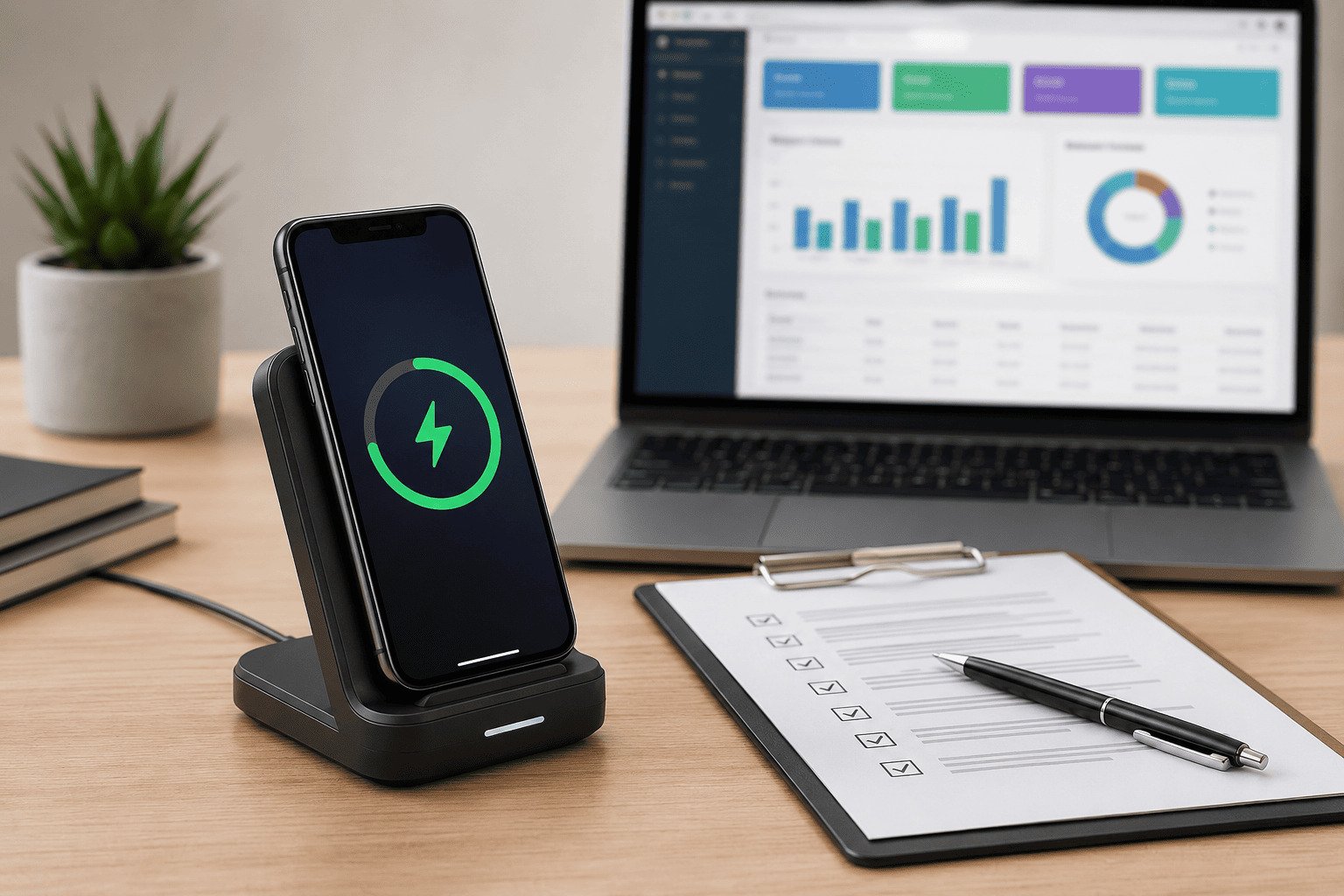
I have handled many wireless charger questions from importers, distributors, and brand owners. I have learned one simple rule. I never stop at the Qi logo. I check the listing source, the model data, the supplier proof, and the full compliance file before I trust the claim.
What is the real difference between Qi compatible and Qi certified?
I often see sellers use “Qi compatible” to make a product sound safer than it is. I know this can confuse buyers and create real risk.
I define Qi compatible as “it may work with Qi phones.” However, according to the official Wireless Power Consortium standards guidelines, terms like "Qi compliant," "Qi compatible," or "Works with Qi" are unverified claims1, explicitly showing that a product has completely bypassed the rigorous, independent laboratory testing required for genuine safety and interoperability. I define Qi certified as “the product has passed WPC testing and appears in the official WPC product database with matching details2.”
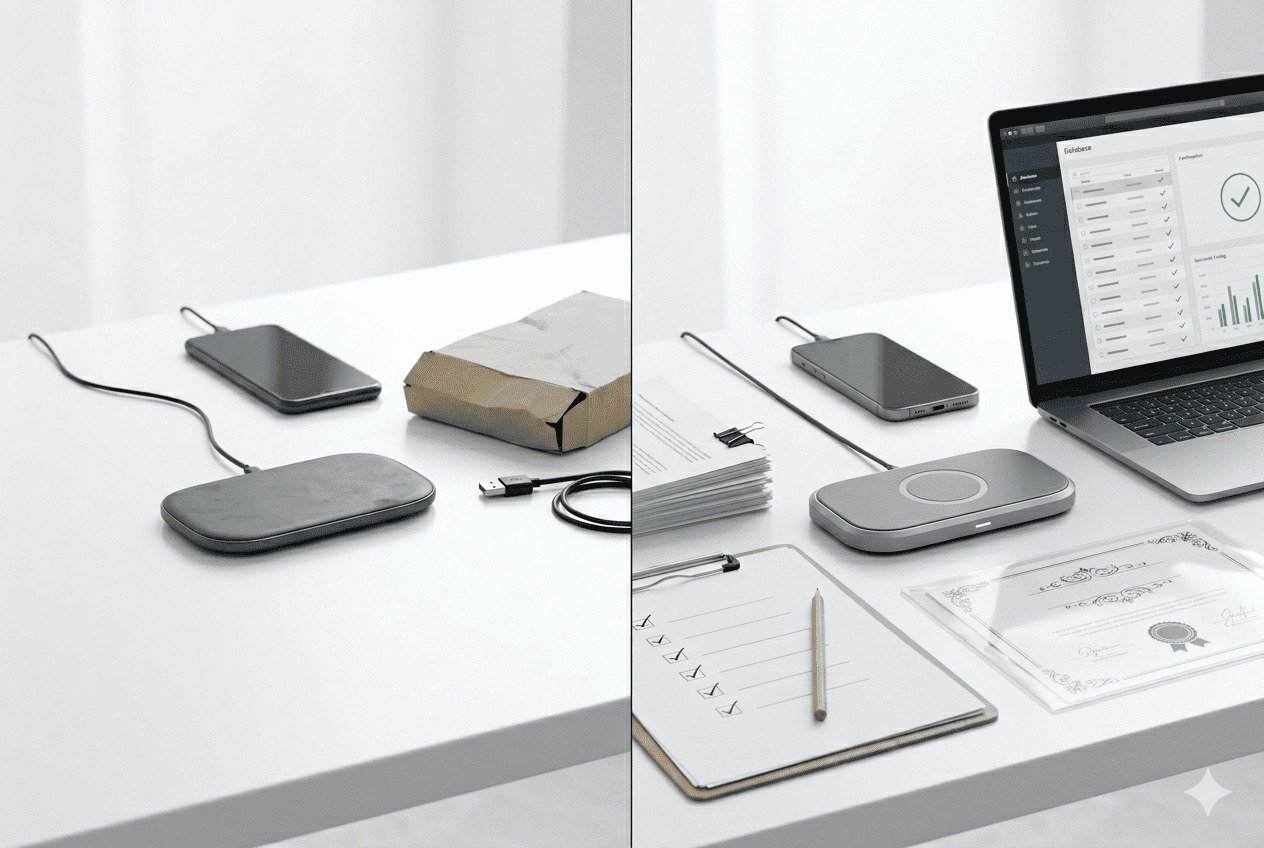
Why the words matter
I treat these two phrases as very different in sourcing work. A Qi compatible charger may charge an iPhone, Samsung phone, or earbuds case. It may still be outside the official Qi certification process. It may not have gone through the full WPC test path. It may not have a valid listing that a buyer can trace.
I treat Qi certified as a stronger claim. The Wireless Power Consortium, or WPC, manages the Qi standard.3 A certified product should be searchable in the WPC product database. The listing should match the actual product that the supplier ships. I always check the model number because many chargers look almost the same from the outside.
| Claim on product page | What I think it means | What I check next |
|---|---|---|
| Qi compatible | The charger may work with Qi phones | I ask for proof and test data |
| Qi certified | The product should be in WPC database | I search the WPC database |
| Supports wireless charging | This is a broad sales claim | I ask which standard and power level |
| Qi logo on package | This may be real or copied | I verify model and listing |
I also look at the buyer’s risk. A consumer may only lose money on one charger. A distributor may have thousands of units stuck in customs, returned by retailers, or rejected by a brand partner. Because the Qi logo is a registered trademark4, printing it on uncertified devices constitutes intellectual property infringement. Border enforcement authorities like the U.S. Customs and Border Protection (CBP) actively seize and destroy unauthorized electronics bearing counterfeit marks. I have seen buyers focus on price and forget traceability. I think traceability is where the real answer starts.
How do I verify Qi certification step by step?
I know the fastest mistake is to ask a supplier, “Is it Qi certified?” and accept a one-word answer. I use a step-by-step check.
I verify Qi certification by checking the WPC product database, matching the product name, brand, model number, power type, photos, and documents, then asking the supplier to connect that listing to my exact SKU.
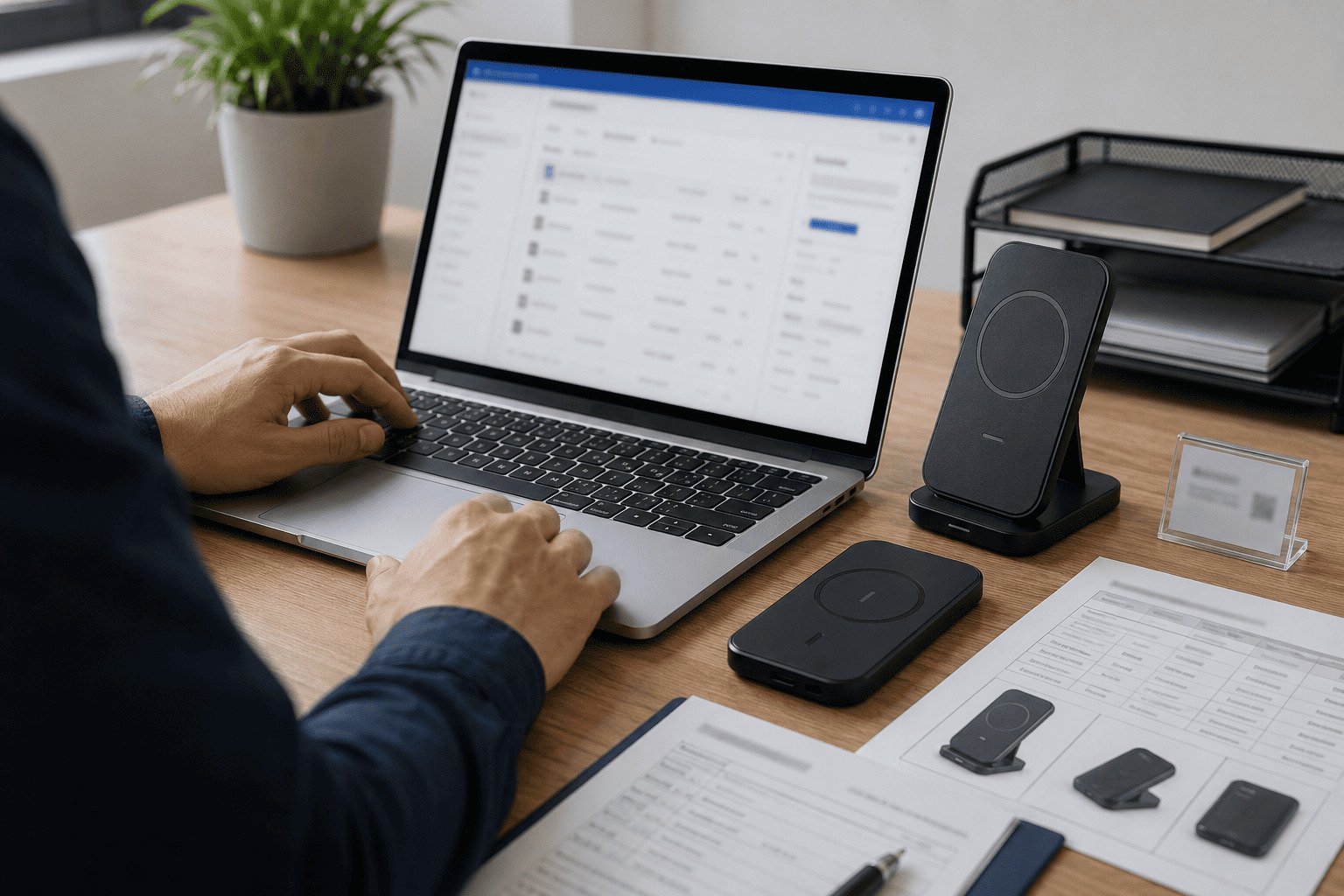
My basic verification process
I use this process when I review a wireless charging pad, stand, 3-in-1 wireless charging station, or magnetic charger. I do not skip steps when the order is large. I ask for the model number first because photos can mislead me. Many factories use the same housing for several PCBA designs. The outside may look identical, but the certified version and non-certified version may be different inside.
| Step | What I do | What I want to see |
|---|---|---|
| 1 | I ask for the exact model number | A fixed model, not a vague series name |
| 2 | I search the WPC database | A public listing that I can open |
| 3 | I compare brand and product name | The listing matches the offer |
| 4 | I compare photos and product type | The listed item looks like the item sold |
| 5 | I check power level and Qi type | The claim matches the specification |
| 6 | I request the certificate or test support | The supplier can explain the listing |
| 7 | I connect it to the purchase order | The SKU and model are written clearly |
My practical checking notes
I do not rely only on screenshots. A screenshot can be old, edited, or borrowed from another product. I ask for the public WPC listing link. I also search by company name, product name, and model number. I want the details to line up.
If the supplier sells a private label product, I ask one more question. I ask whether my brand name will be covered by the existing listing or whether I need a new listing. To do this legally, the factory must execute the official WPC Multi-branding registration procedure. This links the importer's private label directly to the original certified hardware in the WPC database.5 Without this, retail channels may reject the shipment because the brand printed on the packaging will not match the public compliance database records. A factory’s original certificate may not always support a different market claim in a clear way.
I also keep the proof inside my compliance folder. I save the WPC link, the model number, the product photos, the supplier declaration, and the purchase order. I do this before mass production. I do not wait until the goods are on the water.
Can I trust the Qi logo on packaging or marketplace listings?
I know a printed logo feels official. I also know a logo can be copied faster than a product can be certified.
I do not trust the Qi logo alone. I use the logo as a clue, then I confirm it through the WPC database and the supplier’s matching product documents.
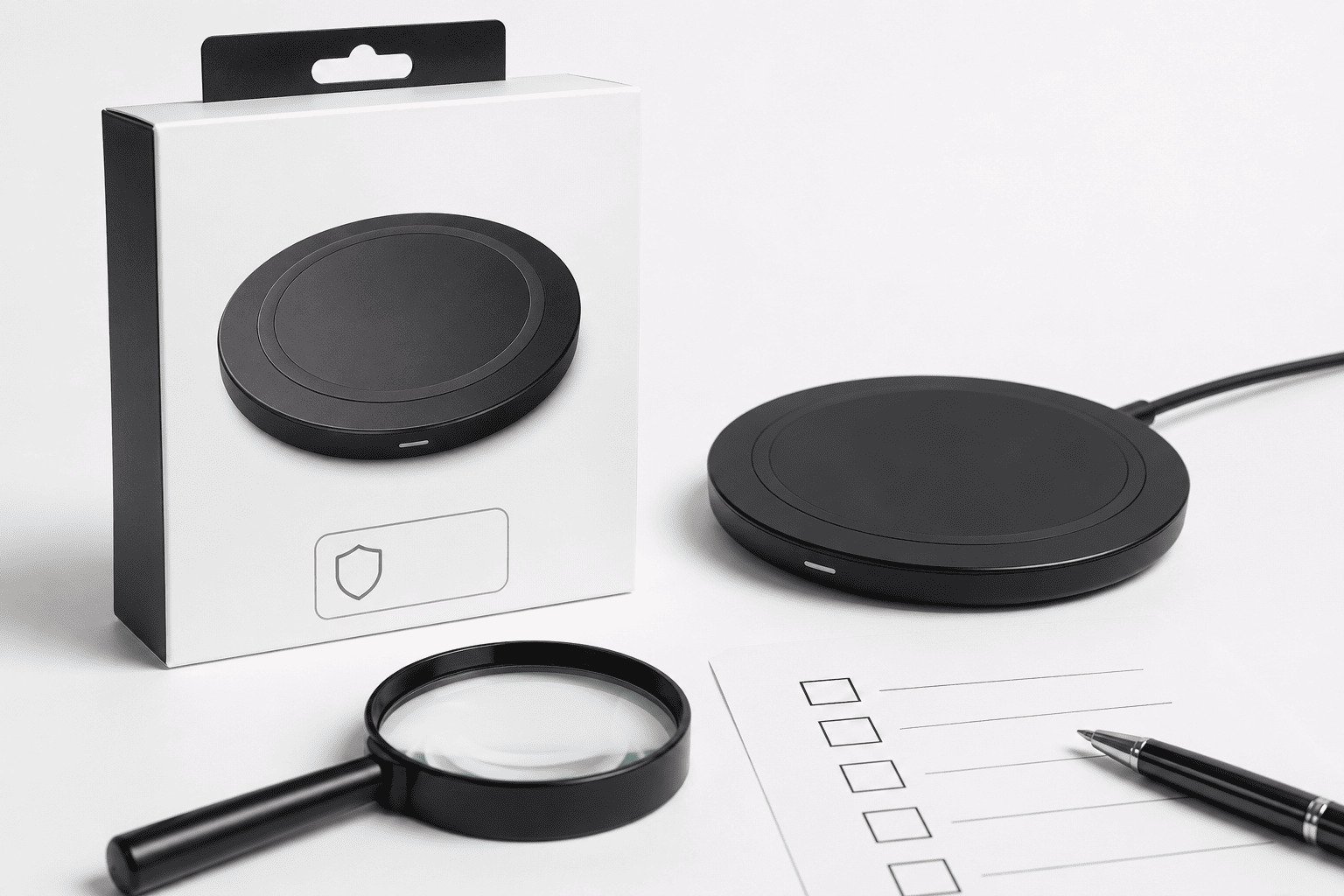
Common places where I see weak claims
I see vague claims on marketplaces, packaging, catalogs, and supplier profile pages. These claims may not be lies in every case, but they are not enough for a buyer who needs proof. I have seen listings that say “Qi standard” or “Qi fast charge” without giving any WPC trace. I treat that as an incomplete claim.
| Place | What I often see | My concern |
|---|---|---|
| Retail box | Qi logo printed near the power rating | The logo may not match the product listing |
| Online marketplace | “Qi certified” in the title | The seller may not know the exact model |
| Supplier catalog | One certificate shown for many chargers | The certificate may cover only one model |
| Sales message | “Yes, all support Qi” | The answer may mean compatible, not certified |
| Product photo | A phone charging on the stand | The photo does not prove certification |
Why I ask for direct proof
I ask direct questions because I source and manufacture wireless chargers for real orders. I care about safe charging, stable output, coil alignment, foreign object detection, temperature control, and long-term return rates. Qi certification is not the only quality sign, but it is an important standard check.
I also separate marketing language from engineering proof. A seller may say “works with iPhone 15” or “supports Samsung fast charge.” That may be true, but it does not answer the certification question. I still ask for the WPC database record.
For B2B buyers, I also check if the product sold today is the same as the product listed in the database. A factory may update a coil, magnet, IC, casing, or cable input. If the change affects the certified design, I want the supplier to explain whether the certification still applies6 based on the WPC's strict Modification of Certified Products policy. I prefer written answers because I may need them later for a retailer, customs broker, or market inspector.
How are Qi, Qi2, MagSafe-compatible, CE, FCC, RoHS, UL, and MFi different?
I see many buyers put all certification names into one box. I think this creates wrong expectations and weak purchasing decisions.
I treat Qi and Qi2 as wireless charging standards from WPC. I treat CE, FCC, RoHS, UL, and MFi as different compliance or program items that do not replace Qi certification.
My simple comparison table
I use this table when I explain certification to new buyers. I keep it simple because each label answers a different question. Qi answers wireless charging standard conformance. CE and FCC answer market compliance questions. RoHS answers restricted substances.7 UL relates to safety testing or certification. MFi relates to Apple’s accessory program in certain product categories. MagSafe-compatible is often a magnetic alignment and charging claim, not always an Apple-approved claim.
| Term | What I understand it to mean | What it does not prove |
|---|---|---|
| Qi | WPC wireless charging certification standard | It does not replace CE or FCC |
| Qi2 | Newer WPC standard with magnetic power profile support | It does not mean every Apple claim is approved |
| MagSafe-compatible | It may align magnetically with iPhone | It does not always mean Apple MFi approved |
| CE | EU market conformity mark | It does not prove Qi certification |
| FCC | US radio/electronic compliance requirement | It does not prove Qi certification |
| RoHS | Restricted substance compliance | It does not prove charging performance |
| UL | Safety testing or certification route | It does not prove WPC listing |
| MFi | Apple program for certain accessories | It does not replace WPC Qi listing |
How I use these labels in real sourcing
I never ask only, “Does it have certification?” I ask which certification, for which model, for which market, and under which applicant name. A wireless charger for the EU may need CE and RoHS support. A wireless charger for the US must mandatory comply with federal radio frequency rules.8 According to the FCC KDB 680106 Equipment Authorization, wireless power transfer devices are classified as intentional or unintentional radiators9, legally binding them to technical and human RF exposure limits under FCC Part 15 and FCC Part 18 regulations. A Qi certificate does not remove those structural legal needs.
I also look at Qi2 and magnetic charging claims carefully. Qi2 is important because it introduces the Magnetic Power Profile (MPP)%%%FOOTNOTE_REF10%%%, [a technical standard directly developed based on Apple’s MagSafe contributions](https://en.wikipedia.org/wiki/Qi(standard))11. Still, I verify Qi2 in the WPC database the same way I verify Qi. If a supplier says “MagSafe 15W,” I ask whether it is official Apple MagSafe, Qi2, or just magnetic wireless charging. These are not the same.
As a manufacturer, I want the claim on the packaging to match the real test path. I think this protects the end user, the importer, the distributor, and the brand owner at the same time.
What should B2B buyers ask suppliers before bulk orders?
I know bulk buyers have a different risk level. A small wording mistake can become a large stock problem.
I ask suppliers for exact model numbers, WPC database links, matching test reports, market compliance files, packaging artwork checks, and written confirmation before I approve mass production.
My supplier document checklist
I use a checklist because sales talks can move fast. I do not want to lose details during price negotiation. I also want the factory, exporter, importer, and brand owner to work from the same product identity. The model number on the PI, test report, box, rating label, and WPC listing should not conflict.
| Document or proof | Why I ask for it | What I check |
|---|---|---|
| WPC database link | It proves public traceability | Brand, model, product name, type |
| Qi or Qi2 certificate support | It supports the database claim | Applicant name and model |
| CE report and DoC | It supports EU sales | Standards and model match |
| FCC report | It supports US sales | FCC ID or report details |
| RoHS report | It supports material compliance | Product model and date |
| UL or safety report | It supports retailer safety needs | Scope and listed model |
| Product specification | It locks power, input, output | The data matches claims |
| Packaging artwork | It controls public claims | No unsupported logos |
| Sample test result | It checks real performance | Heat, alignment, FOD, stability |
Questions I ask before I place the order
I ask clear questions. I do not ask broad questions. I ask, “Is model X listed in the WPC product database?” I ask, “Can you send the direct link?” I ask, “Will my private label use this same certified hardware and firmware?” I ask, “Will the model number on the rating label match the test report?” These questions reduce later argument.
I also ask what happens if I change the cable, adapter, magnet structure, coil, PCBA, or shell. Some changes may be cosmetic. Some changes may affect safety or certification. I want the supplier to tell me which changes are allowed without new testing. I also prefer to confirm this before tooling or artwork starts.
For importers and distributors, I also suggest a golden sample. I keep one signed sample before mass production. I compare it with bulk goods later. This simple habit helps me catch wrong parts, wrong labeling, wrong logo use, or wrong charging performance before the goods reach customers.
What red flags tell me a wireless charger may not be truly Qi certified?
I have learned that weak proof often appears before weak products. I pay attention when answers become vague.
I see red flags when the supplier refuses to share a WPC link, uses a different model number, shows only screenshots, or says “Qi compatible” after I ask for “Qi certified.”
My red flag list
I do not treat one red flag as final proof of a bad supplier. I treat it as a reason to slow down and ask for better evidence. Good suppliers usually understand why buyers need certification proof. Good suppliers also know their model numbers.
| Red flag | What I think it may mean | What I do next |
|---|---|---|
| No WPC database link | The product may not be certified | I ask again by model number |
| Different model on certificate | The proof may belong to another charger | I reject the proof until matched |
| Only “Qi compatible” wording | The charger may only work with Qi phones | I ask if it is certified or not |
| Blurry certificate image | The proof may be old or edited | I request original file and link |
| One certificate for many SKUs | The certificate may not cover all versions | I ask for covered model list |
| Logo shown but no trace | The logo may be marketing only | I verify in database |
| Supplier avoids technical questions | The sales team may not know the product | I ask for engineer confirmation |
How I handle unclear cases
I stay polite, but I stay firm. I tell the supplier that I need proof for internal compliance and customer approval. If the supplier cannot provide proof, I do not call the charger Qi certified in my own sales material. I may still evaluate it as a compatible product for a low-risk use case, but I label it correctly.
I also think about the end market. Some channels may accept general wireless charging products. Other channels may require exact certification documents before listing. Retailers, telecom channels, and brand customers often have stricter review rules. If I plan to sell in North America, Europe, the UK, Poland, the UAE, or ASEAN markets, I prepare the compliance file early.
From my factory side, I would rather solve these questions before production. It costs less to confirm the right model now than to rework boxes, relabel goods, or explain returns later. A clear certification path makes the whole order easier to manage.
Conclusion
I verify Qi certification through the WPC database, matched documents, and clear supplier proof. I never confuse Qi compatible with Qi certified.
"Qi (standard)", https://en.wikipedia.org/wiki/Qi_(standard). The Wireless Power Consortium states that only products completing its Qi certification process may be represented as Qi certified, while compatibility wording alone does not establish certification status. Evidence role: definition; source type: institution. Supports: The source should show WPC’s distinction between Qi certification and non-certified compatibility wording.. ↩
"List of CPSC-Accepted Testing Laboratories", https://www.cpsc.gov/cgi-bin/labsearch/. WPC materials describe Qi certification as a process involving conformance testing and publication of certified products in the WPC product database, supporting database traceability as evidence of certification. Evidence role: definition; source type: institution. Supports: The source should confirm that Qi certification involves WPC testing and listing in the WPC certified product database.. ↩
"Qi (standard) - Wikipedia", https://en.wikipedia.org/wiki/Qi_(standard). Reference sources identify the Wireless Power Consortium as the organization behind the Qi wireless power standard, supporting the attribution of Qi governance to WPC. Evidence role: historical_context; source type: encyclopedia. Supports: The source should identify WPC as the organization that developed or maintains the Qi standard.. Scope note: An encyclopedia source provides contextual confirmation of governance, not the detailed legal terms of WPC membership or certification procedures. ↩
"Patents and Trademarks | Wireless Power Consortium", https://www.wirelesspowerconsortium.com/knowledge-base/patents-and-trademarks/. Trademark registry records identify Qi-related marks associated with the Wireless Power Consortium, supporting the statement that the Qi logo is protected as a registered trademark. Evidence role: general_support; source type: government. Supports: The source should document trademark registration or ownership of the Qi mark/logo.. Scope note: Trademark databases establish registration status and ownership but do not by themselves determine infringement in a particular shipment or product listing. ↩
"Global Brand Database - WIPO", https://www.wipo.int/en/web/global-brand-database. WPC’s multi-branding procedure describes how an additional brand can be registered for a certified product, supporting the claim that private-label branding must be linked to the certified hardware record. Evidence role: mechanism; source type: institution. Supports: The source should explain that WPC multi-branding registers additional brands for a certified product.. ↩
"Introduction to the Power Class 0 Specification", https://faculty-web.msoe.edu/johnsontimoj/ELE4142/files4142/Qi-PC0-introduction-v1.2.3.pdf. WPC guidance on modification of certified products indicates that changes to a certified design may need evaluation to determine whether the original certification remains valid. Evidence role: mechanism; source type: institution. Supports: The source should show that modifications to certified products can require review or affect certification status.. ↩
"RoHS - Wikipedia", https://en.wikipedia.org/wiki/RoHS. The European Commission describes RoHS as restricting specified hazardous substances in electrical and electronic equipment, supporting the article’s distinction between RoHS material compliance and charging-performance certification. Evidence role: definition; source type: government. Supports: The source should define RoHS as a framework restricting certain hazardous substances in electrical and electronic equipment.. ↩
"[PDF] New KDB 680106 on Part 18 Wireless Power Transfer Devices", https://www.fcc.gov/sites/default/files/42-Wireless-Power-Transfer-TCB_Oct_2023.pdf. FCC equipment-authorization guidance for wireless power transfer devices explains that such devices are subject to applicable FCC technical and RF-exposure requirements, supporting the need for U.S. radio-frequency compliance. Evidence role: general_support; source type: government. Supports: The source should show that wireless power transfer devices are regulated under FCC equipment authorization and RF exposure rules.. Scope note: The exact FCC rule part can vary by device design, operating frequency, and authorization pathway. ↩
"680106 Wireless Power Transfer (WPT)", https://apps.fcc.gov/oetcf/kdb/forms/FTSSearchResultPage.cfm?switch=P&id=41701. FCC KDB guidance for wireless power transfer equipment addresses authorization of devices as intentional or unintentional radiators, supporting the article’s regulatory classification statement. Evidence role: definition; source type: government. Supports: The source should support the FCC classification framework for wireless power transfer devices.. Scope note: The guidance supports the classification framework but does not determine the classification of any specific charger without technical details. ↩
"Qi (standard) - Wikipedia", https://en.wikipedia.org/wiki/Qi_(standard). WPC descriptions of Qi2 identify the Magnetic Power Profile as part of the Qi2 standard, supporting the article’s statement that Qi2 introduces MPP-based magnetic alignment. Evidence role: definition; source type: institution. Supports: The source should identify the Magnetic Power Profile as a feature of Qi2.. ↩
"Qi (standard) - Wikipedia", https://en.wikipedia.org/wiki/Qi_(standard). WPC announcements on Qi2 state that the Magnetic Power Profile was developed with Apple’s contribution of MagSafe-related technology, supporting the article’s account of Qi2’s standards lineage. Evidence role: historical_context; source type: institution. Supports: The source should support that Apple contributed MagSafe-related technology to the development of Qi2 or its Magnetic Power Profile.. Scope note: This supports the historical development of Qi2 but does not imply that every Qi2 charger is Apple MagSafe-certified. ↩