
I placed my Apple Watch on a normal wireless charger, saw nothing happen, and first thought the charger had failed.
I learned that the Apple Watch cannot use most regular wireless chargers1 because it needs a dedicated magnetic charging design, correct coil alignment, controlled power, and device communication. I also learned that “wireless charging” does not always mean “universal charging.”
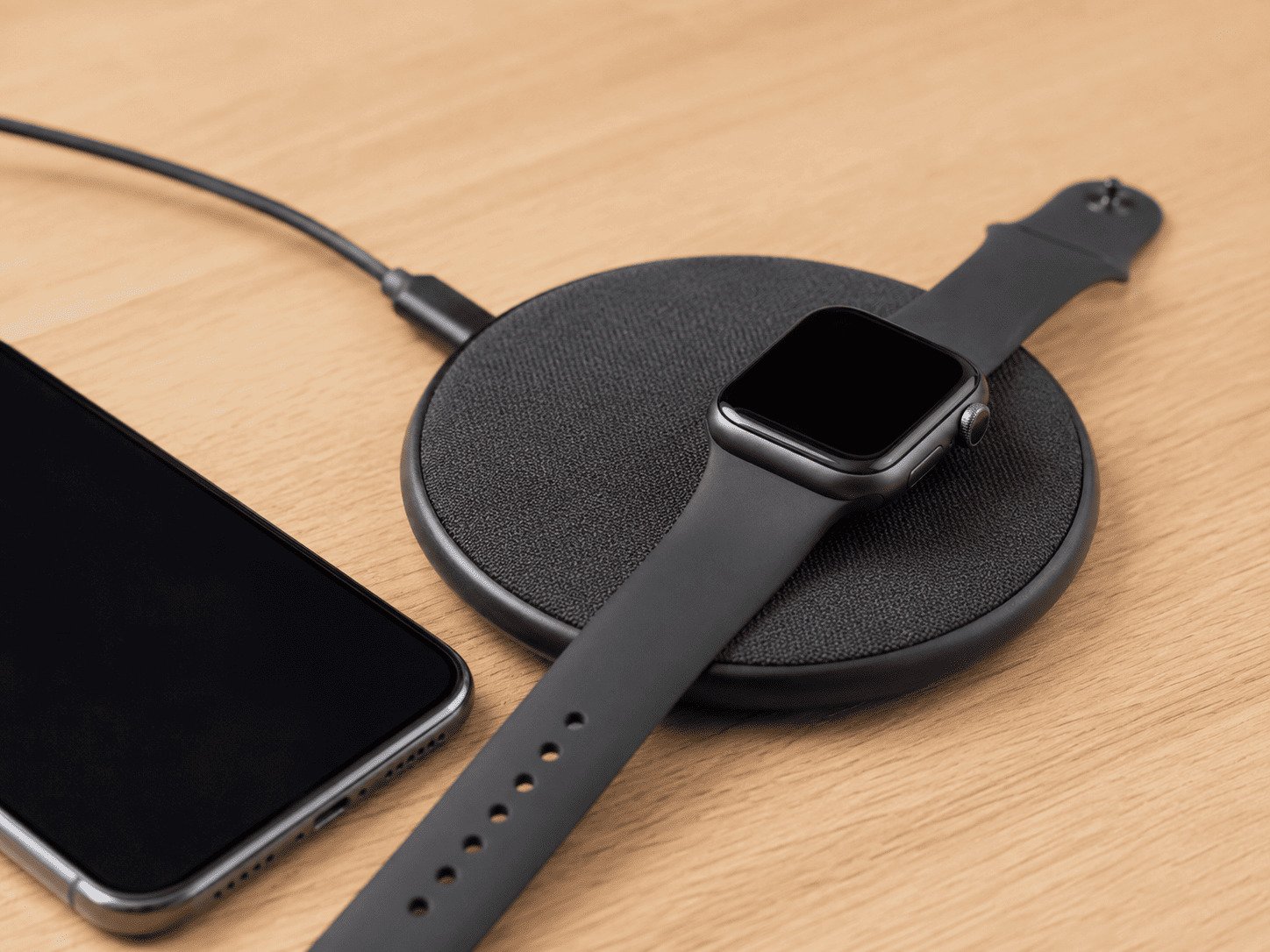
I know this problem feels confusing because the words look simple. I see “wireless charger,” and I expect every wireless device to charge on it. I have also seen buyers, distributors, and end users make the same assumption. The real issue is not whether the charger uses a cable or not. The real issue is whether the charger was designed for that device. I will break this down in a simple way, so I can avoid a wrong return, a wrong purchase, or a wrong product choice.
Does wireless charging mean universal charging?
I used to think wireless charging was one single standard, so I expected my phone pad to charge my Apple Watch too.
Wireless charging does not always mean universal charging. I can use one charger only when the device, coil size, alignment method, power range, and charging protocol are all supported2. A Qi phone charger may support many phones, but it may not support the Apple Watch.
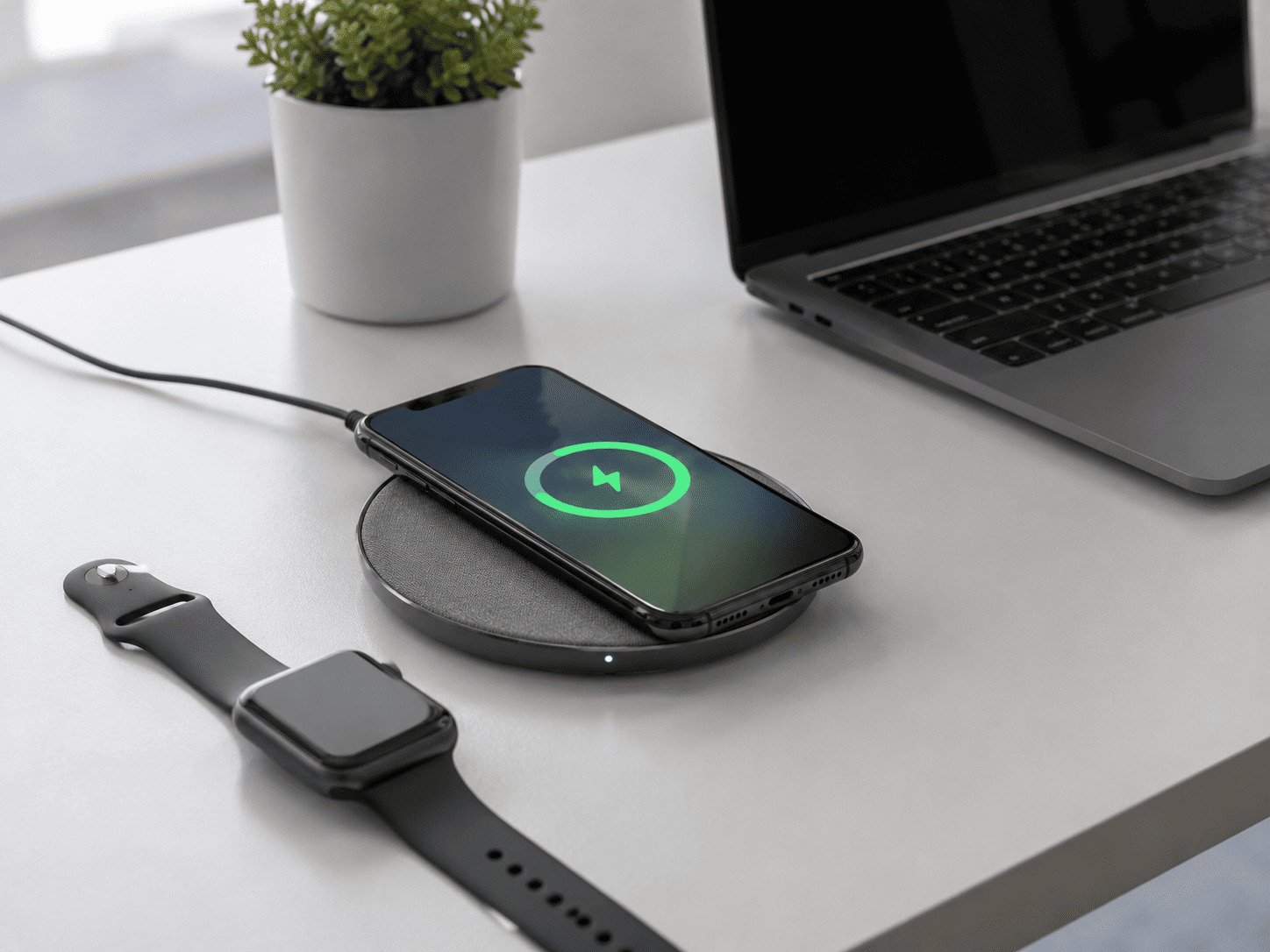
I see this misunderstanding often because the phrase “wireless charging” sounds very general. In daily life, I put a phone on a Qi pad, and it charges without a plug. Then I put an Apple Watch on the same pad, and nothing happens. I may think the pad is broken. I may also think the watch battery has failed. In many cases, neither idea is true.
I need to separate the charging method from the charging compatibility. Wireless charging only means energy moves across a small air gap. It does not mean every receiver can work with every transmitter. I compare it to keys and locks. Many keys are metal, but one key cannot open every lock.
| What I see | What I may assume | What I should check |
|---|---|---|
| A flat wireless pad | It charges all wireless devices | I should check supported device types |
| A Qi logo | It charges Apple Watch | I should check Apple Watch support |
| A magnetic circle | It must be for watches | I should check the module and model list |
| A 3-in-1 charger | It charges all Apple devices | I should check iPhone, AirPods, and Apple Watch areas |
I also look at neutral sources when I explain this point. Apple support pages show that Apple Watch uses Apple Watch Magnetic Charging Cable or compatible magnetic charging accessories. The Wireless Power Consortium explains Qi as a standard for many wireless charging products, mainly known by consumers through phones. I use both ideas together. I do not treat the word “Qi” as a promise that every wearable device will work. In fact, official international technical standardizations confirm that wearable standards require specific localized transmitter designs apart from baseline mobile profiles.
Why does the Apple Watch need a magnetic charging design?
I notice that the Apple Watch has a small curved back, so it cannot sit and align like a flat smartphone.
The Apple Watch needs a magnetic charging design because the charger must hold the watch in the right position3. The magnetic module helps center the small charging coil, keep stable contact, control power, and support safe charging during the whole battery cycle.
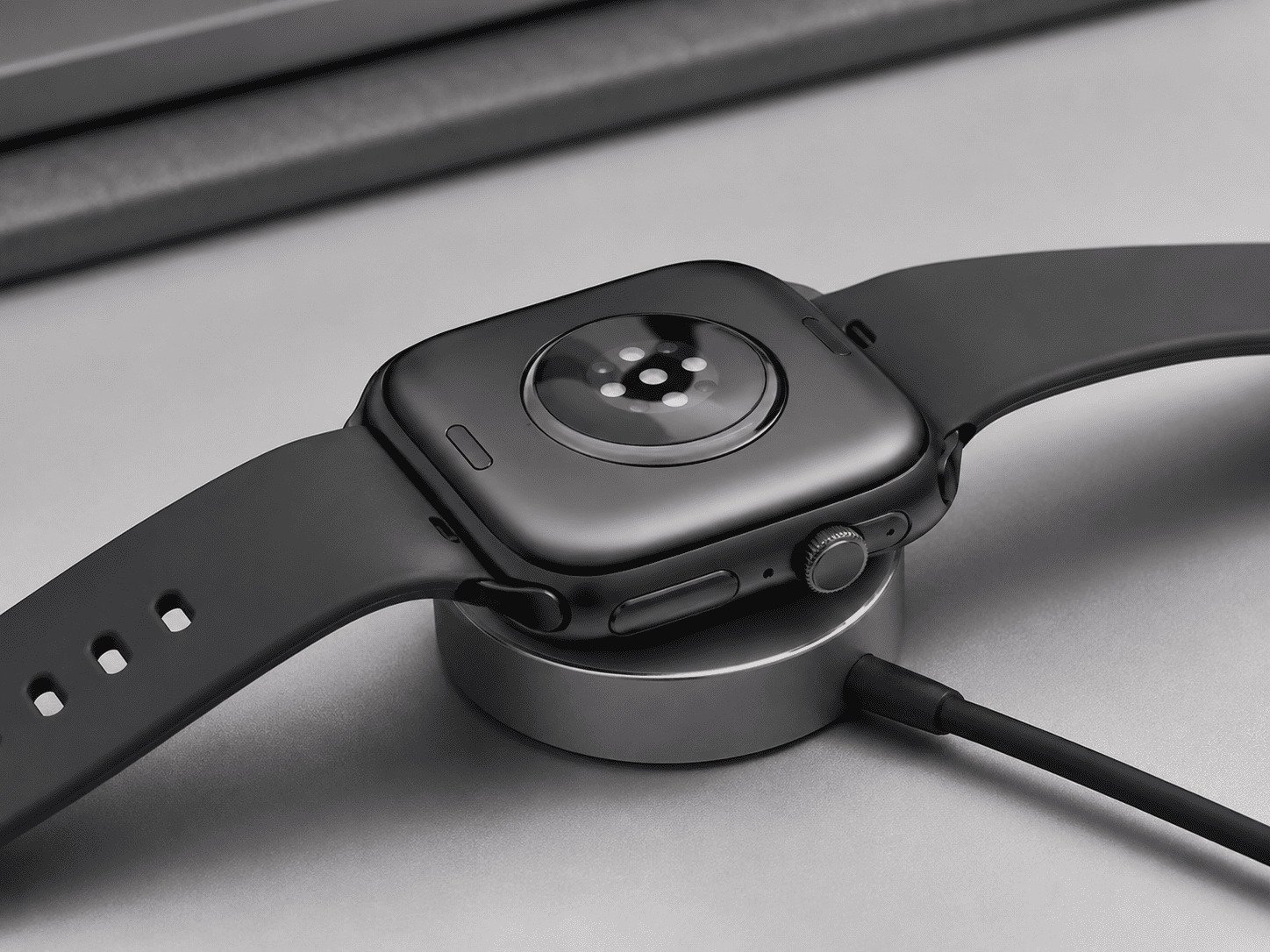
I think the physical shape explains a lot. A phone has a larger back surface. A phone charger can use a larger coil area. The user can place the phone on a pad, and the charger has more room to detect and align with the receiving coil. The Apple Watch is different. It is small, round on the back, and often attached to a band. The watch needs to sit on a small charging puck. If the watch moves a little, the coil may not line up well.
I also see that magnets solve a real user problem. The magnets pull the watch into a stable position. This makes charging easier at night and safer on a desk. I do not need to guess the exact position as much. The charger helps me find it.
| Design factor | Phone wireless charger | Apple Watch charger |
|---|---|---|
| Device size | Larger surface | Small watch back |
| Coil size | Larger phone coil | Smaller watch coil |
| Alignment | Flat placement | Magnetic centering |
| Contact style | Pad surface | Raised or recessed watch module |
| User movement | Phone usually stays flat | Watch can tilt because of band |
I also care about power control. A small wearable battery is not the same as a phone battery4. The charger must manage power in a way that suits the watch. It should not just push power like a generic pad. I look for a charger that clearly states Apple Watch support because that usually means the designer considered coil position, magnet strength, heat, and power behavior. I do not treat the magnetic part as decoration. I treat it as part of the charging system.
Why do regular Qi phone chargers fail with Apple Watch?
I see many regular Qi chargers fail with Apple Watch because they were built for phone-sized coils and phone charging behavior.
A regular Qi phone charger usually fails with Apple Watch because the watch coil is too small, the alignment is wrong, and the charger may not communicate with the watch as needed. The pad may never detect the watch or may stop for safety5.
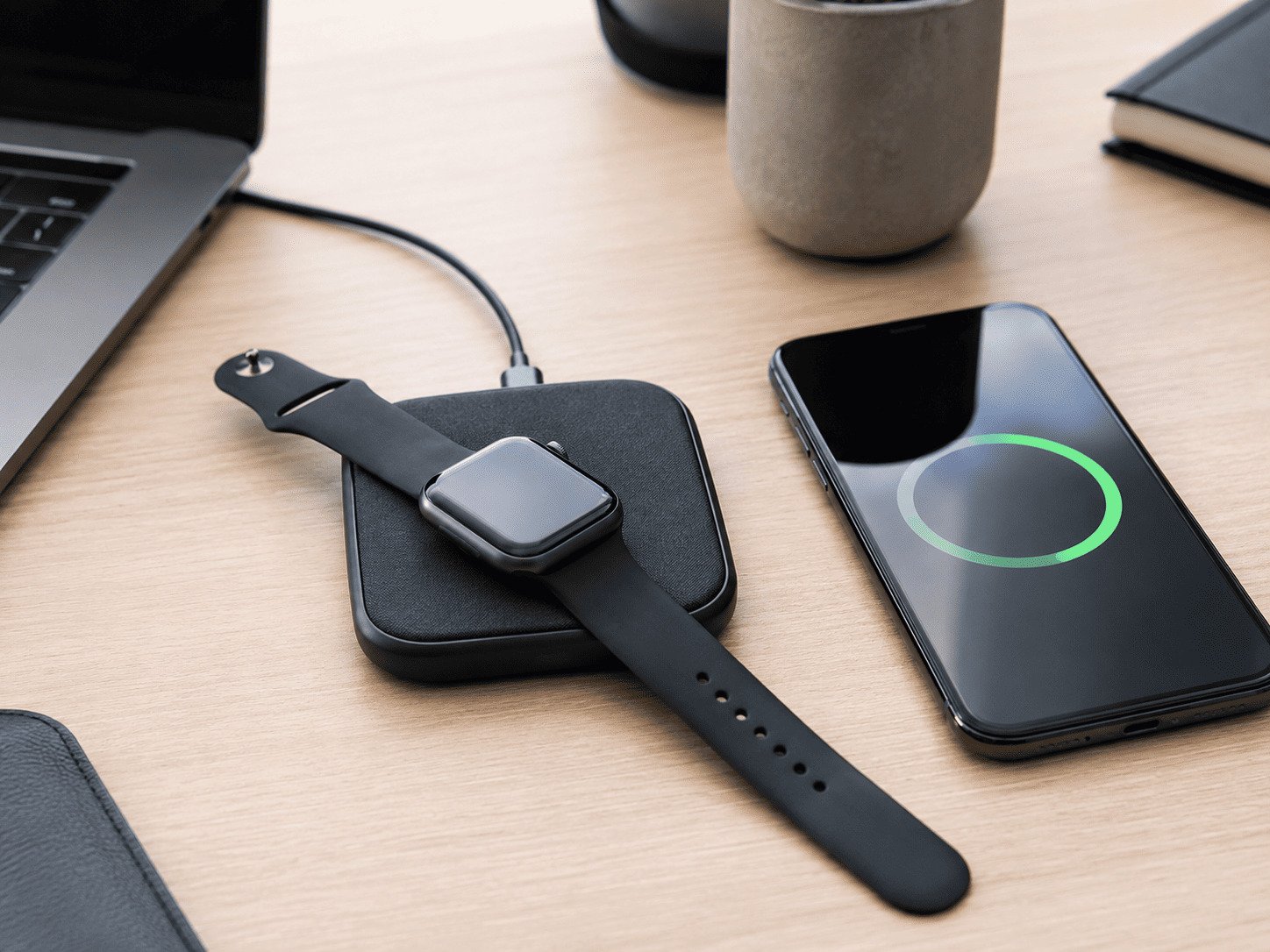
I often explain this with one simple scene. I put my iPhone on a Qi pad. The pad detects a receiver. The coil alignment is close enough. The phone starts charging. Then I put my Apple Watch on the same pad. The pad may not detect a valid receiver. The watch may not sit flat. The coil may sit outside the best charging zone. The charger may decide that nothing useful is on the surface.
This is not a strange failure. Documented engineering research shows that the system requires a proprietary wireless power handshake and specialized inductive pairing that normal Qi transmitters cannot execute, rendering universal phone stands incompatible with the watch's closed firmware.
This is normal design behavior. A good charger should avoid sending power to unknown objects6. I want this safety behavior because metal objects, coins, keys, and other items can heat up on poor chargers. So when a phone pad refuses to charge the Apple Watch, I should not always blame the pad. The pad may be doing what it was designed to do.
| Possible reason | What I may notice | What it means |
|---|---|---|
| Coil mismatch | Nothing happens | The charger cannot detect the watch |
| Poor alignment | Charging starts then stops | The watch is not centered well |
| No watch protocol support | No charging icon appears | The charger is not compatible |
| Foreign object protection | Charger light blinks | The pad is protecting itself |
| Heat control | Charging pauses | The system is reducing risk |
I also think words on product listings can mislead people. If I see “Qi wireless charger,” I should read it as phone Qi support unless the listing clearly says Apple Watch support. I should not assume it. Official technical documentation explicitly indicates that the device requires authorized magnetic charging accessories built to specific regulatory compliance standards to maintain active connectivity.
Is my charger broken if my Apple Watch does not charge?
I understand why I may panic when the Apple Watch does not charge, but I should test compatibility before I blame the charger.
My charger is not necessarily broken if my Apple Watch does not charge. I should first confirm that the charger has a dedicated Apple Watch magnetic area, that the power source is correct, that the watch is placed well, and that the watch model is supported.
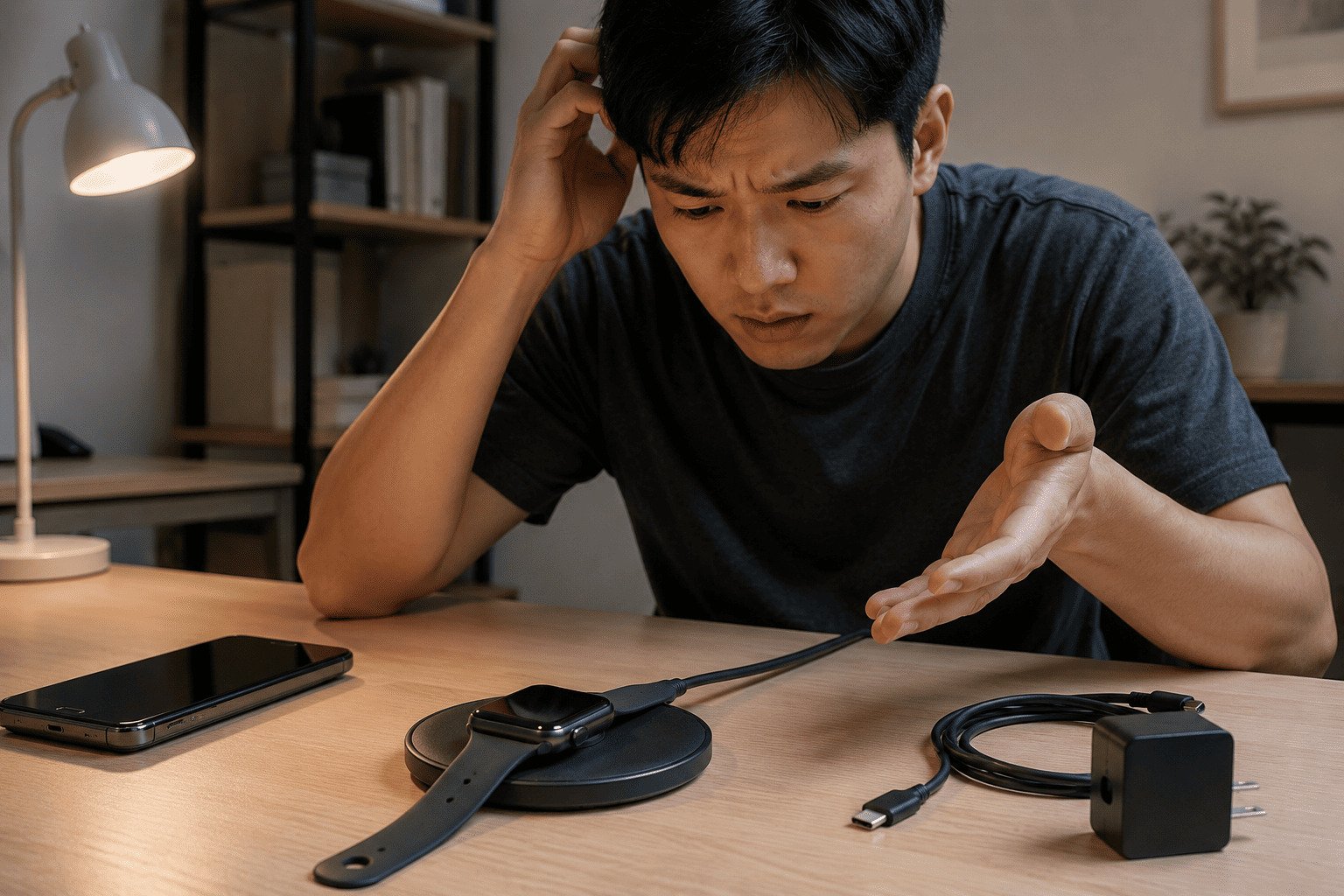
I use a simple check process before I decide a charger is faulty. First, I check the product label or manual. If the charger only says “Qi wireless charger for phones,” I do not expect it to charge the Apple Watch. Second, I check whether there is a raised round watch puck or a clear magnetic watch position. A flat phone pad without a watch module is usually not enough.
Third, I check the power adapter. Multi-station chargers need a strong and consistent input source. Engineering lab experiments prove that insufficient wattage or voltage fluctuations under multi-device loads trigger power delivery failures and disconnects, meaning a weak wall brick can cause the watch to stop charging midway.
I also check the watch itself. I make sure the back of the watch is clean. I remove thick cases or metal accessories that may interfere. I restart the watch if it behaves strangely. I also test with an original or known working Apple Watch magnetic charger when possible. This gives me a baseline.
| Step I take | Why I take it | Result I want |
|---|---|---|
| I read the charger label | I confirm watch support | I avoid wrong expectations |
| I find the magnetic puck | I confirm physical design | I see a real watch module |
| I check the adapter power | I avoid weak input | I get stable charging |
| I clean the watch back | I improve contact | I reduce charging failure |
| I test another charger | I separate watch issue from charger issue | I find the real cause |
I also pay attention to heat. If the watch becomes unusually hot, I stop charging and check the accessory7. Warm charging can be normal, but high heat is not something I ignore. I prefer chargers with over-temperature protection, over-current protection, over-voltage protection, and foreign object detection. These safety features matter more when one charger supports several devices at the same time.
What should I check before buying a charger for Apple Watch?
I check the product details carefully because a nice-looking wireless charger may still not support the Apple Watch.
Before I buy a charger for Apple Watch, I should check for a clearly marked Apple Watch charging area, a magnetic watch module, supported Apple Watch models, safety features, proper certifications, and clear power input requirements. I should not rely only on the words “wireless charger.”8
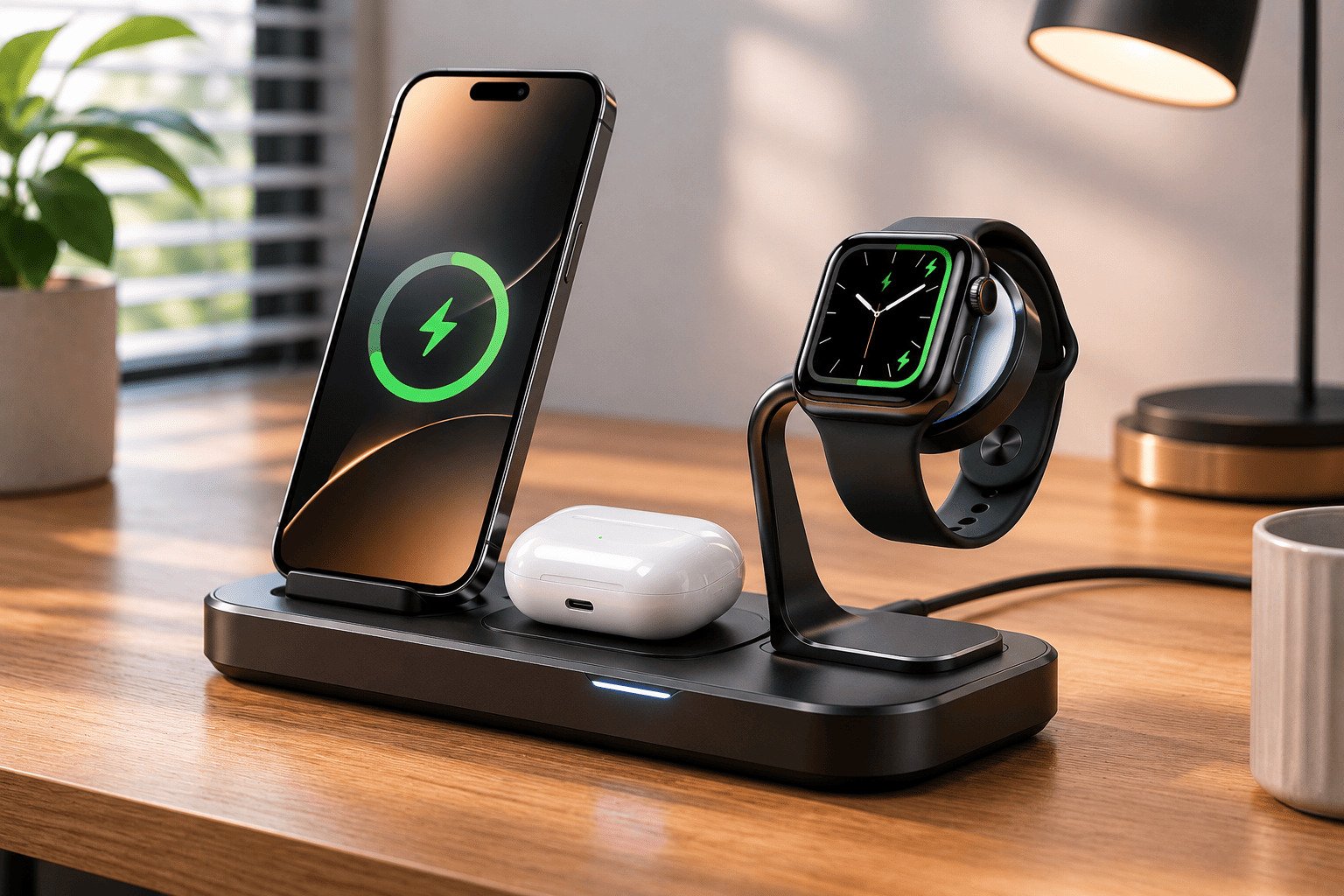
I have learned to read a charger listing like a procurement checklist. This habit helps me avoid wrong samples, wrong orders, and wrong customer complaints. I first look for a dedicated watch position. It should not be only a flat phone pad. I then look for a magnetic module. This module should hold the watch in place and help the coil align. I also check if the listing mentions Apple Watch Series compatibility. Clear model support gives me more confidence than vague words.
I then check safety and compliance. For consumer electronics, I do not only care that the charger works one time. I care that it works every day beside a bed, on an office desk, or in a hotel room. I look for common compliance marks and test reports when needed. Different markets may require different documents. A buyer in Europe may ask for CE and RoHS. A buyer in the United States may ask for FCC and sometimes UL-related safety documentation. A buyer in Japan or Korea may ask for PSE or KC9.
| Buying point | What I look for | Why it matters |
|---|---|---|
| Apple Watch area | Clear watch icon or puck | I know where to place the watch |
| Magnetic module | Watch snaps into place | I get better alignment |
| Model support | Series and generation details | I avoid compatibility gaps |
| Input power | Required adapter rating | I prevent unstable charging |
| Safety protection | Heat, current, voltage, FOD | I reduce charging risk |
| Certifications | CE, FCC, RoHS, UL, PSE, KC, Qi where relevant | I support market compliance |
I also check the wording around Qi. If a product says Qi2 or Qi for phones, I still look for separate Apple Watch wording. I do not mix these together. According to the official Qi2 Core Specifications published by the Wireless Power Consortium, the magnetic profile (MPP) is fundamentally architected for mobile hand-held devices10, meaning it does not natively encompass wearable operating systems. The Apple Watch area and the phone area can be different systems inside one product. A 3-in-1 charger may have one coil for phone charging, one area for earbuds, and one magnetic module for the watch. This design can be very useful, but only when each part is correctly built and clearly described.
How can I explain this issue to customers or end users?
I explain this issue best when I avoid heavy technical words and start with the user’s real experience.
I tell customers that the Apple Watch is wireless, but it is not charged like most phones. It needs its own magnetic charging spot. If a charger does not show Apple Watch support, the watch may not charge even when the charger works well for phones.
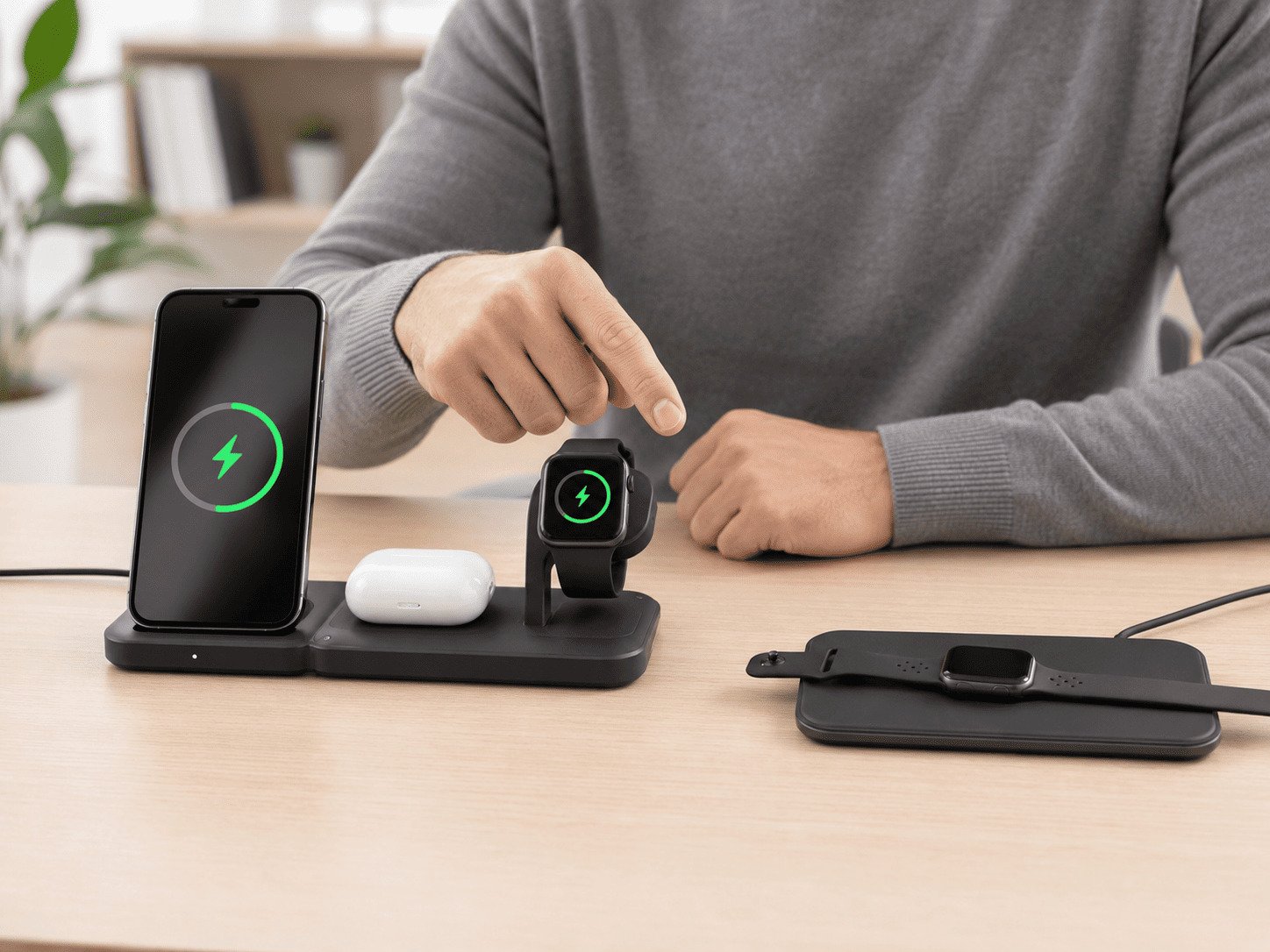
I find that people accept the answer faster when I show the difference in plain language. I do not start with coils, protocols, or standards. I start with the shape of the device. I say that the Apple Watch is small and curved. I say that it needs to be pulled into the right place by magnets. Then I explain that a phone pad was made for a larger phone back, not for a small watch back11.
I also avoid saying that a regular wireless charger is “bad.” That is not fair. A regular Qi charger may be very good for phones. It may support safe and stable phone charging. It simply may not be designed for Apple Watch. This neutral explanation reduces conflict after a return or support ticket.
| Customer question | Simple answer I use | Extra detail if needed |
|---|---|---|
| Why does my phone charge but not my watch? | The charger supports phones, not the watch. | The watch needs a magnetic watch module. |
| Is the charger broken? | Not always. | It may be working as designed. |
| Does Qi mean Apple Watch support? | Not by itself. | I still need Apple Watch compatibility. |
| What should I buy? | Buy one with a clear Apple Watch area. | Check model support and safety features. |
I also mention Apple support pages as a neutral reference when needed. I say Apple lists magnetic charging accessories for Apple Watch. I also mention that Qi standards are commonly tied to phone charging in consumer use. I use these references to support the explanation, not to overload the reader. My goal is to help the customer make the right choice and avoid wasting time.
Conclusion
I treat wireless charging as a design match, not a universal promise, and I always check Apple Watch support before I buy or recommend a charger.
"Apple Watch and Qi charging : r/AppleWatch - Reddit", https://www.reddit.com/r/AppleWatch/comments/txjj9l/apple_watch_and_qi_charging/. Apple's official support documentation confirms that the Apple Watch requires a specific magnetic charging connector or a certified Made for Watch (MFW) accessory and is not compatible with standard Qi-certified chargers. Evidence role: general_support; source type: other. Supports: That the Apple Watch uses a proprietary magnetic charging system and is not compatible with standard Qi chargers.. ↩
"Inductive charging - Wikipedia", https://en.wikipedia.org/wiki/Inductive_charging. Technical explanations of inductive charging demonstrate that its efficiency and compatibility depend on factors including the geometric alignment of the transmitter and receiver coils, their relative size, the operating frequency, and the communication protocol used to manage the power transfer. Evidence role: mechanism; source type: education. Supports: That successful wireless power transfer is contingent on the alignment and size of the transmitter and receiver coils, as well as compatible communication protocols for managing the power transfer.. ↩
"MagSafe (wireless charger) - Wikipedia", https://en.wikipedia.org/wiki/MagSafe_(wireless_charger). Design patents filed by Apple for its watch charger describe a system using magnetic attraction to automatically align the small receiver coil in the watch with the transmitter coil, overcoming the difficulty of manual placement for small devices. Evidence role: mechanism; source type: other. Supports: That magnets are used in the Apple Watch charger to ensure precise alignment between the small coils, which is critical for efficient and reliable charging on a small, curved surface.. ↩
"Batteries for wearables - PMC - NIH", https://pmc.ncbi.nlm.nih.gov/articles/PMC9843125/. Research on lithium-ion battery management shows that smaller-capacity cells, typical in wearable devices, are more sensitive to thermal stress and require carefully controlled charging profiles to ensure safety and longevity, differing from the requirements of larger smartphone batteries. Evidence role: mechanism; source type: research. Supports: That smaller batteries, like those in wearables, have different thermal and power management needs compared to larger smartphone batteries, requiring tailored charging algorithms for safety and longevity.. ↩
"Qi (standard) - Wikipedia", https://en.wikipedia.org/wiki/Qi_(standard). According to the Wireless Power Consortium, the Qi protocol involves several stages, including detection, ping, and identification, where the power transmitter verifies the presence of a valid, compatible receiver. If the receiver, such as an Apple Watch, does not respond with the correct authentication signals, the transmitter will not initiate or will cease power transfer. Evidence role: mechanism; source type: institution. Supports: That the Qi standard includes a communication protocol where the charger must detect and authenticate a compatible device before initiating and maintaining power transfer.. ↩
"Inductive charging - Wikipedia", https://en.wikipedia.org/wiki/Inductive_charging. The Qi wireless charging standard, managed by the Wireless Power Consortium, mandates a safety feature known as Foreign Object Detection (FOD). This system prevents the charger from transmitting power if it detects a metal object like keys or coins, which could otherwise heat up to dangerous temperatures. Evidence role: definition; source type: institution. Supports: That Foreign Object Detection (FOD) is a mandatory safety feature in wireless charging standards like Qi to prevent hazardous heating of metallic objects.. ↩
"Lithium-Ion Battery Safety - Ready NC", https://www.readync.gov/plan-and-prepare/protect-your-home/lithium-ion-battery-safety. Apple's official user guide advises that while the Apple Watch and charger may become warm during use, if the device becomes uncomfortably hot, the user should remove it from the charger. The device has internal thermal protections that will shut down charging or other functions if the temperature exceeds normal operating limits. Evidence role: general_support; source type: other. Supports: That if a device like an Apple Watch becomes uncomfortably hot during charging, it is a potential safety issue and charging should be discontinued.. ↩
"Qi (standard) - Wikipedia", https://en.wikipedia.org/wiki/Qi_(standard). Consumer technology publications frequently advise readers to verify compatibility before purchasing a wireless charger, noting that while the Qi standard is widespread for phones, many accessories like smartwatches and earbuds use proprietary wireless charging methods. Evidence role: general_support; source type: other. Supports: That consumers should look for explicit compatibility information rather than assuming a 'wireless charger' will work with all their devices.. ↩
"CE marking - Wikipedia", https://en.wikipedia.org/wiki/CE_marking. International trade regulations require electronic devices to carry specific compliance marks to be sold in different markets. For example, the FCC mark indicates compliance with U.S. electromagnetic interference standards, while the CE mark signifies conformity with health, safety, and environmental protection standards for products sold within the European Economic Area. Evidence role: definition; source type: government. Supports: That various international markets require specific compliance certifications for electronic products, indicating adherence to regional safety and operational standards.. ↩
"Qi (standard) - Wikipedia", https://en.wikipedia.org/wiki/Qi_(standard). The Wireless Power Consortium's public announcements and technical outlines for the Qi2 standard specify that its Magnetic Power Profile (MPP) is directly based on Apple's MagSafe technology, which was originally developed for iPhones, and is therefore optimized for handheld mobile devices. Evidence role: general_support; source type: institution. Supports: That the Qi2 standard's Magnetic Power Profile (MPP) was developed based on Apple's MagSafe technology for iPhones and is primarily aimed at smartphones.. Scope note: The source may not explicitly state that MPP excludes all wearables, but its origin and stated focus on mobile devices strongly implies this distinction from proprietary wearable chargers. ↩
"Alignment-Free Wireless Charging of Smart Garments with ... - PMC", https://pmc.ncbi.nlm.nih.gov/articles/PMC8588031/. Engineering research on wireless power transfer for wearable electronics highlights the challenges posed by small form factors, where limited surface area and curved housings make precise coil alignment difficult without assistive mechanisms like magnets, a problem not typically faced by larger, flat-backed smartphones. Evidence role: mechanism; source type: paper. Supports: That the small and curved form factor of wearable devices like smartwatches presents unique challenges for wireless charging, including coil alignment and thermal management.. ↩