
I know Father’s Day gifts can feel risky. A nice item may sit unused. That waste feels worse when Dad already owns enough gadgets.
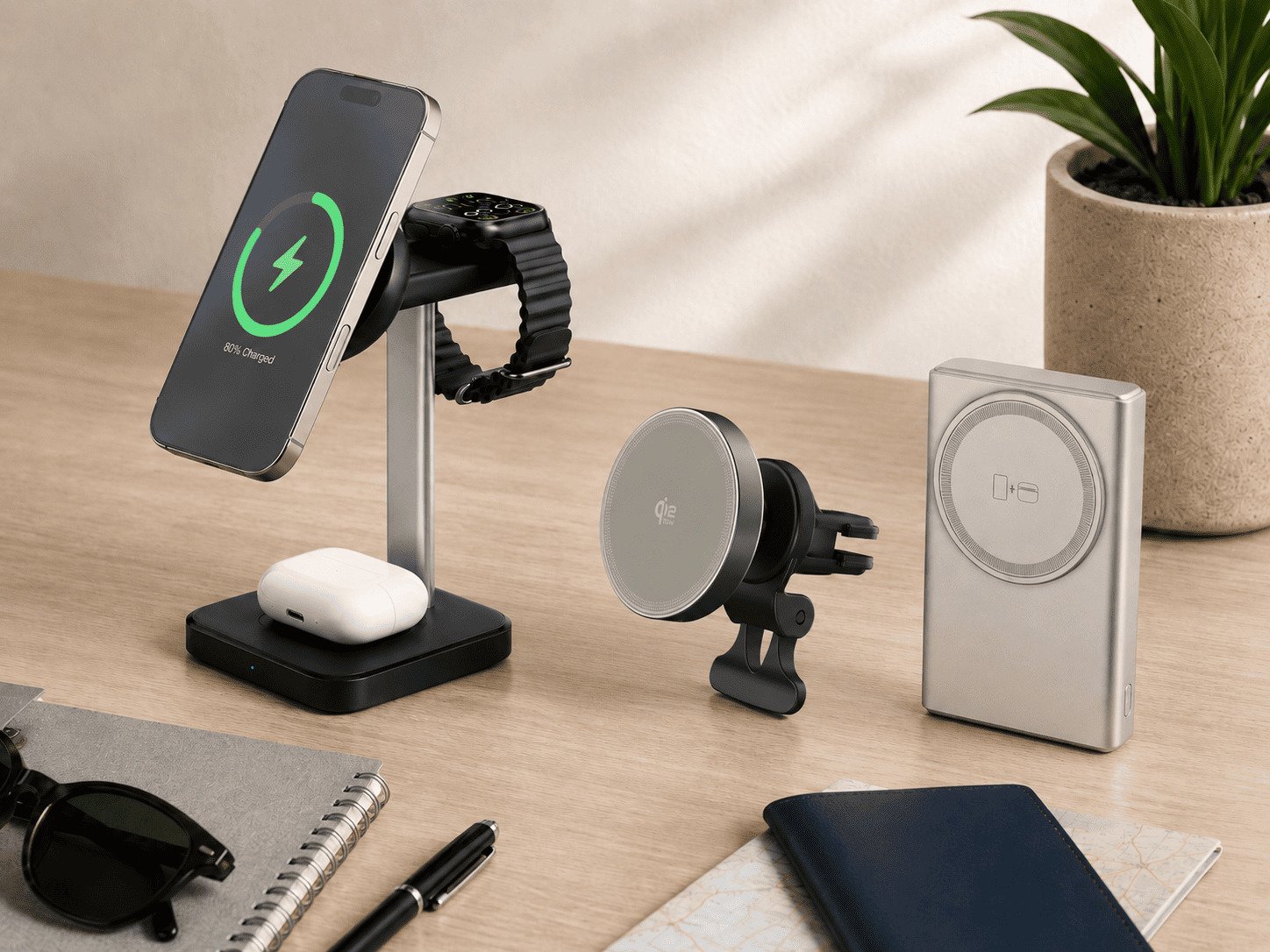
Wireless chargers and wireless power banks can be great Father’s Day gifts because they solve daily charging problems. I would choose them for convenience, cleaner spaces, easier phone use, and backup power during work, driving, travel, or outdoor time.
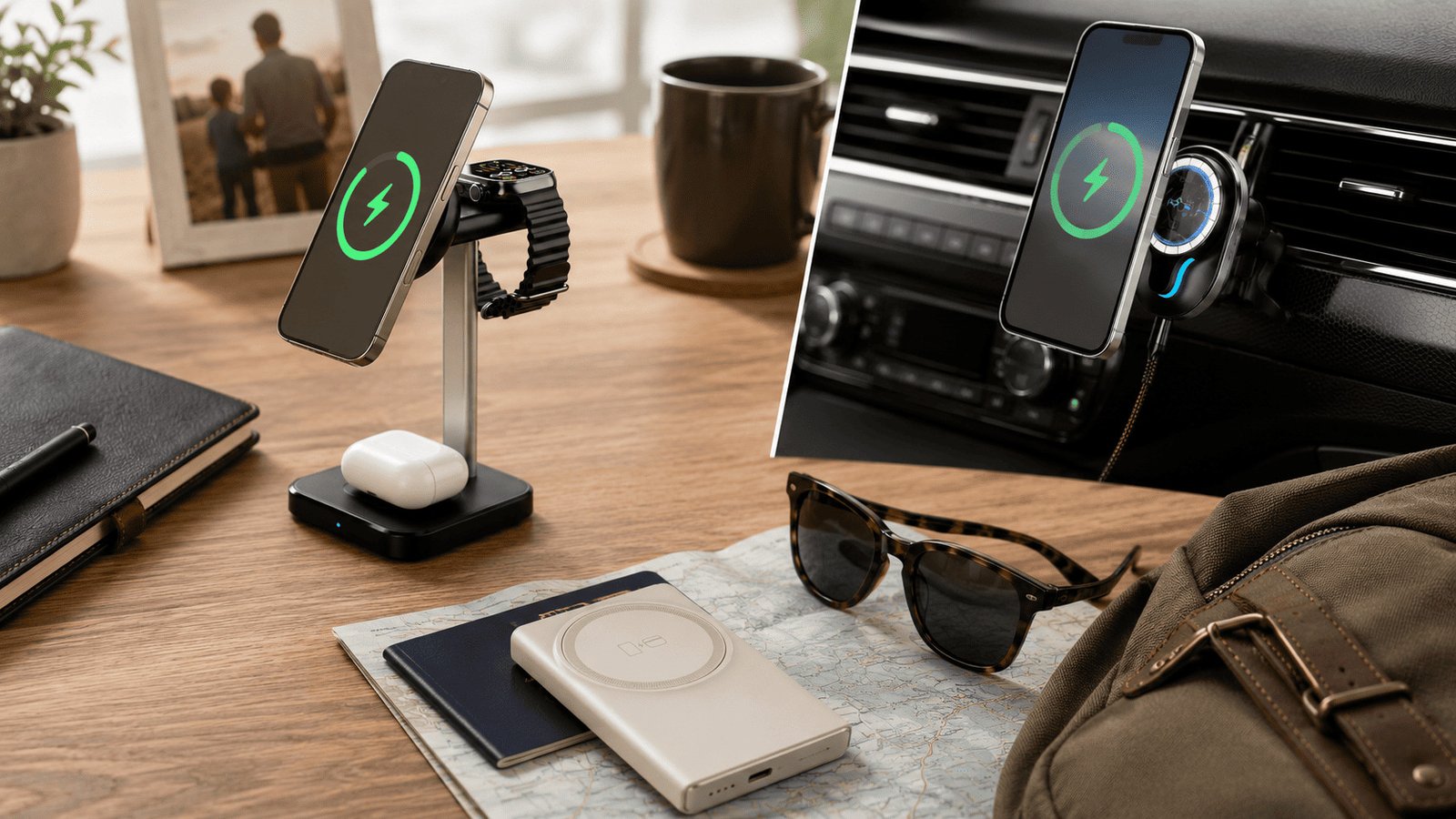
I do not see these products as just tech accessories. I see them as small tools that remove small stress from a father’s day. A good gift should match his real habits. If I choose based on how he works, drives, travels, or rests, the gift feels useful from the first day.
Why is a 3-in-1 wireless charging stand useful for fathers with many devices?
I have seen desks become full of cables fast. One phone, one watch, and one pair of earbuds can turn a clean table into a charging mess.
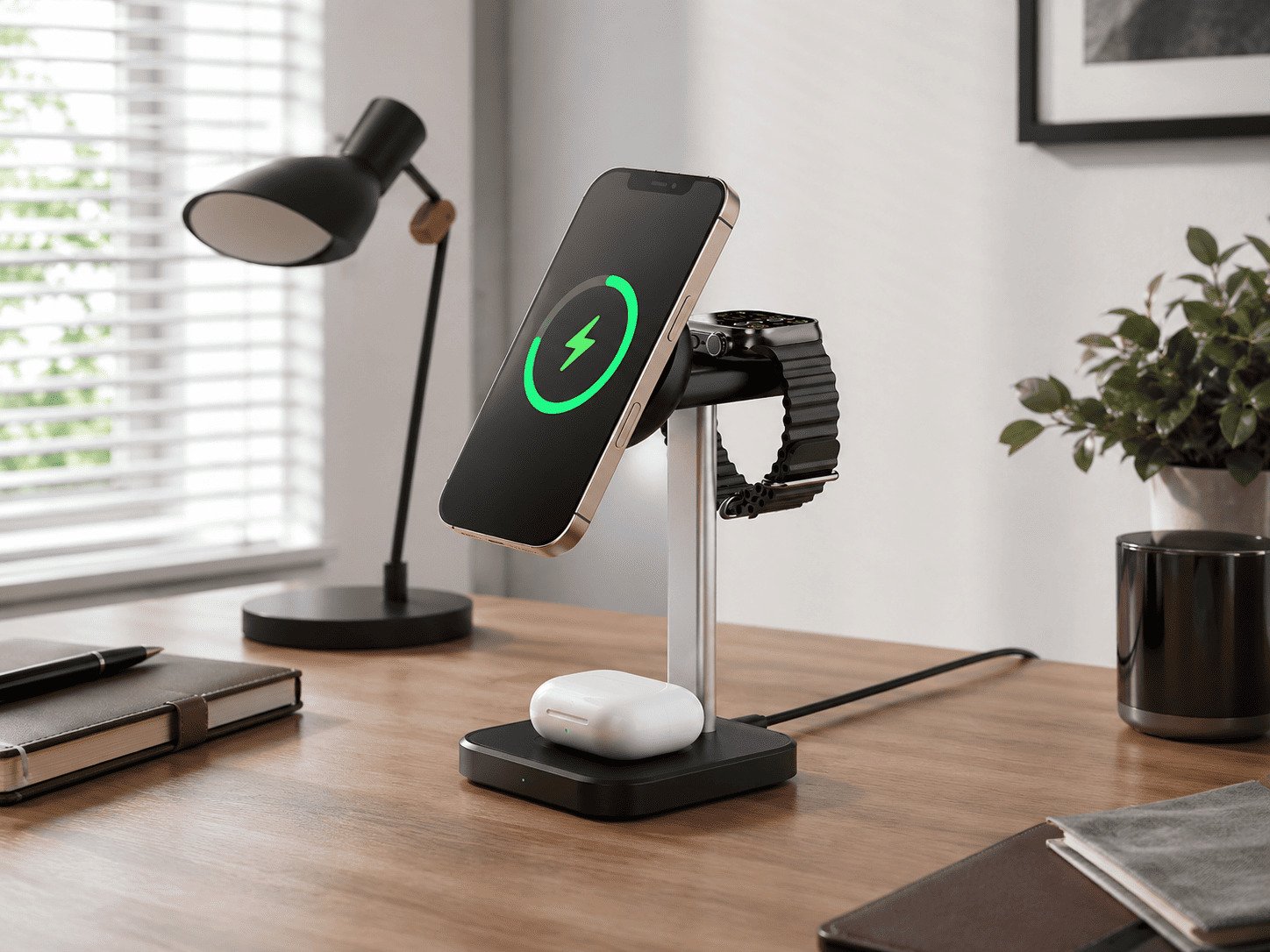
A 3-in-1 wireless charging stand helps charge several daily devices in one place. I would choose it for fathers who use a phone, smartwatch, and earbuds at home or in the office, and who want a cleaner, easier charging routine.
How I match it to daily use
I would not buy a 3-in-1 stand only because it looks modern. I would buy it when Dad already charges several devices every night or every workday. The value is order. He can place the phone on the stand, leave the watch on its spot, and keep earbuds ready. He does not need to search for three cables.
| Daily problem I notice | How the 3-in-1 stand helps | What I would check |
|---|---|---|
| Cables cover the desk | It keeps devices in one charging area | Stable base and clean layout |
| Phone is hard to see | It holds the phone upright | Stand angle and phone size |
| Watch or earbuds get forgotten | It gives each item a fixed place | Device compatibility |
| Night charging feels messy | It creates a simple routine | Safety protection and certification |
I would also check magnetic alignment if the phone supports magnetic wireless charging. I would check the case thickness too. A very thick case can reduce charging stability1. I would not promise that it is always faster than wired charging2. I would explain that it is easier to use every day.
Why does a wireless car charger fit fathers who drive often?
A low phone battery in the car is not just annoying. It can become a real problem when Dad needs maps, calls, or parking information.
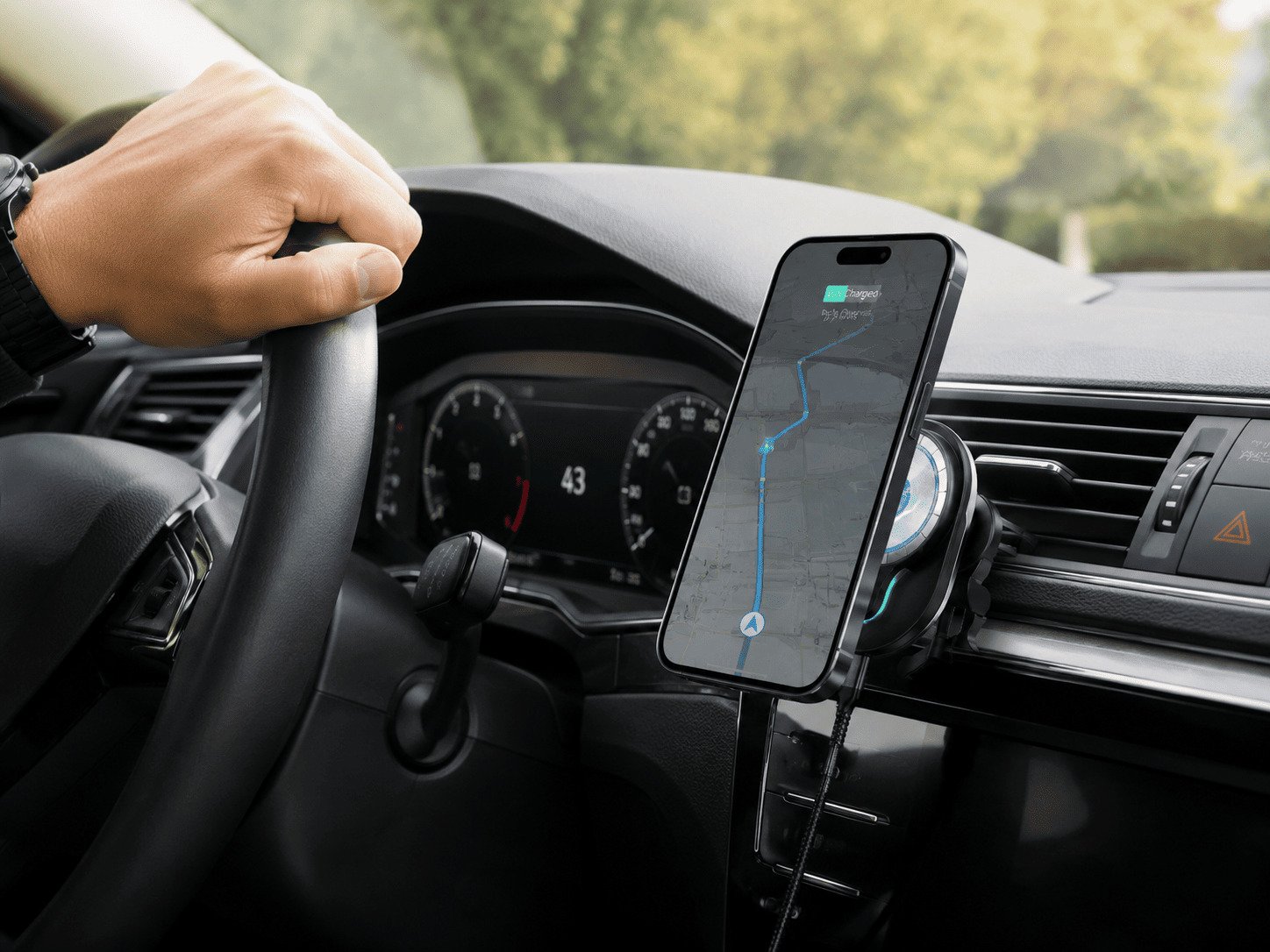
A wireless car charger is useful for fathers who drive often and rely on phone navigation. I would choose it because it holds the phone in view and helps keep the battery ready during daily driving.
How I think about driving situations
I would look at this gift through one simple question. Does he use his phone in the car every week? If the answer is yes, a wireless car charger can be more useful than many decorative gifts. It reduces the need to plug in a cable each time he gets in the car. It also gives the phone a fixed position, which can help when he follows navigation3.
| Driving habit | Best product detail | Why I care |
|---|---|---|
| Long commute | Strong mount and stable charging | The phone should not shake loose |
| Frequent navigation | Clear viewing angle | Dad should not look down too much4 |
| Short daily trips | Easy one-hand placement | He will use it more often |
| Hot weather driving5 | Heat and safety protection | Charging should stay reliable |
I would check whether the mount fits his car air vent, dashboard, or windshield. I would also check charging speed, but I would not make speed the only point. In a car, secure holding and easy placement matter a lot. I would also look for over-current, over-voltage, and temperature protection6. These details make the gift feel safer and more dependable.
Why is a wireless power bank helpful for travel, commuting, and outdoor days?
I have had days when a phone battery dropped at the worst time. A cable did not help because there was no wall outlet nearby.
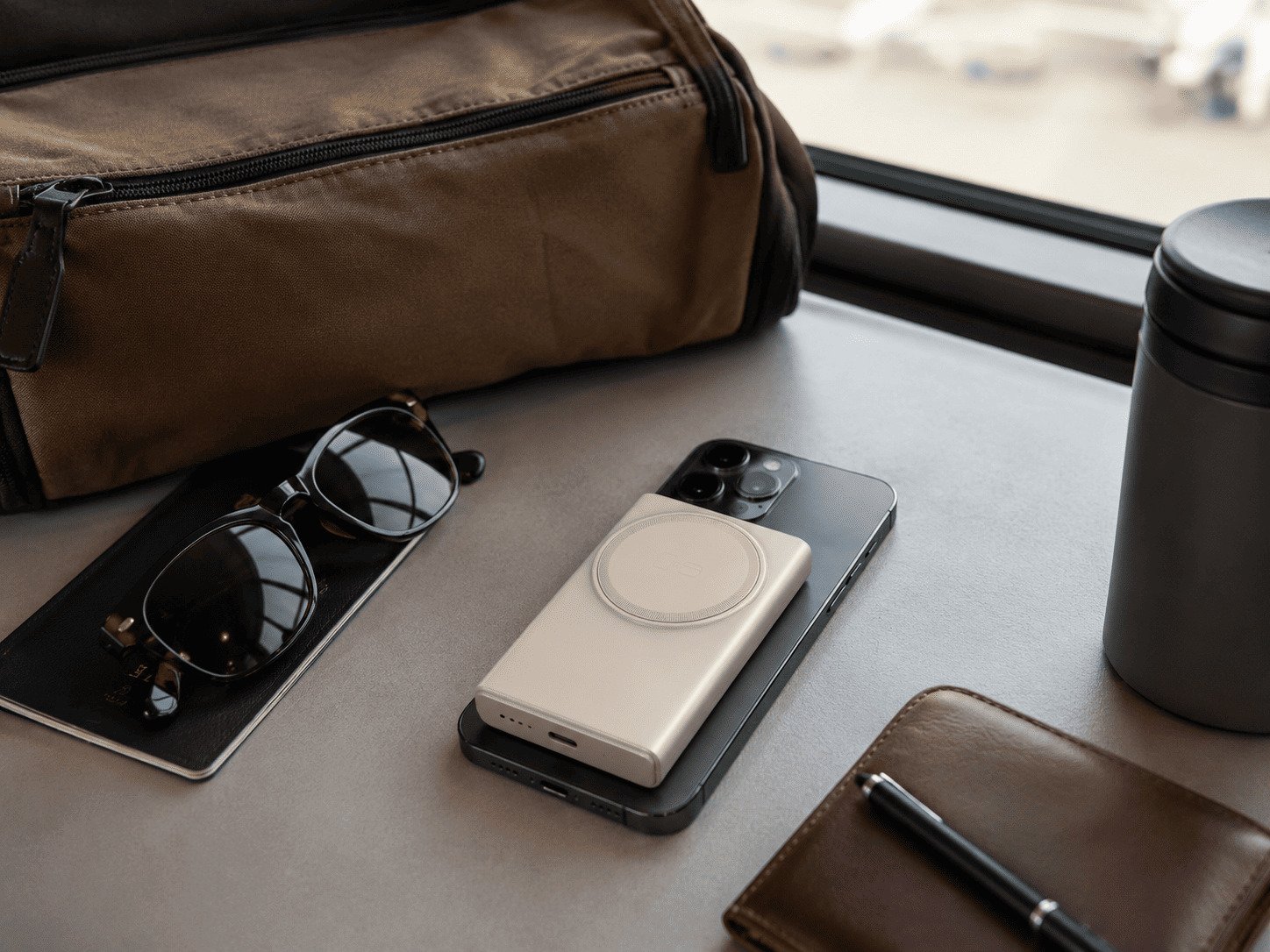
A wireless power bank is a good gift for fathers who travel, commute, work outside, or spend time outdoors. I would choose it because it provides backup power when a wall charger is not available.
How I choose the right power bank
I would choose a wireless power bank when Dad often leaves home for long hours. This can include business trips, train rides, flights, trade shows, weekend fishing, camping, or site visits. The main value is not only wireless charging. The value is peace of mind. He knows he has a power source in his bag.
| Use case | What I would choose | Reason |
|---|---|---|
| Daily commute | Slim magnetic wireless power bank | It is easy to carry |
| Business travel | Higher capacity model | It supports longer use |
| Outdoor activity | Strong shell and good grip | It handles movement better |
| Backup for family trips | Model with wireless and USB output | It can charge more devices |
I would check phone compatibility first. I would also check whether the magnetic hold is strong enough if his phone supports magnetic charging. If he uses a thick case, I would check whether charging still works well. I would also look at capacity, weight, and safety protections. A very large power bank may sound better, but Dad may leave it at home if it is too heavy7. I prefer a balance between capacity and carry comfort.
How should I choose the right wireless charging gift without overbuying?
It is easy to buy the most advanced model and still miss the point. The wrong gift adds clutter instead of solving a problem.
I would choose a wireless charging gift by matching it to Dad’s real routine. I would check device compatibility, charging speed, magnetic alignment, case thickness, safety protection, and certification before buying.
My simple buying checklist
I would start with his daily setting, not the product page. If he works at a desk, I would consider a 3-in-1 stand. If he drives often, I would consider a wireless car charger. If he travels or spends long days outside, I would consider a wireless power bank. This way, I buy a solution, not a random gadget.
| Buying check | What I look for | Why it matters |
|---|---|---|
| Phone compatibility | Qi or magnetic wireless support8 | The charger must work with his phone |
| Charging speed | Supported wattage for his device9 | It sets a realistic charging result |
| Magnetic alignment10 | Strong and accurate placement | It improves daily ease of use |
| Case thickness | Thin or compatible case | Thick cases may block stable charging |
| Safety protection | Heat, short-circuit, over-current protection | It supports safer use |
| Certification | CE, FCC, RoHS, UL, Qi, or local marks | It helps confirm compliance |
I would also think about where he will place the gift. A desk charger should look tidy. A car charger should hold the phone firmly. A power bank should fit his bag or pocket. I would not tell him wireless charging is always better than wired charging. I would tell him it can make daily charging cleaner, simpler, and easier to remember11.
Conclusion
I would choose wireless charging gifts for Father’s Day when they fit Dad’s real routine and make his day cleaner, easier, and more comfortable.
"Inductive charging - Wikipedia", https://en.wikipedia.org/wiki/Inductive_charging. A source can explain that wireless charging efficiency decreases with distance, and that thick phone cases (especially those over 3-5mm or containing metal) can exceed the optimal charging gap or interfere with the inductive field, leading to slower or failed charging. Evidence role: mechanism; source type: paper. Supports: The physical principles of inductive charging and how distance and materials can impede charging efficiency.. ↩
"Is fast charging on wireless any different than on wired? - Reddit", https://www.reddit.com/r/techsupport/comments/10i7gua/is_fast_charging_on_wireless_any_different_than/. A technical comparison can show that while wireless charging speeds have improved, high-speed wired charging standards (like USB Power Delivery) often deliver higher wattage and therefore faster charging times for compatible devices. Evidence role: general_support; source type: other. Supports: A comparison of the maximum charging speeds (in watts) and real-world charging times for current wired and wireless charging technologies.. Scope note: The specific speed difference depends on the phone model, the charger, the cable, and the charging protocols supported by each component. ↩
"Car Seat & Booster Seat Safety, Ratings, Guidelines - NHTSA", https://www.nhtsa.gov/equipment/car-seats-and-booster-seats. Sources on driving safety, such as those from national transportation safety agencies, recommend using a mount to position a navigation device where it can be seen with a brief glance, reducing the need to look down or away from the road. Evidence role: expert_consensus; source type: government. Supports: The importance of mounting a phone within the driver's line of sight without obstructing the view of the road.. ↩
"Distracted Driving Dangers and Statistics - NHTSA", https://www.nhtsa.gov/risky-driving/distracted-driving. Government transportation safety reports indicate that taking your eyes off the road for just two seconds can double the risk of a crash, and looking down at a phone often takes much longer. Evidence role: statistic; source type: government. Supports: Data and expert warnings about the dangers of taking one's eyes off the road to interact with a phone.. ↩
"Wireless charging - does anyone's phone get super hot, fairly ...", https://www.reddit.com/r/MachE/comments/1d7m2gi/wireless_charging_does_anyones_phone_get_super/. A source on battery technology can explain that wireless charging itself generates heat. When combined with high ambient temperatures (like a car's interior in the sun), a phone's battery management system will often slow or pause charging to prevent the battery from overheating, which can cause permanent damage. Evidence role: mechanism; source type: education. Supports: The effect of ambient temperature on the efficiency and safety of charging lithium-ion batteries.. ↩
"What Is Overcurrent Protection? - Astrodyne TDI", https://www.astrodynetdi.com/blog/what-is-overcurrent-protection. A technical resource can define these as crucial safety features that protect both the charger and the connected device from damage by automatically shutting down power delivery in case of electrical faults (like short circuits or power surges) or excessive heat. Evidence role: definition; source type: other. Supports: Definitions for common electronic safety circuits like over-current protection (OCP), over-voltage protection (OVP), and thermal protection.. ↩
"Lithium-ion battery - Wikipedia", https://en.wikipedia.org/wiki/Lithium-ion_battery. A source on battery technology can explain that a power bank's capacity is a function of the volume and mass of its internal battery cells. Due to the finite energy density of current lithium-ion technology, higher capacity inevitably results in a heavier and larger device. Evidence role: mechanism; source type: paper. Supports: The relationship between a battery's energy capacity (measured in mAh or Wh) and its physical mass.. ↩
"Qi (standard) - Wikipedia", https://en.wikipedia.org/wiki/Qi_(standard). A source like the Wireless Power Consortium (WPC), which develops the standard, can define Qi as the leading global interface for inductive power transfer, designed to ensure safety and interoperability between different brands of chargers and devices. Evidence role: definition; source type: institution. Supports: A definition of the Qi standard for wireless power transfer and its purpose.. ↩
"Quick Charge - Wikipedia", https://en.wikipedia.org/wiki/Quick_Charge. An educational source on basic electronics can explain that power, measured in watts, is the rate of energy transfer. A higher wattage allows for more energy to be delivered to a battery in a given period, resulting in faster charging, provided the device's battery management system is designed to accept it. Evidence role: mechanism; source type: education. Supports: The physical relationship between power (measured in watts) and the rate of energy transfer to a battery.. Scope note: Actual charging speed is actively managed by the device to optimize for battery health and safety, so it may not always charge at the maximum possible wattage. ↩
"Qi (standard) - Wikipedia", https://en.wikipedia.org/wiki/Qi_(standard). A technical article can explain that magnetic alignment systems, such as those in Apple's MagSafe and the Qi2 standard, use a ring of magnets in both the charger and the device to automatically snap them into the optimal position for the most efficient power transfer, ensuring a consistent charge without user guesswork. Evidence role: mechanism; source type: other. Supports: An explanation of how magnetic alignment systems work and their benefits.. ↩
"What is the point of wireless charging? : r/NoStupidQuestions - Reddit", https://www.reddit.com/r/NoStupidQuestions/comments/10e817w/what_is_the_point_of_wireless_charging/. An encyclopedia or technology overview article can corroborate that the primary user benefits of wireless charging are convenience and reduced cable clutter, as users can simply place a device on a charging surface without needing to plug in a cable. Evidence role: general_support; source type: encyclopedia. Supports: A summary of the commonly cited advantages of wireless charging technology.. Scope note: The source may also note common trade-offs, such as lower energy efficiency and generally slower charging speeds compared to modern wired alternatives. ↩