
I know wireless charging looks simple. I place a phone down, but slow charging, no charging, or weak alignment can make buying one feel risky.
Most modern phones, earbuds, and some accessories with Qi wireless charging can work on a Qi charger in 2026. I still check the device’s official specs, WPC certification, and real charging behavior because Qi compatibility does not always mean Qi2, MagSafe alignment, or fastest charging.
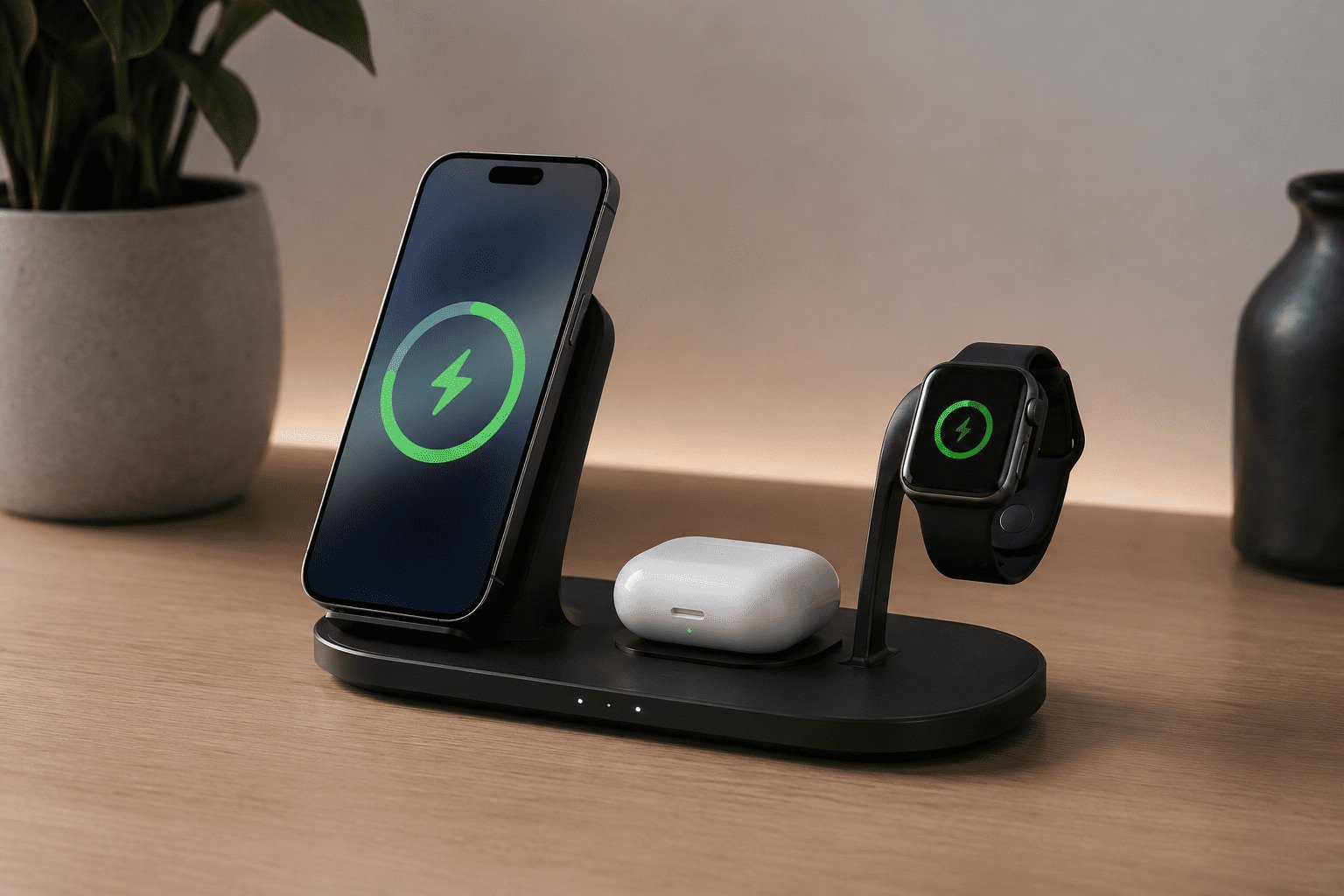
I wrote this guide as a simple checklist, not as a standards document. I want to help myself, and other everyday users, avoid buying the wrong charger. I separate Qi, Qi2, MagSafe, and Apple Watch charging because these names often get mixed together. If I know the difference, I can buy with fewer surprises.
What Does Qi-Compatible Mean in 2026?
I see “Qi-compatible” on many product pages. The problem is that the label can hide limits, so I may expect fast charging and get basic charging instead.
Qi-compatible usually means a device can charge wirelessly on a Qi charging pad or stand. It does not always mean the device supports Qi2 magnetic alignment, MagSafe magnets, full-speed charging, or smartwatch charging.
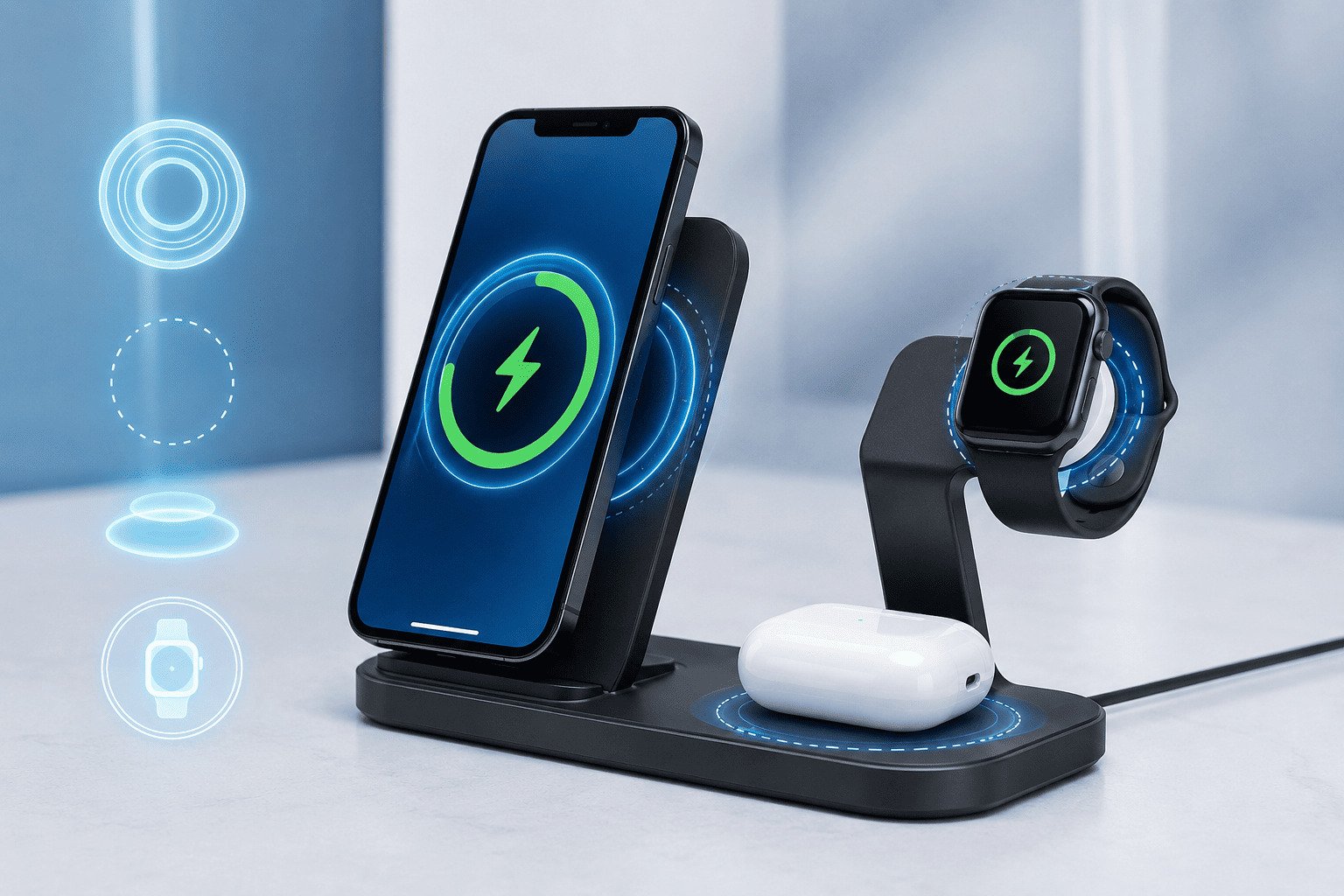
I treat Qi as the basic wireless charging language. If my phone supports Qi, it can usually receive power from a Qi charger. I still check power level, coil position, case thickness, and charger certification. These details affect the real result.
| Term | What I Expect | What I Still Check |
|---|---|---|
| Qi | Basic wireless charging | Charging speed and device support |
| Qi2 | Newer magnetic Qi charging | Device and charger certification |
| MagSafe | Apple magnetic charging system | iPhone model and charger rating |
| Apple Watch charger | Watch-specific charging | It is not the same as phone Qi |
I do not assume every wireless charging phone supports Qi2. Many phones support Qi charging, but Qi2 needs the right phone, the right charger, and often a magnetic design. I also do not assume a “magnetic” charger is certified Qi2. Some chargers have magnets only for holding the phone. They may still charge at basic Qi speed without official WPC Qi2 Magnetic Power Profile (MPP) certification. I prefer to check official device pages, Wireless Power Consortium information, and trusted charging tests before I buy. An older Qi phone is fully backward-compatible with a Qi2 charger by design, but it may not snap into perfect alignment or charge at the higher Qi2 level.
Which Phones Work With Qi Wireless Chargers?
I often start with the phone because it is the main device most people charge wirelessly. A phone may work, but the speed can change a lot.
Most recent iPhone and many Samsung, Google Pixel, and premium Android phones support Qi wireless charging. Some models support Qi2 or MagSafe-style alignment, but many Android phones still use standard Qi charging only.
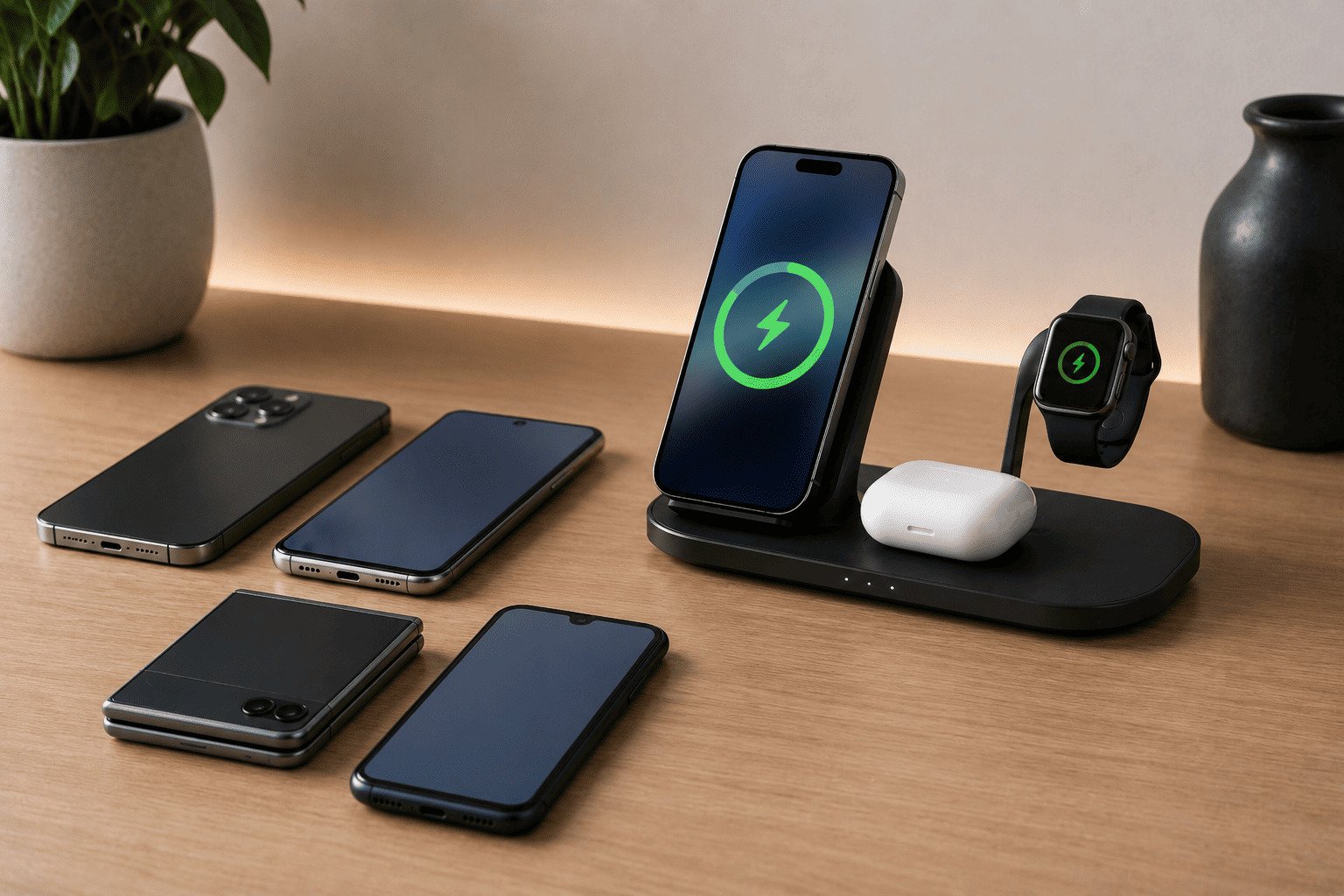
I use this quick list as a practical guide. I still confirm the exact model before buying, because phone names can look very similar across regions.
| Device Group | Qi Wireless Charging | Qi2 / Magnetic Note |
|---|---|---|
| iPhone 8 to iPhone 11 series | Yes | No native MagSafe magnets |
| iPhone 12 to newer iPhone models | Yes | MagSafe supported; Qi2 support for iPhone 13 and 14 was fully unlocked via iOS updates |
| Samsung Galaxy S flagship models | Usually yes | Requires a magnetic case to achieve alignment on standard Qi Android models |
| Samsung Galaxy Z Fold / Z Flip models | Usually yes | Alignment can vary by design |
| Google Pixel premium models | Usually yes | Charging speed depends on Pixel model and charger |
| Many budget Android phones | Often no | I check specs first |
| Phones with metal backs or no wireless coil | No | A Qi charger will not add wireless charging by itself |
I do not buy a charger only because it says “for iPhone and Android.” I check the phone’s official spec page for “Qi wireless charging,” “wireless charging,” or “Qi2.” If the page only says “fast charging,” it may mean wired fast charging, not wireless charging. I also check my case. A thick case, metal ring, wallet case, or badly placed magnet can stop charging. If I use a magnetic case, I make sure the magnet pattern matches the phone and charger.
Do Earbuds and Smartwatches Use the Same Qi Charger?
I used to think one wireless charger could charge every small device. Then I learned that earbuds and watches do not always follow the same charging rules.
Many wireless earbud cases support Qi charging, but smartwatches are more mixed. Apple Watch charging is separate from normal Qi phone charging, and many watches need their own puck or certified module.
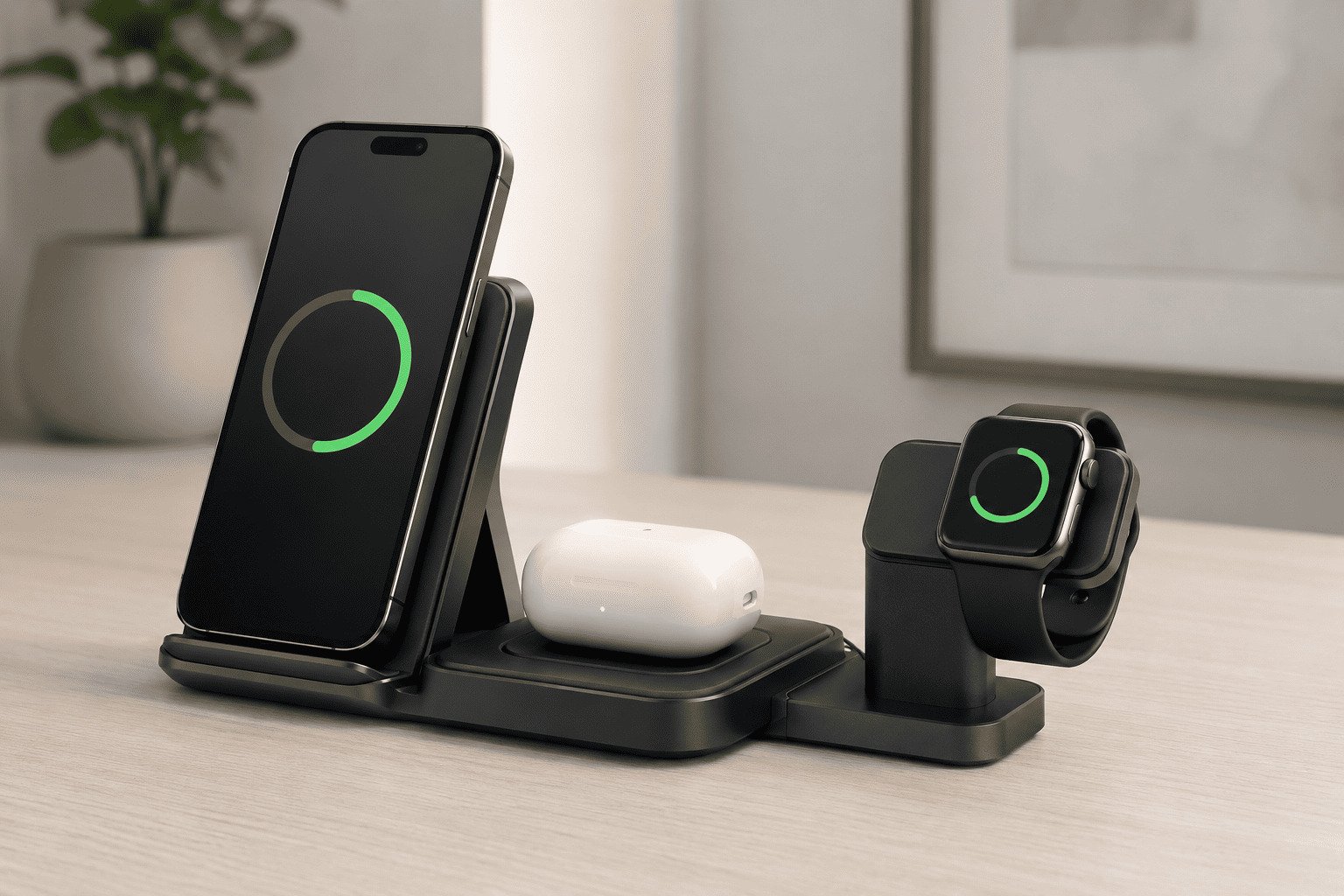
I place earbud cases into a simpler group. If the earbud case says “Qi wireless charging case,” it usually works on a flat Qi pad. The case coil is small, so placement matters. If the charger has raised edges or a strong phone stand angle, the case may not sit in the right place.
| Device Type | Can It Use a Normal Qi Pad? | What I Watch For |
|---|---|---|
| AirPods with wireless charging case | Usually yes | Case version matters |
| Many Samsung Galaxy Buds cases | Usually yes | Center placement matters |
| Other Qi earbud cases | Usually yes | Official specs matter |
| Apple Watch | No, not normal Qi | Needs Apple Watch charger |
| Samsung Galaxy Watch | Usually no | Standard Qi pads fail because of proprietary smartwatch alignment and small coil constraints |
| Some fitness watches | Usually no | Check brand charger type |
I treat smartwatch charging as a separate category. Apple Watch does not charge on a normal Qi phone pad, even though it uses wireless power. It needs an Apple Watch charging puck or a charger with a built-in Apple Watch module. Some 3-in-1 chargers include phone Qi charging, earbud Qi charging, and Apple Watch charging in one product. That design can be very useful, but I still check whether the watch module is included, whether it is certified or approved, and whether fast watch charging is supported. A “3-in-1” label alone is not enough for me.
How Can I Check Compatibility Before Buying a Charger?
I know the safest way is to check before I order. A few minutes of checking can save a return, a slow charger, or a device that slides off the stand.
I check four things before buying: my device’s official wireless charging support, the charger’s Qi or Qi2 certification, the expected wattage, and whether my case affects alignment or power transfer.
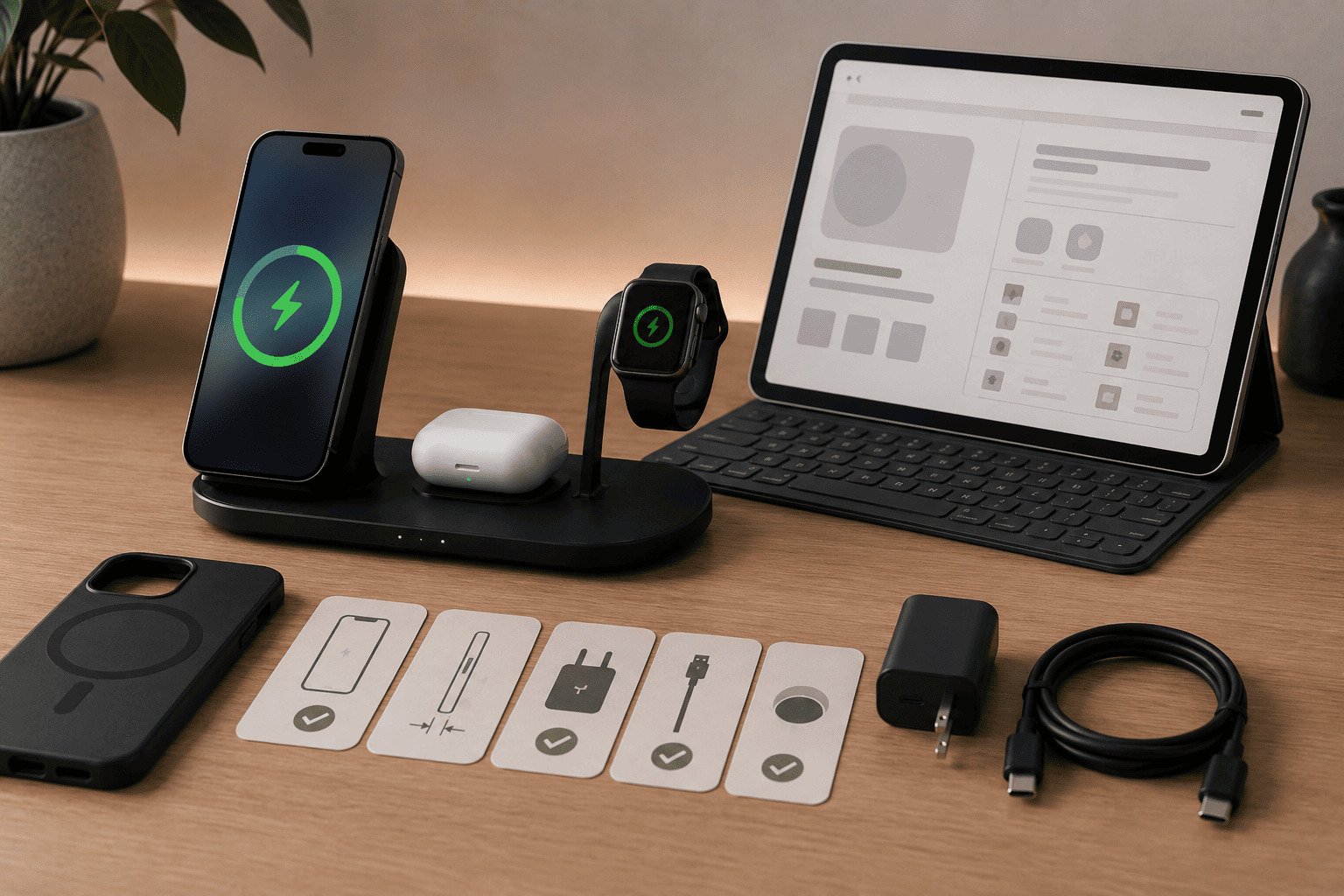
I use a short process. It helps me avoid overpromising product pages and confusing labels.
| Step | What I Check | Why It Matters |
|---|---|---|
| 1 | Device official specs | Confirms wireless charging exists |
| 2 | WPC certification or brand data | Confirms Qi or Qi2 claim |
| 3 | Charging wattage | Shows likely speed |
| 4 | Case and magnet design | Affects alignment |
| 5 | Charger shape | Pads, stands, and 3-in-1 stations fit devices differently |
I also look for cautious wording. If a charger says “up to 15W,” I ask which phone gets 15W. Some phones limit third-party wireless charging. Some iPhones charge faster on MagSafe or certified Qi2 chargers than on basic Qi chargers. Some Android phones use brand-specific wireless fast charging, so a normal Qi pad may charge them slower.
I also avoid thick cases with metal plates. I remove wallet cases before charging. I do not place coins, keys, or bank cards between the phone and charger. If charging starts and stops, I move the phone slowly until the coil lines up. If the phone gets too warm, I stop charging and test without the case. I see compatibility as a real-world match, not just a printed word.
Conclusion
I check Qi, Qi2, MagSafe, and watch support separately because compatibility means “can charge,” not always “best speed” or “perfect alignment.”