
Many buyers see 25W and expect instant speed. I see the risk. A wrong charger, adapter, or phone can turn that promise into slow charging.
I define Qi2 25W as certified magnetic wireless charging with a peak output of up to 25W1. I do not treat it as a fixed speed. I check the phone, charger, USB-C PD adapter, heat control, magnetic alignment, and software support before I expect real 25W charging.
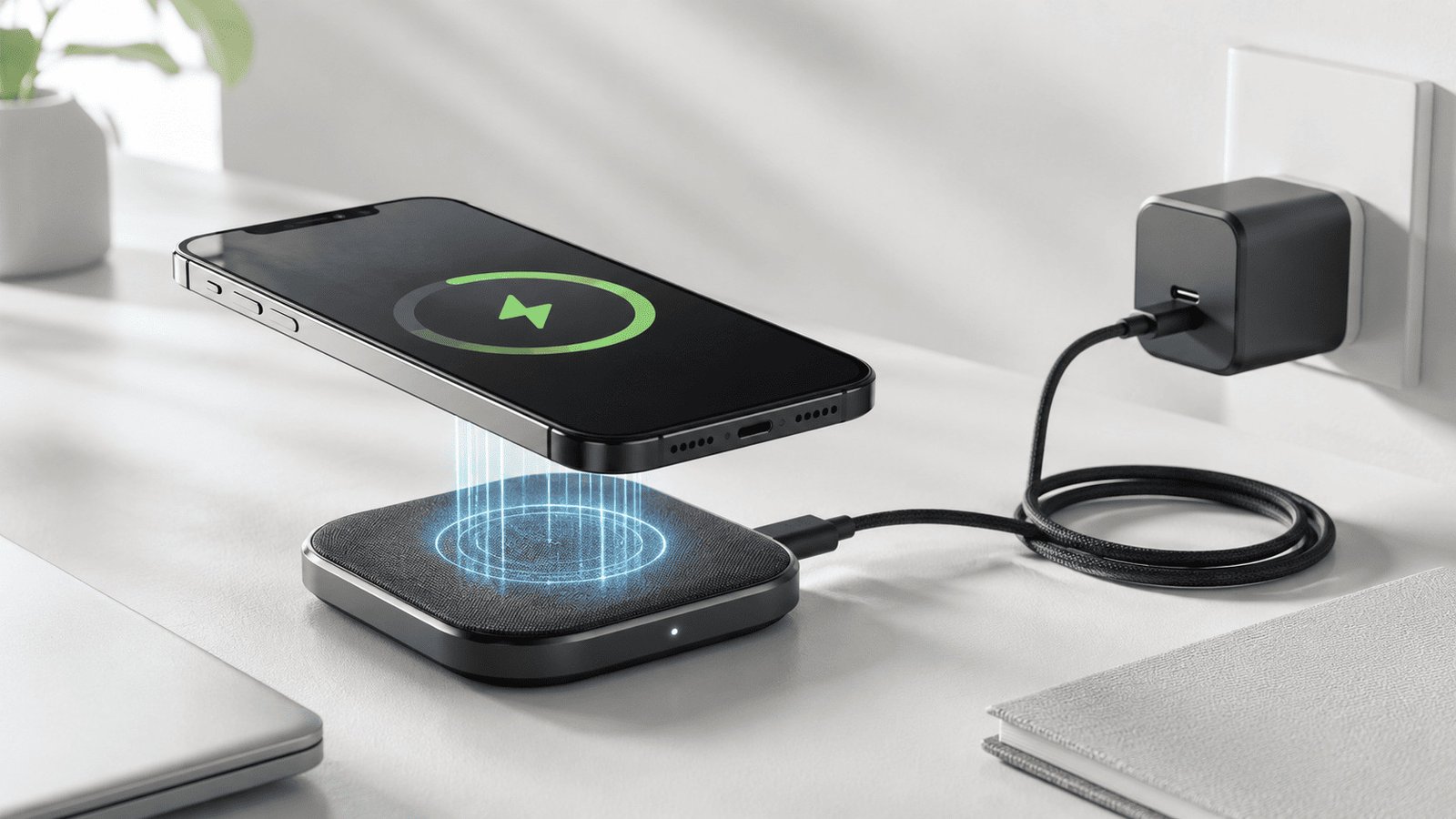
I have watched wireless charging move from simple Qi pads to magnetic chargers and now to Qi2 25W. I like this change because it gives the market a clearer path. I also know it can confuse buyers. Some product pages say “25W compatible,” but they do not always mean certified 25W performance. I wrote this guide to separate real Qi2 25W value from loose marketing claims, so I can help both consumers and B2B buyers make safer decisions.
What Does Qi2 25W Actually Mean?
Many people treat Qi2 25W like a magic number. I do not. I see it as a system standard, not only a charger label.
I understand Qi2 25W as a certified wireless charging level that can deliver up to 25W when the full charging chain supports it. The charger, phone, adapter, cable, magnets, firmware, and thermal design all matter.
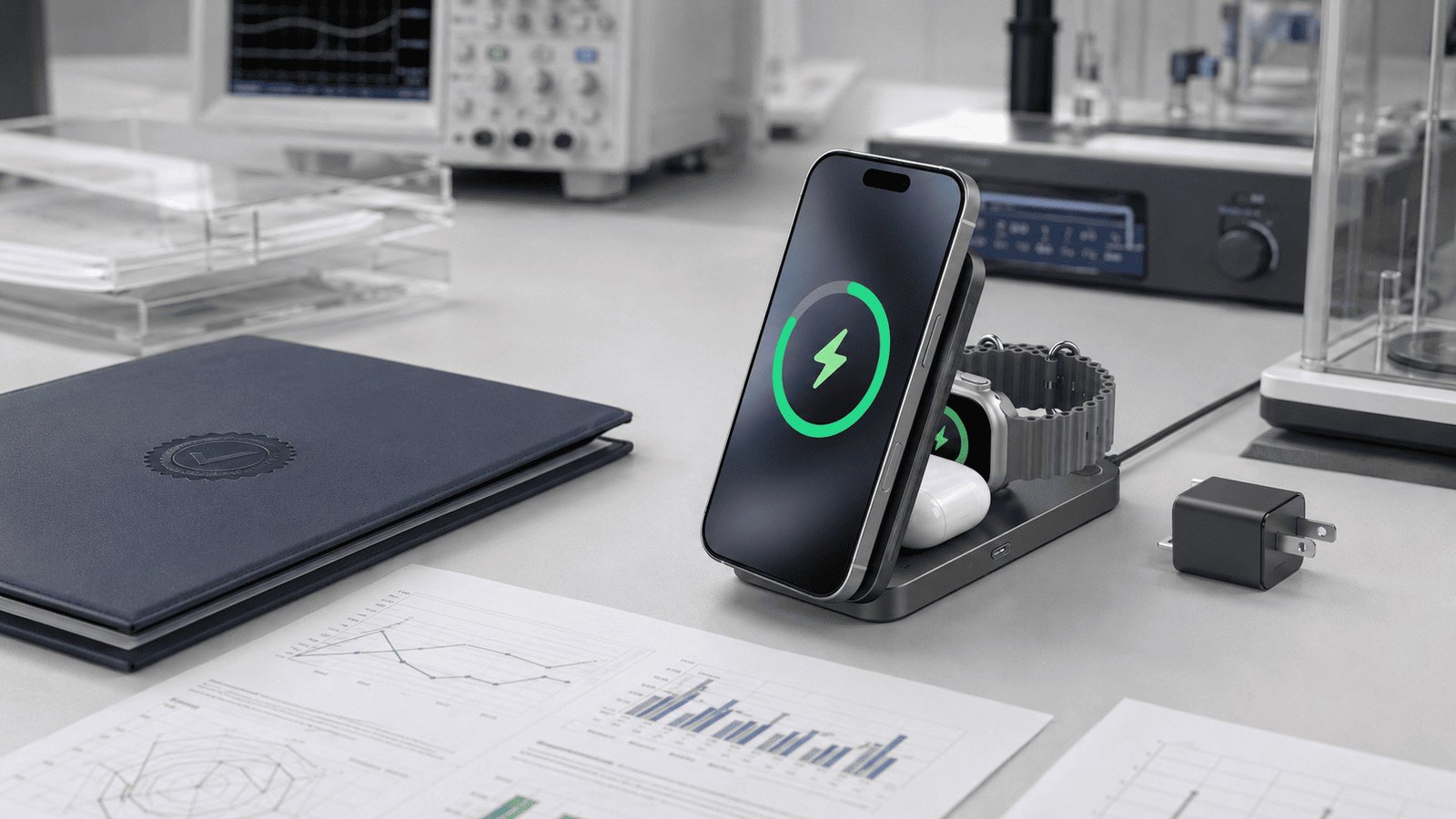
I separate the power number from the charging system
I always start with one clear point. Qi2 25W is a peak capability. It does not mean every phone will charge at 25W from 0% to 100%. Wireless charging power rises and falls during the session.2 The phone controls the power based on battery level, temperature, battery health, and software rules. The charger can offer 25W, but the phone can accept less.
I also check certification. A charger can look magnetic and still not be a certified Qi2 25W product.3 A seller can write “25W compatible” and still fail to deliver certified performance. I do not rely on the largest number on the box. I ask for test proof, certification status, adapter requirements, and thermal data.
| Item I Check | Why It Matters | What I Expect |
|---|---|---|
| Phone support | The phone decides the accepted power | Real Qi2 25W support or clear power limit |
| Charger certification | It proves standard compliance | Qi2 25W certification, not only marketing text |
| USB-C PD adapter | The charger needs enough input power | Correct PD profile and enough wattage |
| Magnetic alignment | Poor alignment wastes power as heat | Strong, centered magnetic connection |
| Thermal control | Heat reduces charging speed | Safe temperature and stable power |
| Firmware behavior | Software manages battery safety | Smart power control and protection |
I see Qi2 25W as useful because it brings higher power into a more controlled magnetic standard. It is not only about speed. It is also about alignment, safety, and predictable design. This point is important for my consumer customers and my B2B customers. A consumer wants fast charging at home. An importer wants a product that passes testing, avoids complaints, and works with target phones in the market.
Which Devices Can Really Charge at 25W?
Many users buy a 25W charger and expect every phone to match it. I see disappointment happen when the phone only supports 15W or less.
I tell buyers that real 25W wireless charging needs a phone that officially supports the latest high-power profiles4. If the phone only supports Qi2 15W, MagSafe 15W, or older Qi power, the charger will reduce output.
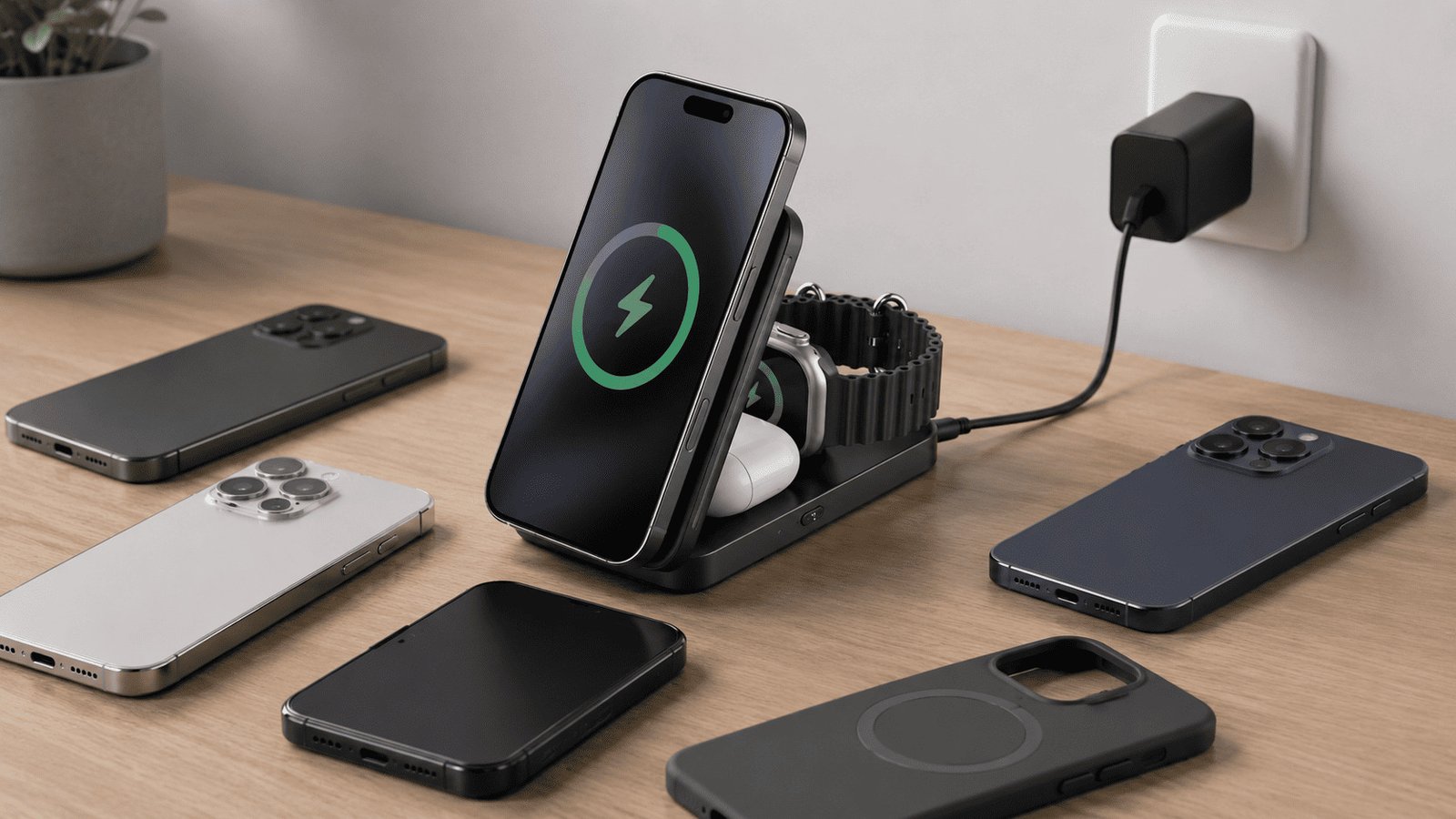
I check device support before I promise speed
I do not judge support by phone brand alone. I check the exact model. Two phones from the same brand can behave very differently. One model may support Qi2 magnetic charging at 15W. Another may support higher wireless power, such as the [iPhone 16 and iPhone 17 series which native support up to 25W MagSafe charging] (https://support.apple.com/en-us/121029)5. A third may only support older Qi charging. This is why I do not tell buyers that a Qi2 25W charger will make all phones charge at 25W.
I also watch environmental conditions. A phone may start near a high power level and then reduce power after it gets warm. A thick case can create distance. A metal ring can affect alignment. A hot room can make the phone protect its battery sooner. Battery level also matters. Many phones charge faster at low battery levels and slow down as they approach full charge.
| Device Situation | Likely Charging Result | My Buyer Advice |
|---|---|---|
| Phone supports Qi2 25W | It may reach up to 25W peak | Use a certified charger and correct adapter |
| Phone supports Qi2 15W | It will likely stay around 15W peak | Do not expect 25W |
| Phone supports MagSafe 15W only | It may charge at MagSafe-level limits | Check brand and model rules |
| Phone supports older Qi only | It may charge at 5W, 7.5W, 10W, or 15W | Check the phone specification |
| Phone has a thick case | Power may drop | Use a magnetic compatible thin case |
| Phone is hot | Power will reduce | Let the phone cool |
I also remind distributors that device support changes by region and software version due to local radio regulations. For example, strict frequency band and power adjustments mandated by local ministries (like China's updated MIIT radio administration provisions) directly alter how global smartphone giants calibrate their wireless charging firmware for specific markets. For this reason, I prefer real charging tests with target devices. I do not only read a chipset claim. I place the phone on the charger. I record input power, surface temperature, charging time, and stability. I treat this process as basic product work, not extra work.
What Accessories Do I Need for Real Qi2 25W Charging?
A buyer can own the right phone and still miss 25W. I see this often when the adapter is weak or the cable is poor.
I need three things for real Qi2 25W charging: a compatible phone, a certified Qi2 25W charger, and a suitable USB-C PD power adapter. I also need a good cable, correct magnetic case, and safe heat design.
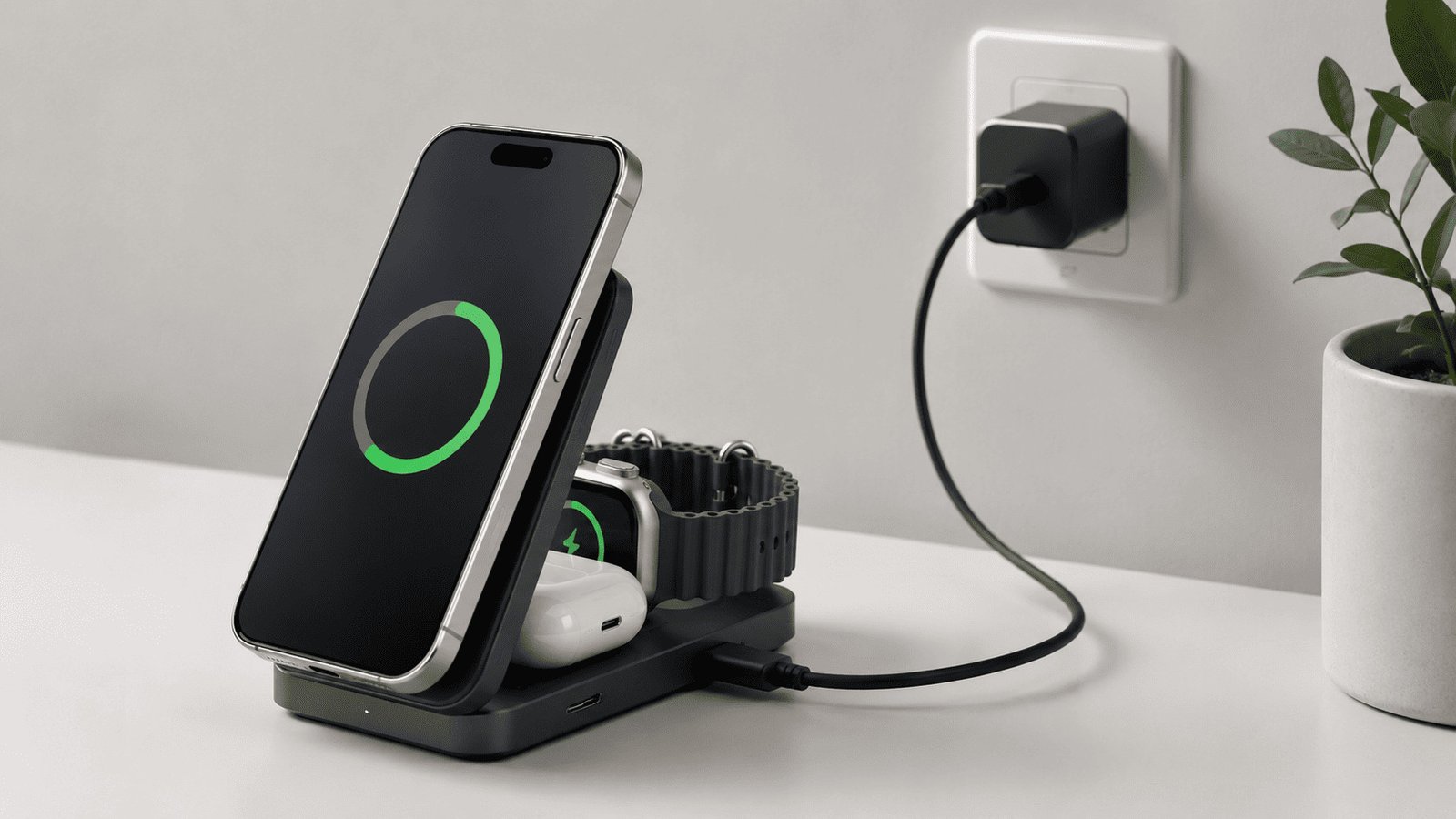
I treat the charger as one part of the chain
I always explain the charging chain in simple words. The wall adapter provides power. The USB-C cable carries power. The Qi2 25W charger converts power into wireless output. The magnet keeps the phone aligned. The phone receives and controls the power. If one part is weak, the full chain slows down.
The USB-C PD adapter is especially important. Laboratory power stress tests confirm that a 25W wireless charger [needs more than 25W input because wireless charging has conversion loss](https://pmc.ncbi.nlm.nih.gov/articles/PMC11086091/)6. To consistently achieve a 25W peak wireless delivery to the device, the upstream power supply must provide at least a 30W or 35W PD profile to absorb thermal dissipation and transmission efficiency drops. If a buyer uses an old 5V adapter, the charger may still work, but it will not perform at the expected level. This creates complaints even when the charger itself is well designed.
| Accessory | My Minimum Check | Common Problem |
|---|---|---|
| Qi2 25W charger | I check certification and test reports | Product only says “25W compatible” |
| USB-C PD adapter | I check wattage and PD profile | Adapter is too weak |
| USB-C cable | I check current rating and quality | Cable causes voltage drop |
| Phone case | I check magnetic fit and thickness | Case creates gap or heat |
| Charging surface | I check stability and airflow | Heat builds under the phone |
| Firmware | I check power negotiation behavior | Charger does not manage power well |
I also care about thermal design because faster wireless charging creates more heat7. I look at coil design, PCB layout, shielding, heat spreaders, and surface materials. A product can show high peak power in a short lab test but still feel poor in daily use. If the charger overheats, the phone will reduce power. The user will see slow charging and may blame the brand. For B2B buyers, this is a real after-sales risk needs to be paid attention to.
How Does Qi2 25W Compare With Qi2 15W, MagSafe, and Older Qi?
Many buyers compare only watts. I think that is too simple. I compare certification, alignment, device support, heat, and real user experience.
I see Qi2 25W as the next step after Qi2 15W because it keeps magnetic alignment while raising certified peak power. MagSafe and older Qi can still be useful, but they have different limits and device rules.
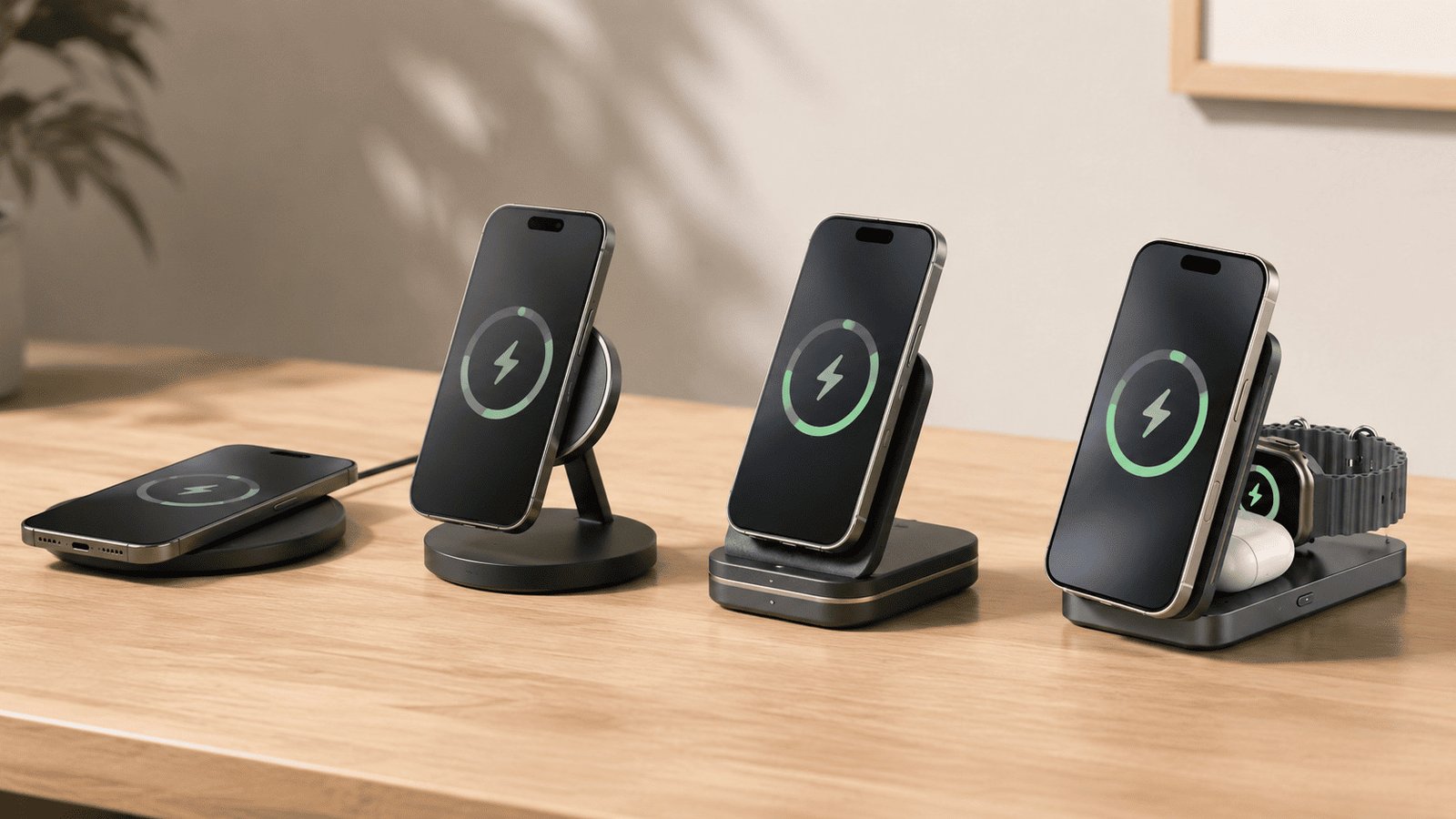
I compare real standards, not only product claims
Older Qi charging helped the market grow. It gave users a simple way to charge without plugging in a cable. Yet older Qi products often depended on manual placement. If the phone was not centered, charging became slow or hot. Qi2 improved this part with magnetic alignment.8 I see magnetic alignment as a major value because it reduces user error.
Qi2 15W gave the market a certified magnetic path at a known power level. Qi2 25W builds on that idea. It raises peak power, but it still depends on the phone and accessory chain. MagSafe is also magnetic, and many Apple users know it well. Yet I do not treat every magnetic charger as the same thing. Some are certified. Some are not. Some support Apple rules. Some support Qi2 rules. Some only look similar.
| Charging Type | Main Feature | Typical Limit I Watch | My View |
|---|---|---|---|
| Older Qi | Broad wireless charging support | Alignment can be poor | Useful, but less predictable |
| MagSafe | Magnetic charging for Apple ecosystem | Power depends on Apple rules and certification | Strong for supported iPhones |
| Qi2 15W | Certified magnetic wireless charging | Peak power is lower than 25W | Good balance for many users |
| Qi2 25W | Certified magnetic charging with higher peak power | Needs full chain support | Best when phone, charger, and adapter match |
I also tell buyers that speed is not the only buying point. A good Qi2 15W charger may give a better daily result than a weak “25W compatible” charger. The reason is simple. Stable alignment, safe temperature, and proper power control matter. I would rather sell a certified product with clear limits than a product with a large number and unclear proof. This matters more in wholesale and distribution. A vague claim can easily lead to retail returns, platform listing bans, and severe brand damage. Across global marketplaces, electronics average an 8% to 15% return rate, and reverse logistics for overpromising SKUs can quietly erase an importer's entire profit margin.
What Should B2B Buyers Check Before Launching Qi2 25W Products?
Importers and distributors can lose money when they buy only from a product photo. I have seen small missing documents become big sales delays.
I advise B2B buyers to check Qi2 25W certification, test reports, adapter requirements, thermal results, packaging claims, device compatibility lists, warranty terms, and supplier production controls before placing bulk orders.
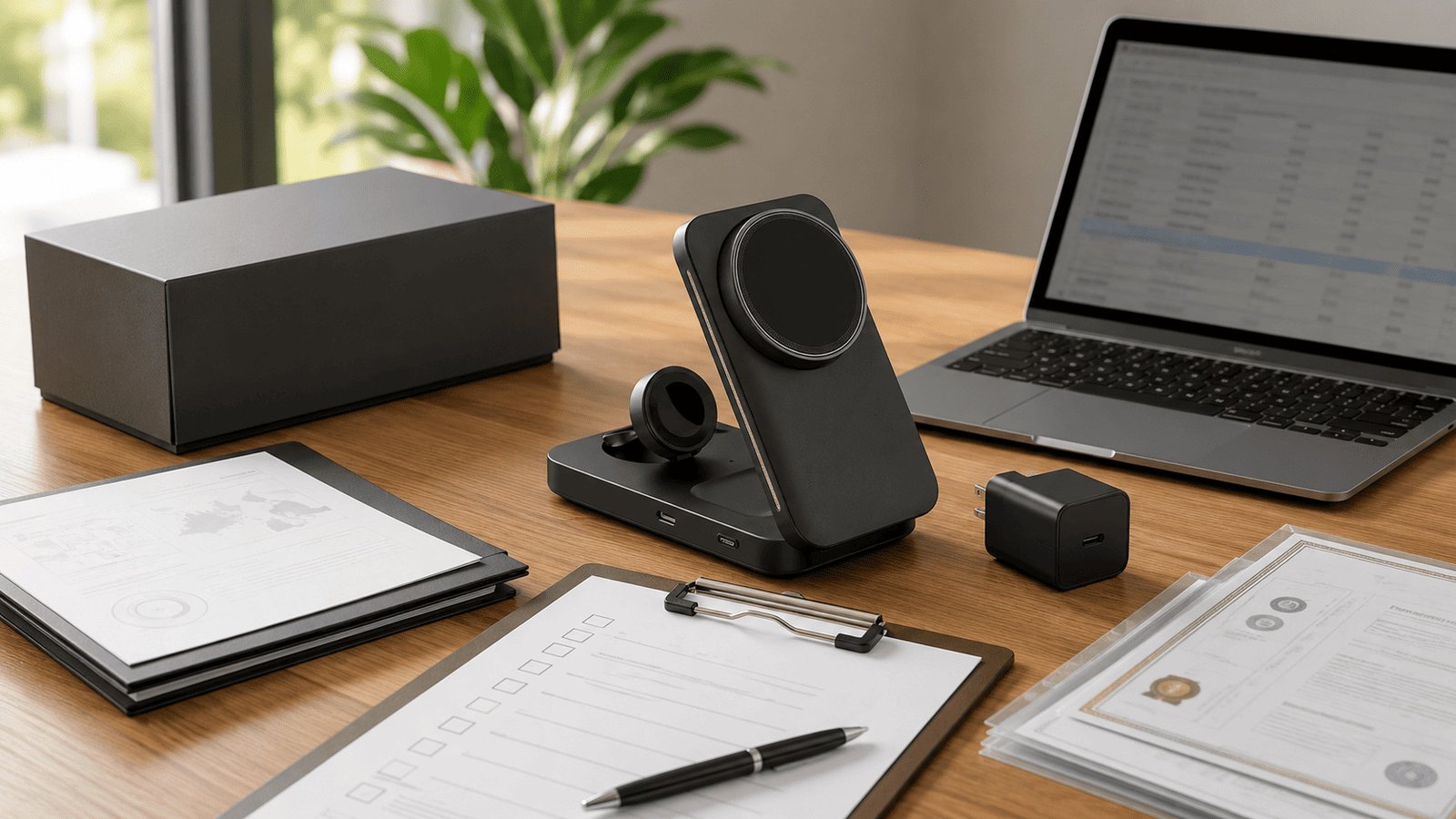
I treat certification and testing as part of the product cost
I work in wireless charging manufacturing, so I know one thing clearly. A good charger is not only a shell, a coil, and a number on a box. A good charger needs R&D, testing, parts control, and production checks. For Qi2 25W, I pay close attention to certification and test proof. I also ask whether the product claim on the package matches the certified scope.
For importers, this work protects the business. A buyer may plan to sell in North America, Europe, the UK, Poland, the UAE, or ASEAN markets. Each market can require different compliance files. The product may need UL, CE, RoHS, FCC, PSE, KC, Qi, or other related documents9, based on product type and market plan. I do not wait until shipment to check these files. I check them during supplier selection.
| B2B Checkpoint | What I Ask For | Why I Care |
|---|---|---|
| Qi2 25W certification | Certificate or official proof | It separates certified products from claims |
| Safety compliance | UL, CE, FCC, RoHS, PSE, KC as needed | It supports import and channel sales |
| Test reports | Power, heat, aging, protection tests | It lowers after-sales risk |
| Adapter requirement | Recommended PD wattage and profile | It prevents user complaints |
| Device list | Tested phones and charging results | It supports honest marketing |
| Packaging claims | Exact wording and warning notes | It avoids misleading claims |
| Production control | QC process and batch testing | It supports stable bulk supply |
| Patent and design status | Appearance and structure information | It reduces copy and dispute risk |
I also check the supplier’s ability to support OEM and ODM projects. A brand may need a 3-in-1 charging station, a charging stand, a charging pad, or a travel charger. Each form has a different heat path and coil layout. A multi-device 3-in-1 station, by default, will experience elevated heat accumulation due to multiple power fields working simultaneously, which demands advanced thermal management and protective structural materials. A stand needs strong magnets and a stable angle. A pad needs good surface material and good coil centering. I ask for engineering feedback before I freeze the design.
I also check capacity. A supplier may make a good sample but fail in mass production. I look at factory size, staff, output ability, and quality process. In my own work, I value production bases, R&D support, patent experience, and export experience because these things make bulk orders safer. I also want clear after-sales rules. If a batch issue happens, the buyer needs fast answers, spare parts support, and a corrective plan.
How Can I Avoid Misleading “25W Compatible” Marketing Claims?
A big power number can sell products fast. I still slow down because loose wording can hide weak performance and weak proof.
I avoid misleading claims by asking whether the product is certified for Qi2 25W, which devices reached 25W in testing, which adapter was used, and how long the charger held stable power.
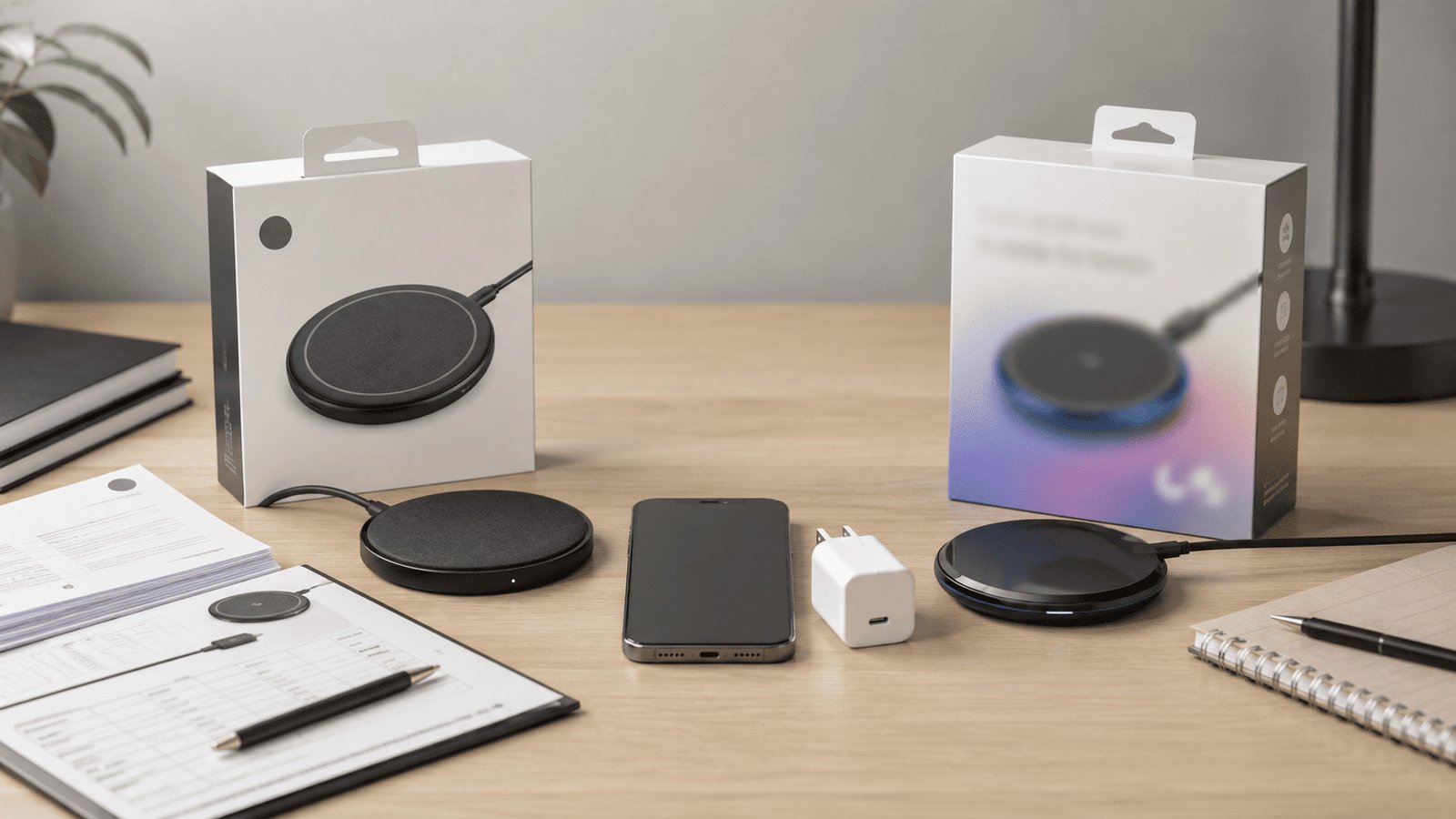
I read the words on the product page very carefully
I see several phrases in the market. Some sellers write “supports 25W.” Some write “25W compatible.” Some write “maximum 25W.” Some write “Qi2 style magnetic charger.” These phrases do not all mean the same thing. I do not reject every product with these words, but I ask for proof.
A certified Qi2 25W product should have a clear standard position. A product that only says “compatible” may mean it can connect to a 25W adapter. It may also mean the chipset has a high input rating. It may not mean the wireless output is certified at 25W. This difference is important. Consumers may not notice it at first, but they will notice slow charging, heat, or unstable performance.
| Marketing Phrase | My Concern | My Follow-Up Question |
|---|---|---|
| “25W compatible” | It may not mean 25W wireless output | Is it Qi2 25W certified? |
| “Max 25W” | It may be a short peak only | How long does it hold high power? |
| “Magnetic fast charger” | It may not be Qi2 certified | Which standard does it meet? |
| “For iPhone and Android” | Device power may vary a lot | Which models were tested? |
| “PD required” | Adapter may not be included | What PD adapter should users buy? |
I also suggest honest product copy. I prefer wording like “up to 25W with supported Qi2 25W devices and recommended USB-C PD adapter.” This sentence protects the seller and informs the user. It sets the right expectation. It also reduces bad reviews. When I write product pages for B2B customers, I include device notes, adapter notes, and case notes. I believe clear wording can sell better over time because trust matters more than a fast click.
How Should I Test Qi2 25W Before Bulk Purchase?
A sample on a desk can look perfect. I still test it under real use because customers will not charge phones in perfect lab conditions.
I test Qi2 25W products with target phones, recommended adapters, real cases, repeated cycles, heat checks, and aging tests. I compare peak power, stable power, temperature, charging time, and protection behavior.
I use a practical test plan before I approve an order
I start with device selection. I choose phones that my target market actually uses. If a distributor sells mainly to Apple users, I include recent iPhone models. If the market includes Android flagships, I include those models too. I do not rely on one phone because one successful result does not prove broad performance.
Then I test the full accessory chain. I use the recommended USB-C PD adapter. I test with a lower power adapter too, so I can understand user complaints. I test with a bare phone and with a magnetic case. I watch surface temperature and charging stability. I also check whether the charger restarts, blinks, shuts down, or makes noise during charging. Small issues can become big complaints after bulk sales.
| Test Item | How I Test It | What I Want To Learn |
|---|---|---|
| Peak power | I record early charging behavior | Whether 25W appears under correct conditions |
| Stable power | I monitor over time | Whether power drops too quickly |
| Temperature | I check charger and phone surface | Whether heat control is safe |
| Adapter match | I test recommended and weak adapters | Whether instructions are clear |
| Case impact | I test with common cases | Whether users need case warnings |
| Multi-cycle use | I repeat charging sessions | Whether performance stays stable |
| Protection behavior | I test foreign object and overheat response | Whether safety design works |
I also review documentation before I approve a supplier. I ask for certification files, material information, inspection standards, and packaging artwork. I check whether the user manual explains adapter requirements. I also check whether the product label and carton label are correct for the target market. These steps feel basic, but they save money. A shipping delay, relabeling cost, or platform listing issue can cost more than proper checking at the start.
Conclusion
I treat Qi2 25W as a certified charging system, not a simple watt number. I check the full chain before I promise real 25W performance.
"Wireless Power Consortium: Home", https://www.wirelesspowerconsortium.com/. The Wireless Power Consortium describes Qi2 certification as a standards-based wireless charging program and identifies newer Qi2 profiles as supporting certified magnetic charging at up to 25 W. Evidence role: definition; source type: institution. Supports: The source should confirm that the Qi2 standard includes a magnetic power profile or related certified profile capable of wireless charging up to 25 W.. ↩
"Enhancing lithium-ion battery health with multi-stage constant ...", https://www.sciencedirect.com/science/article/abs/pii/S2352152X25009740. Studies of lithium-ion charging describe controlled current and voltage phases in which charging current and power vary over time, providing a general mechanism for why wireless charging output is not constant throughout a session. Evidence role: mechanism; source type: paper. Supports: The source should explain that lithium-ion charging uses controlled charging phases and that accepted power changes with state of charge and operating conditions.. Scope note: The source may explain battery-charging behavior generally rather than measuring Qi2 25W chargers specifically. ↩
"Wireless Power Consortium - Wikipedia", https://en.wikipedia.org/wiki/Wireless_Power_Consortium. The Wireless Power Consortium maintains a certification program and product database for Qi-certified devices, supporting the distinction between a charger that merely appears magnetic and one that has documented Qi2 certification. Evidence role: general_support; source type: institution. Supports: The source should show that Qi/Qi2 certification is verified through an official certification program or product database, not by product appearance.. Scope note: This supports the certification-verification principle rather than proving that any specific product is uncertified. ↩
"Qi (standard) - Wikipedia", https://en.wikipedia.org/wiki/Qi_(standard). Wireless Power Consortium materials on Qi certification and power profiles indicate that certified charging performance depends on compatible transmitters and receivers, supporting the claim that a phone must support the relevant high-power profile to receive 25 W. Evidence role: mechanism; source type: institution. Supports: The source should explain that wireless charging power depends on both transmitter and receiver support for the relevant Qi/Qi2 power profile.. Scope note: The source establishes standards compatibility requirements, not charging performance for every individual phone model. ↩
"iPhone 16 - Tech Specs - Apple Support", https://support.apple.com/en-us/121029. Apple’s technical specifications for supported iPhone models state that MagSafe wireless charging can reach up to 25 W when used with compatible power adapters, documenting the model-specific Apple implementation. Evidence role: case_reference; source type: other. Supports: The source should document Apple’s stated MagSafe wireless charging limit for the named iPhone series.. Scope note: Apple specifications support MagSafe capability for named models but do not by themselves prove Qi2 25W performance with every third-party charger. ↩
"Wireless Power Transfer Efficiency Optimization Tracking Method ...", https://pmc.ncbi.nlm.nih.gov/articles/PMC11086091/. Wireless power transfer literature reports efficiency losses in inductive charging systems, supporting the engineering point that delivering 25 W wirelessly requires more than 25 W of input power. Evidence role: mechanism; source type: paper. Supports: The source should explain that inductive wireless power transfer has conversion and transmission losses, so input power exceeds delivered output power.. Scope note: The exact input wattage needed depends on charger design, operating conditions, and the applicable power profile. ↩
"[PDF] Thermal Design and Optimization of High-Power Wireless Charging ...", https://www.osti.gov/servlets/purl/1871896. Research on wireless power transfer thermal behavior shows that conversion and coupling losses are dissipated as heat, supporting the claim that higher-power wireless charging requires more careful thermal management. Evidence role: mechanism; source type: paper. Supports: The source should show that wireless charging losses are dissipated as heat and that higher power levels can increase thermal-management requirements.. Scope note: The source may provide general thermal mechanisms rather than testing this article’s specific charger designs. ↩
"Qi (standard) - Wikipedia", https://en.wikipedia.org/wiki/Qi_(standard). Wireless Power Consortium descriptions of Qi2 identify magnetic alignment as a defining feature of the standard’s Magnetic Power Profile, supporting the statement that Qi2 addresses placement and alignment problems found in earlier pad-style charging. Evidence role: definition; source type: institution. Supports: The source should confirm that Qi2 includes magnetic alignment through its Magnetic Power Profile and that alignment is intended to improve charging consistency.. ↩
"Equipment Authorization – RF Device | Federal Communications ...", https://www.fcc.gov/oet/ea/rfdevice. Government and standards-agency guidance on FCC equipment authorization, EU CE/RoHS rules, and national electrical-safety schemes shows that electronic charging products can require different compliance documentation depending on the market. Evidence role: general_support; source type: government. Supports: The source should show that electronic or radio-frequency charging products are subject to market-specific safety, EMC, radio, or environmental compliance requirements.. Scope note: No single government source covers every mark listed; requirements depend on the product configuration and jurisdiction. ↩